From Cure Chair to "Chaise Longue": Medical Treatment and the Form of the Modern Recliner
Dublin Core
Title
From Cure Chair to "Chaise Longue": Medical Treatment and the Form of the Modern Recliner
Subject
Effect of medical attitudes towards tuberculosis on the development of the recliner.
Description
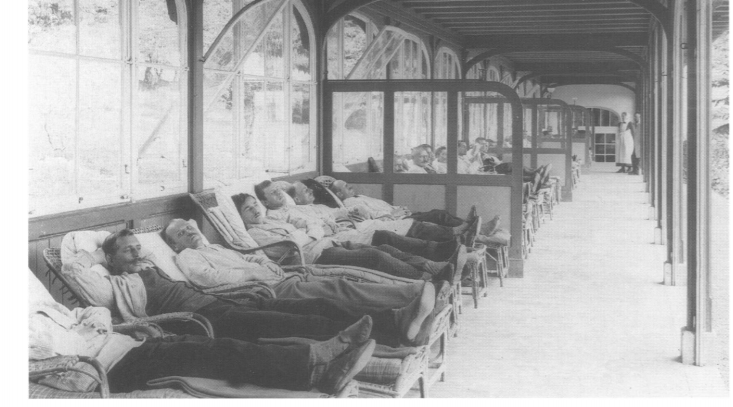
During the early 1900s, furniture such as the “lounger”, “cure chair”, or “day bed” began to be used in European sanatoriums (hospitals that treat chronic illnesses) in order to accommodate the large influx of patients diagnosed with tuberculosis. The demand for this type of furniture continued in the medical field up until the late 1950s when the successful implementation of chemotherapy caused these institutions to be obsolete. By this time, the “chaise longue” became a modern icon due to health reform initiatives and an increased emphasis on comfort.
Creator
Margaret Campbell
Source
https://www.jstor.org/stable/1316241?seq=1#metadata_info_tab_contents
Publisher
Oxford University Press
Date
Journal of Design History
Vol. 12, No. 4 (1999), pp. 327-343 (17 pages)
Vol. 12, No. 4 (1999), pp. 327-343 (17 pages)
Contributor
Alexa Boothe
Language
English
Type
Journal Articles
Files
Collection
Citation
Margaret Campbell , “From Cure Chair to "Chaise Longue": Medical Treatment and the Form of the Modern Recliner,” HistoryStudent—Omeka Sites, accessed November 16, 2026, https://schrag.reclaim.hosting/omeka/items/show/343.