Bicycle Clothing - Future
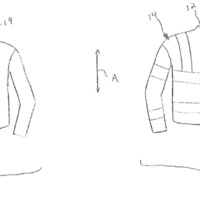

By the early 2000s, inventors recognized that cyclists did not want to look like cyclists all the time. "Because safety vests and high-visibility jackets are so prominent and even flamboyant in appearance," explained Michael Fitzpatrick in a 2006 patent application," they can be embarrassing to wear." Rather than forcing cyclists to stash their specialized gear, he suggested "a reversible garment that is reversible between a high-visibility configuration for riding a bicycle and an ordinary configuration for non-bicycle use." Unlike Gary Neese's 1984 patent for a jacket/vest, this one is specifically for cyclists, and Fitzpatrick even imagines integrating electric turn signals. (Wanting to maximize his opportunities, however, he also contemplates versions for "jogging, hiking, skiing, swimming, diving, and surfing.")
Not everyone is sure that specialized clothing of any kind is the right approach. Discussing a 2012 CNN article about bikers who "shed spandex" in favor of "period fashion," a forum administrator of the Washington Area Bike Forum and at least one member were enthusiastic that such press could encourage new riders. But "TwoWheelsDC" was less sure. "Cycling doesn't require fancy tweed or wool or 'vintage' outfits any more than it requires spandex," they wrote, "but somehow that aesthetic gets billed as what is going to bring cycling into the mainstream . . . How does that even make sense? People want to look good while riding, so they buy clothes from this guy's shop that are made for riding...but they ride more when they feel like they don't have to wear clothes made for riding??" They concluded, "we really should be focusing on rider safety, infrastructure, and driver education/awareness."
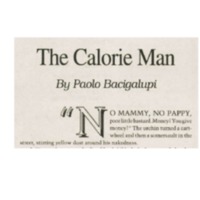
Looking further into the future, science fiction author Paolo Bacigalupi conjured a post-petroleum world in his 2005 story, "The Calorie Man." (He would later set his acclaimed 2009 novel, The Windup Girl, in a similar future.) Although the magazine noted that "this story was partly inspired by the sheei elegance of that muscle-powered machine known as the bicycle," bicycles barely feature, and bicycle clothing gets only part of a sentence: "At the end of the alley, cycle rickshaws and bicycles slipped through the mid-morning gray, pulses of green and red and blue as they passed the alley's mouth draped under rain-glossed com polymer ponchos." (16) Yet even that sentence's mention of "corn polymer" reminds us that a world without petroleum is also a world without many of the plastics and other compounds that we take for granted. Bicycles may be muscle-powered, but those muscles are often clad in fabrics that are crafted from and transported by oil.