Movie Cameras - Past
Introduction to Photography
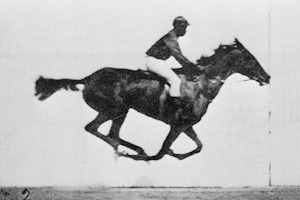
Eadweard Muybridge's photographic experiment "Sallie Gardner at a Gallop" was the bridge between photography and the motion picture industry. In 1878 , Muybridge was commissioned by Leland Stanford, a breeder and trainer of Thoroughbred horses, to determine if a galloping horse ever lifted all feet off of the ground simultaneously. When viewed in quick succession, the photos determined that this was indeed the case. The "Sallie Gardner at a Gallop" photo series provided one of the first recorded instances of photography as a means of manipulating time by slowing it down to view something too fast to be detected by the naked eye alone, perhaps giving rise to the beginnings of instant-replay technology. Muybridge spent the next several years touring to show the photo series to audiences, making "Sallie Gardner at a Gallop" the very first documented motion picture exhibition and precursor to the silent film industry.
Early Cameras
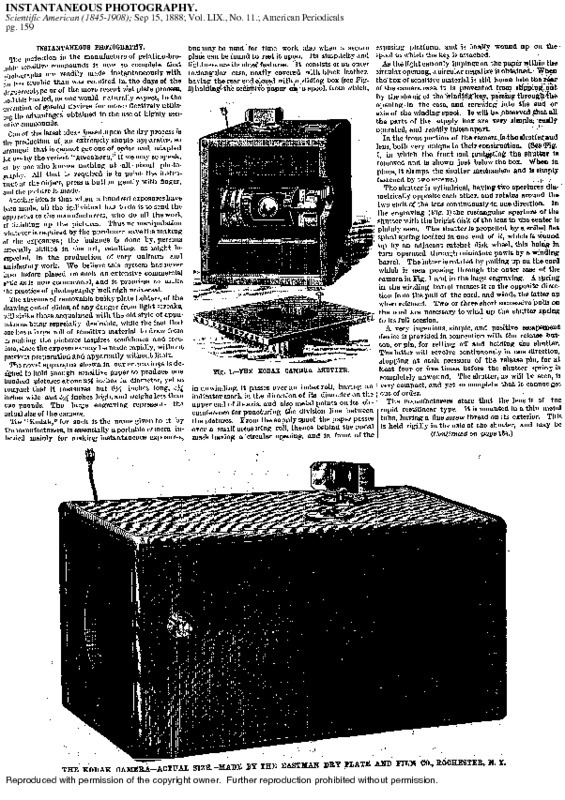
In 1888, Kodak revolutionized the camera industry by introducing a mass-market, consumer oriented “instantaneous camera”. Prior to Kodak, cameras had to be set in place and allowed anywhere from thirty seconds to several minutes for the image to be imprinted onto film. This meant that in order to take a photo of people, those being photographed would have to stand perfectly to avoid extreme blurring. The instantaneous camera allowed photographers to capture moving images with reasonable clarity for the first time and it became widely adopted by journalist and amateur photographers. Critically for the future movie camera industry however, the ability to capture moving images instantly meant that if enough pictures could be taken in rapid succession, a movie camera could be created.
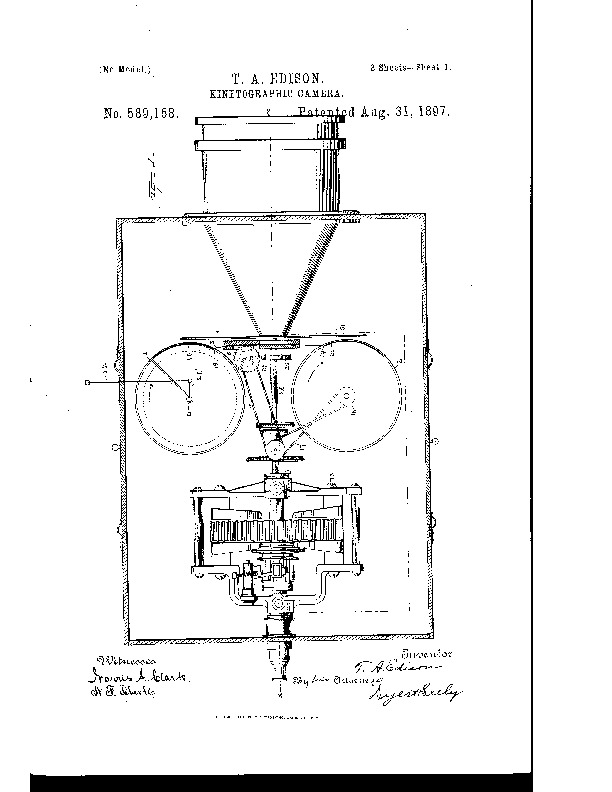
Modern movie cameras have their origin in Thomas Edison’s 1897 invention, the “kinetographic camera”. This ingenious device worked by moving film through the device and imprinting images onto it at a rapid enough pace that, when fed through a projection device, will show “moving objects”. Although Thomas Edison did not, in fact, invent the device entirely by himself (there is considerable evidence that he copied it from another contemporaneous inventor), it was his design which would popularize the movie camera and lay the foundations of the film industry. Alongside his “kinetoscope” projector, the kinetographic camera allowed consumers to record video and view it back for the first time in history.
This 1894 newspaper article introduces the public to Thomas Edison’s newest invention: the kinetoscope. The kinetoscope was the first movie camera to be popularized, and it worked recording video onto film and allowing the viewer to watch the recording through a screen at the top of the device. The article takes the form of an interview with Edison, in which he explains how the device functions and what he sees it being used for. He explains that his goal in creating the device was to produce, “an instrument… that would faithfully record and reproduce practically all motion”. However, the articles most profound moment comes, not when Edison’s describes the workings of the current device, but when he pivots to talking about its future. He describes the current iteration as merely a “funny toy” and goes on to explain his real ambition: “My experiments with the kinetoscope have been directed toward this end: First, to mount the photographs on glass plates and throw the pictures by means of a magic lantern upon a screen. Then, instead of looking into a peephole, a large number of spectators might watch the movie picture. Second, to combine the phonograph with the kinetoscope so that while the figures had visible motion on the curtain their words might be heard plainly by the audience”. In the excerpt, Thomas Edison more or less prophecies the entire film industry decades before it takes off.
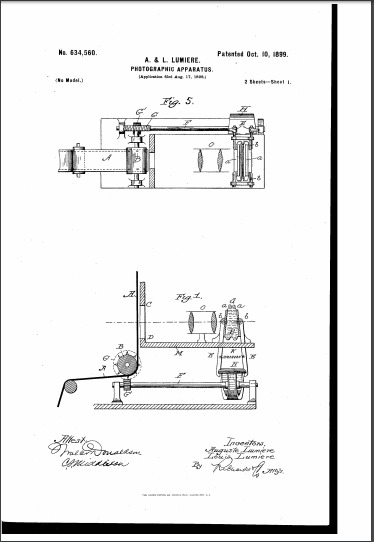
How did viewing moving pictures progress from being an individual pleasure to the community activity that it is has become? The camera apparatus produced by the Lumiere brothers in 1899 was the first type of projection instrument that allowed multiple people to view a motion picture at once. It was an improvement of Thomas Edison’s kinetoscope, a technology already discussed on our page. Movie cameras are a complex genre of technology with several moving parts, each of which are useless alone to creating the final product. This innovation by the Lumiere brothers introduced not only group viewing of motion pictures, but ushered in the third element of photographic/movie camera innovation after filming and editing: projection.
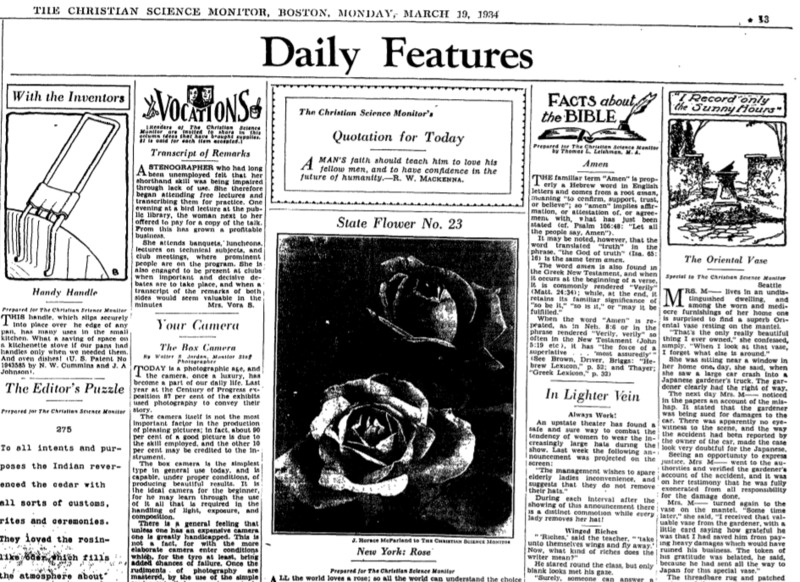
What goes into taking the perfect photograph? Surely many things, but this article from 1936 makes a coupel of claims in particular on this topic. One of the most poignant lines from the article says that 90 percent of taking a good pictures comes from the person using the camera, and the other 10 percent comes from the machine taking the picture. This a good example of the lengths that photographers of the past had to go to, to capture a quality photo in comparison to today. Sure, things like good lighting and angles and capturing at the right time did and still fall on the responsibility of the person using the camera. But, progressive technological improvements to cameras over time have worked to take much of that responsibility out of the hands of the photographer and into the camera. One of these deficiencies that the article mentions is the lack of a focus function, something that comes standard in the modern camera. One that it does not, though, is the lack of a flash function, which also now comes standard, and was even more important before the days of color photography. All in all, this article provides adequate insight into the early days of photography.
The Camera Accessory
What additional inventions or accessories might have contributed to the progressive increase in accessibility and functionality of the camera to the average consumer? U.S. patent 817207A filed in 1905 and patented in 1906 describes the invention of a self-proposed "new and useful" improvement in camera supports. A look at the figures provided may not give anything new, useful, and non-obvious enough to meet the current criteria for a patent that Kathleen Franz discusses in her Consumers as Inventors, but it certainly was in the very early 20th century. Though the application does mention how it derives influence from the existing tripods of the time, it also goes out of its way to distinguish itself from and identify the things that it can do that those tripods cannot. The application also mentions how it was of particular use to the amateur photographers of the time, even though the idea of amateur photographer was not necessarily a common or widespread thing. This notion reinforces the possibility of the significance that this particular invention provided to the camera as a whole, because even though it did not do anything to change or improve upon the actual camera itself, it did attempt to create a further invention/accessory that would assist in the camera’s overall accessibility and functionality. It is inventions like this that contributed to the progressive increase in availability of the camera -- something that it certainly did not achieve this all by itself -- to the average consumer, and this is further evidenced by the 42 successive patent applications in which this patent is cited.
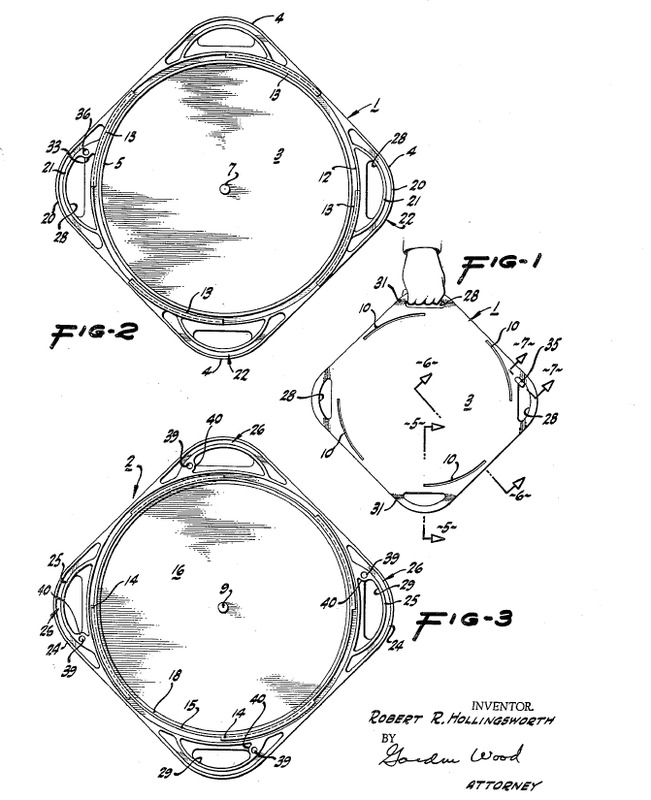
There were also patents that were designed specifically for professional use. This patent is for a carrying case for reels of film. In the past, video footage was captured and stored on magnetic film (as opposed to having it being stored as a file on a computer). As such, when a lot of footage was filmed, a lot of magnetic film was needed in order to store the captured footage for later use. As such, the film needed to be transported carefully in order to prevent the footage from being damaged. The film carrying case shown in the patent would help fix this issue as it would both protect the film from outside influences as well as make it much easier to carry the film reels. However, as one may guess, professional movie makers would be the ideal consumer for this product as the average consumer wouldn't be working with magnetic film.
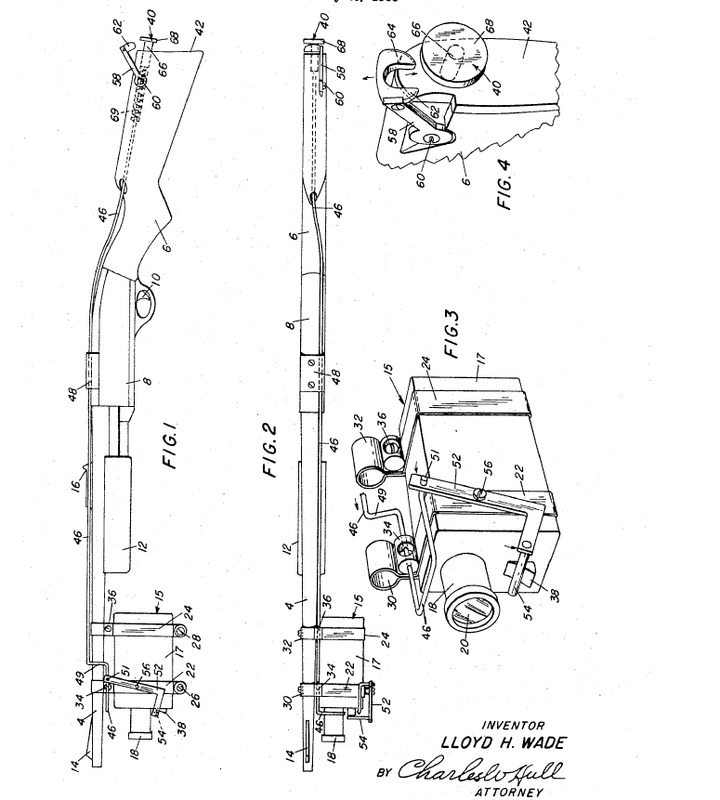
What if you wanted to record yourself hunting game? This patent was a patent to have a movie camera mounted underneath the nose of a rifle. The inventor Lloyd H Wade desired to create a firearm that would allow hunters to record footage of their marksmanship before, during, and after a shot was fired. Due to its niche focus group, most professional movie makers wouldn't use the patent's product as they would have access to more advanced (and expensive) technology than the general consumer populace. That being said, if this product was created, it would allow for more general and amatuer consumers (hunters in this case) to create short films for their families, friends, and (in some cases) potential customers.
Cameras in Fiction

What might fiction from the mid-20th century be able to tell us about the idea of the camera or photography in that time? According to Jim Kjelgaard's 2003 review of the novel Wildlife Cameraman from 1957, a couple things. First, he mentions how the protagonist in the novel had to convince his father that to let him pursue a career as a wildlife photographer. This shows that by 1957 it might have been possible to make a living as a photographer, but also that photography as a profession might not have been taken as seriously as it is today. Furthermore, Kjelgaard mentions the many difficulties and rewards of being a wildlife photographer, just like there exists ups and downs of working in an office or factory. As a whole, an artifact like Wildlife Cameraman not only provides a snapshot of how photography may have been treated at the time through fiction, but of the evolution of the concept of photography as a whole through its specific role in this novel as a profession. Young adult novels like this one might have let kids know that they could grow up and be a photographer if they wanted to be one.
Although movie cameras today are most typically associated with films, cat videos, and television, those witnessing the early diffusion of the movie camera foresaw more sinister uses. George Orwell’s classic novel Nineteen Eighty-Four anticipated the use of movie cameras as home surveillance devices used to identify political dissenters in a totalitarian political system. This perspective offers a counterargument to the idea that innovation in information and video technology will inevitably lead to more openness and connectivity. Instead, he implies that advances in video technology are, “neither good nor bad nor neutral”, and that how these innovations end up being used is supremely important. In the hands of the people of a pluralistic democracy, it can be liberating, but in the hands of a paranoid dictator, it can be a tool of oppression.
Editing: The Past
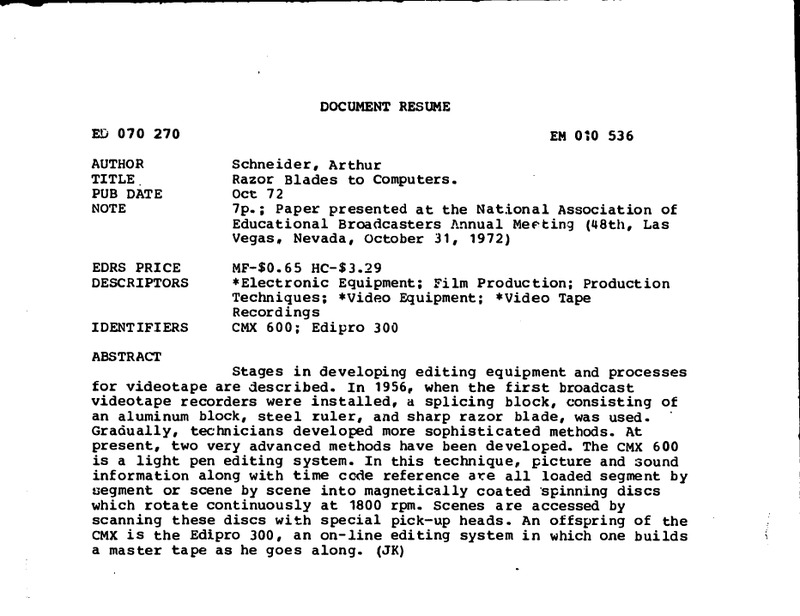
Video Editing in the past was a relatively complex process. This paper from the 1972 National Association of Educational Broadcasters Annual Meeting discusses the intricacies of editing recorded footage. After footage is captured by a camera, it can be edited to make a feature production like a movie. When movie production was first performed, editors had to manually cut magnetic film on a slicing block. Unless if carbonyl iron power was used, one couldn't see the pattern on the tape, which can lead to the editor cutting the wrong part of the tape. If a mistake was made (i.e. a cut was made at the wrong location), the original film would be ruined and the editors would have to re-record footage again. As such, video editing wasn't that prevalent in non-professional settings in its early years.
Once the 70s hit, non-linear editing systems like the CMX 600 and the Edipro 300 were invented. Non-linear editing meant that the original source is not modified in any fashion. This meant that professionals would not make errors that would permanently destroy the original copy. In addition, these non-linear editing systems are computerized, which meant that less manual labor was needed to produce the film. As such, professionals would be able to produce more products with less effort. However, a large majority of editors were still professionals as video cameras (or camcorders like the Chicago Tribune article likes to call them) were not widely available to the general public. That being said, the advent of non-linear editing systems really revolutionized video editing.
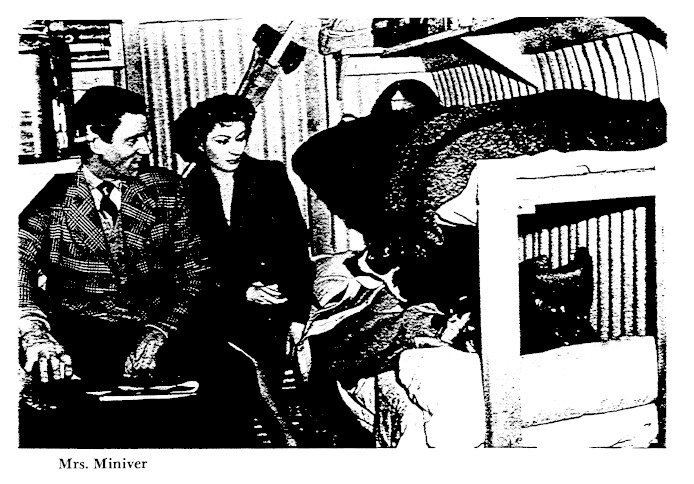
The main focus of the journal "The Editor's Role in Film Making" was to discuss the editing process that the movie editor goes through whenever a movie was being produced. It also provides a narrative of how the filmmakers and editors thought throughout the production and editing stages of movie creation. The journal also compared tapestries, textiles with a design on them, to modern day films. Tapestry can be seen as a series of still images that illustrate a story for the viewer. As such, they lack sound, so they can be seen as the precursor to silent films. The process of film editing would be more important to professionals than to the average consumer as it deals with tricky methods like slicing footage on a chopping block (a process that was mentioned in a prior paragraph). Scholars would also find this information useful as it would allow them to examine the history of film making over time.
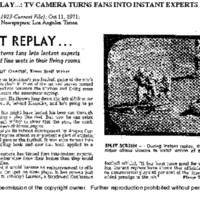
In October of 1971, the Los Angeles Times shows that new instant replay technology not only changed revolutionized recognition and legitimacy in the sports industry, but also turned sports fans into experts from the comfort of their own homes. Whereas before, the fame and recognition in televised football games largely went to the quarterbacks, instant replay turned over some of the spotlight to other players on the team who largely went unnoticed before instant replay showed some of their hard-to-spot contributions to gameplay. Another group that received validation after the popularization of instant-replay technology became the referees and officials who made calls about plays. Instant replay showed that these officials made the correct calls a majority of the time, whereas before their judgement was often called into question. The success of the officials came at the expense of game announcers who found themselves at a disadvantage and often made wrong accounts about gameplay, which were checked by playbacks of the play in question.
Because fans, from their own couches, had access to the instant-replay of a play before the announcers themselves, fans became experts on gameplay and relied less on the expertise of game announcers to explain a play. The article points out that this was not a possibility five years before the article was written―if a play was missed or too fast for the naked eye to see, it could not be replayed, slowed down, and analyzed from every angle, and fans would have to settle for the account by game announcers. Whereas instant replay was once up to television stations to provide to fans, if we take a moment to glance into the present day, instant replay has become ubiquitous with the television watching experience with DVR technology as it has diffused down to average consumers.. Consumers have not only become experts in sports watching, but also the masters of their own instant replay experience.