Bicycle Clothing - Present

In the 2010s, most Americans likely associate the term "bicycle clothing" with brightly colored spandex jerseys and tight black shorts. But some designers are working to expand the options available to cyclists, and they could take lessons from the pre-spandex era to do so.
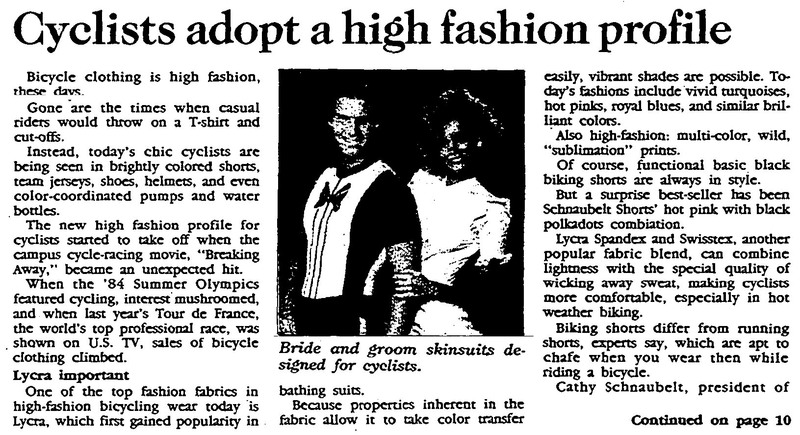
The current spandex era emerged in the 1980s. In 1986, for example, the Chicago Tribune ran a story about bicycle clothing to accompany an avertising section on bicycles. The story describes shorts and jerseys in basic terms, as if to a reader who had never seen such clothing or was curious about what made it differerent from other athletic apparel. For instance, it distinguishes bicycle shorts from running shorts, explaining that longer legs and padding help cyclists avoid chafing and soreness. This suggests that the clothing was new enough to require such explanations. The article attributes some of the growing popularity of bicycle clothing to new synthetic fabrics that make the clothing better fitting and easier to care for. But it also suggests the ways that the clothing jumped from top athletes to more casual riders: the 1979 film, Breaking Away, and the television spectacles of the 1984 Olympics and the 1985 Tour de France.
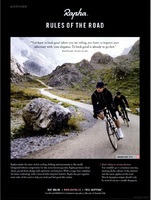
Rapha's 2008 ad, "Rules of the Road," mostly features men on bicycles, or looking as if they'd just come off of a hard ride, and the ad copy makes claims about performance. But it empahsizes appearance, from the Paul Fournel quotation ("You have to look good when you are riding") to the fussy instructions that prioritize looks over comfort ("Never leave a gap between your arm warmers and jersey.") Even its denial—"Rapha is more than just a clothing company"—acknowledges that some reading the ad might think that Rapha is just a clothing company. The ad suggests a middle ground between a pure concern with performance and a wish for bike clothing that does not look like bike clothing. It presents a line that is very much bike clothing, but fashionable bike clothing.
By the 2010s, some manufacturers made appearance even more of a priority. In 2012, Bicycle Retailer and Industry News reminded its readers that many customers want clothes that they can wear on and off the bicycle, to offices and restaurants. Jeans, hoodies, and even dresses could serve them better than "loud or logo'd racing kits." The first photograph, captioned "Terry Bicycles' Cadence dress," shows a woman standing on a beach, no bicycle in sight. This framing emphasizes the goal of making clothing that can function in other contexts, when the bike is put away.