Chairs - Future
The Future of Chairs
Looking into the future there is a few different ways that chairs seem to be evolving. One is through the ever growing need for productivity and another possible avenue is innovation due to growing health concerns about chairs. In the present chairs have undergone leaps and bounds to become more ergonomic and comfortable so that users can stay in them longer without experiencing discomfort. Looking towards the future it seems very likely that we will see technologies and desks being integrated together with chairs for enhanced productivity. This change can already be seen with top of the line chairs.
Futuristic Chairs that Enhance Productivity
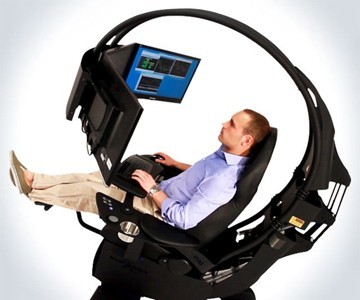
One incredibly futuristic chair is the Emperor. This chair includes everything that you could need in a workspace. It an audio system, LED lighting, monitors, cable management options, tables all of which add to the users productivity. To enhance the comfort of the user the Emperor has several features such as cup holders, a leg rest, several lighting choices, different option for seats, and seat heaters all to enhance comfort of the user. Having this mixture of extreme comfort options along with options to enhance the productivity allows the user to work harder for long periods of time without stopping due to discomfort.
This chair also conveyes a certain status of its user. With a name life the Emperor and its price tag starting at $5,000 and going all the way to $20,000 with customizations it is defintely a chair meant for the wealthy and those that can afford extreme luxury products.
One potential issue with this chair however is the size. This chair takes up 15 square feet. But if configured in their recommended orientation you can fit 5 of these chairs in 169 square feet. Another issue is the immobility of the chair on it's placed in the office. However this isn’t the only option for advanced seating.
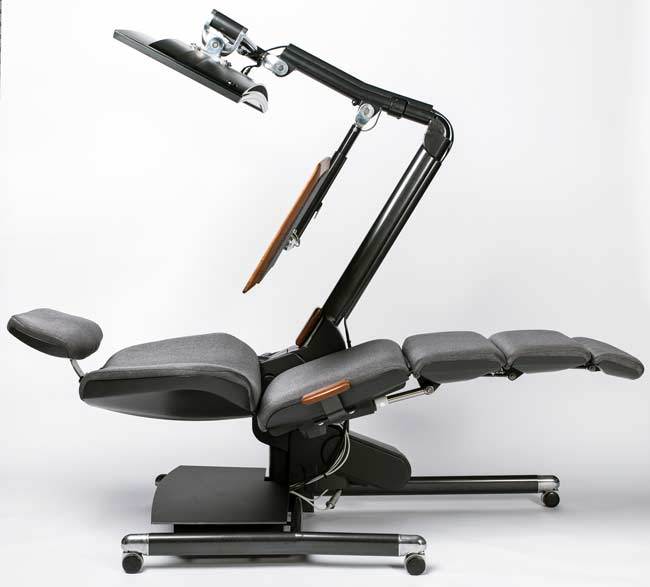
Another great option is the Altwork Station. This is a chair and desk combination that allows the user to work in any position that they desire while keeping in working range of the computer that is integrated into the station. The company highlights four key postions that this chair can be in as the selling point. These positions are sitting, standing, collaborating, and focusing. While the sitting and standing are fairly self explanatory the collaborating and focusing require a little more explanation. The company refers to the normal sitting mode with the mointor turned so others can view as collaboration mode and the reclined position of the chair as focusing mode.
One downside to this chair however is the space that it requires. It requires 18 square feet of space and has be orienated a specific way to fit through a standard door. Another thing to consider when getting this char is the wieght. Without any monitors or computers hooked into the work station the Altwork Station weighs a whopping 210 lbs and with those things it can weigh upwards of 250 lbs.
Health Concerns with Modern Chairs
In the US there has been a growing movement to move away from the traditional chair. This movement is due to growing health concerns about being sedentary for long periods of time. 18 studies over the past 16 years, covering 800,000 people, provide concerning evidence about the future of posture-related health.
Circulation, which followed 8,800 adults over the course of seven years, found that adults who sat and watched TV for more than four hours a day had a 46% increase in death from any cause when compared to people who only sat in front of the TV for 2 hours a day.
Sitting for long periods of time has been linked to an incredible amount of health risks, including heart disease, muscle degeneration, strained neck, disk damage, leg disorders, and back pain. When looking at all of these potential health risks it's important that people begin to practice safe seating practices in order to reduce future health risks.
Mary Smith, an ergonomics expert at George Mason University, talked to Joshua McLean about the health implications introduced by the utilization of poor ergonomic environments.
Ms. Smith stated that there are “Lots of ergonomics issues [that] this generation [of students will face].” In an increasingly mobile and sedentary world, students are prioritizing convenience over health, laying the groundwork for future health-related issues. Despite this, there are a variety of ways that individuals can mitigate the negative health effects of sitting or standing improperly. As the potential for health issues looms for current generations, taking proper precautions for workplace and at-home health is important.
Ms. Smith recommends moving at least once every thirty minutes during long sitting sessions in order to increase circulation throughout the body. She also recommends sitting with your back straight so as to relieve unwelcome stress on the spine. In work environments where we find ourselves immobile for eight or more hours at a time, moving the body proves essential to good health.
Society’s contemporary focus on workplace health is present at George Mason University. While many people may be unaware of the resources that GMU's Environmental Health and Safety Office provides, their presence is essential in the promotion of safe workplace sitting and non-sitting behaviors. The interview with Ms. Smith verified previous research that had been conducted regarding how chairs are regarded today. While every chair, or lack thereof, is not necessarily going to be the best for your back, it is important to know why and how chairs can be utilized to not only compliment the body, but also support the work you do on a daily basis.
One chair-like option, for example, that has been becoming more and more popular, is standing desks.
Movement Based Health Desks
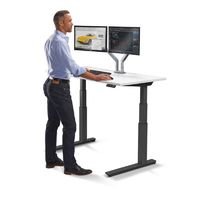
One method to avoid sitting for such long period of times has been the use of standing desks. As seen on the left, the standing desk looks pretty much like a traditional desk except for the height of it which allows the user to stand. There has been many claims by health professionals of the benefits provided by these desks to include lowering risk of weight gain, lower blood sugar, lowering risk of heart disease, reduced back pain, improved mood and energy, boosted productivity and longevity. However, many come across issues with fatigue from standing in one place all day, keeping pressure on the same parts of the back, legs, and feet for hours on end. To correct this, innovations arose to make work spaces even more active.
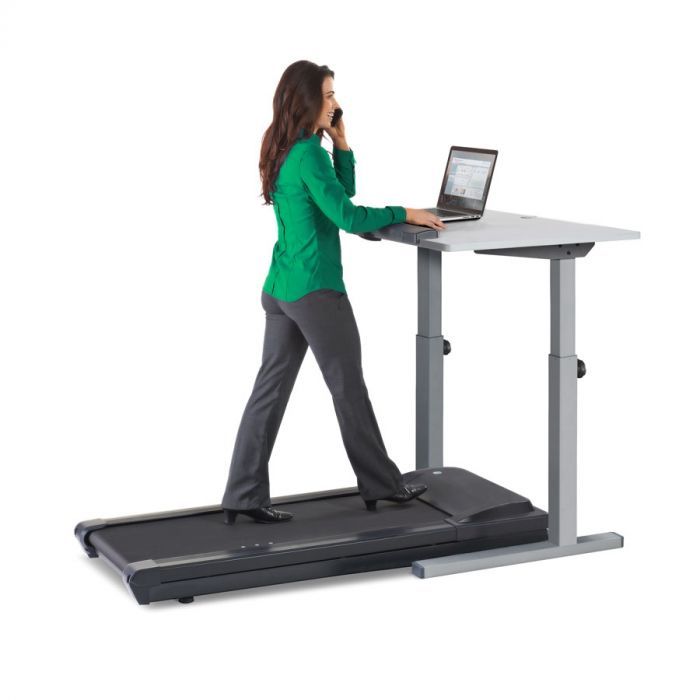
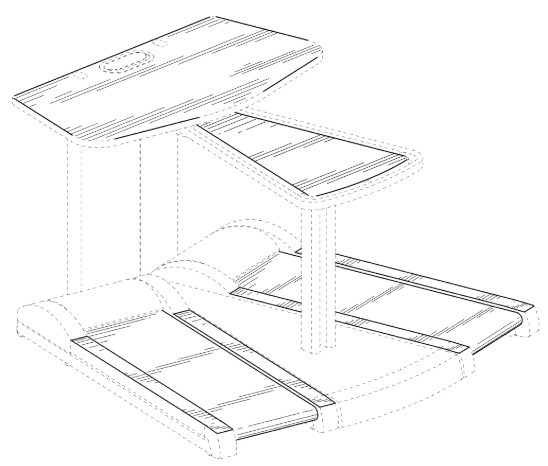
With the growing demand for Standing Desks there has been another market that has been growing alongside. Treadmill Desks are another alternative for chairs that has been praised by health enthusiasts and some health professionals. It offers many of the same health benefits that Standing Desks do as well as an active way to burn calories throughout the day. However, there are concerns that businesses have that these desks may be to large for offices and in response we are seeing technology evolve to combat it.
One patent is for a convergent treadmill desk. It allows for a combined workspace for two people that can allow them to collaborate or work separately if they so wish. Another benefit with this patent is the compaction of the treadmill desk. This convergent desk allows treadmill desks to fit into smaller spaces as to optimize it for office use. With the patent of the convergent treadmill desk it optimizes space and provides an area where users could collaborate if they so wish.
There are plenty of articles and blogs talking about how much they love their treadmill desks but there are also an abundant amount of sources talking about issues that they have with them. Alyson Shontell writes about his first hand experience with them. The first thing he talks about is how sweaty and uncomfortable you can become in your work clothes if you walk at too fast of a speed for too long. He also speaks to how difficult it is to type and eat lunch while walking on the treadmill and describes the treadmill as distracting from work. One alternative that people may be able to use to actively burn calories but keep concentrated is a bike chair.
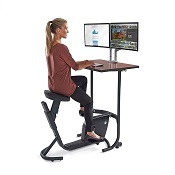
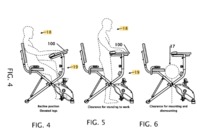
Bike Chairs are another technology that is developing alongside treadmill desks as another alternative for people wishing to keep an active lifestyle. Many people prefer it over treadmill desks due to the upper body not moving as much so it tends to not interfere as much with working on a laptop. This chair can provide a more active lifestyle that people are looking for but still retains a lot of the negative health effects due to the user still being sat in a physical chair. One great example of the way technology is evolving for these movement related health movement in chairs is the patent for the Xbike desk.
The Xbike desk allows users the option of having a bike desk and can also transform into a stand-up desk as well. This option bridges the gap between users that are worried about standing all day with the option to sit and the users that want to be able to stay active throughout the day. In the end this desk is a great option for people that would be sedentary for long periods but wish to stay active or stand. Although this was devolped by a company they aren't the only ones looking to innovate in this field.
Users and small time inventors have congregated on message and forums to dicuss innovations that can lead to healthier life styles. On a forum called Reddit one user expresses concerns and negative aspects that he has with currrent market options.
Him along with several users on the forum expressed concerns about how at their standing desk they often got uncomfortable after standing for more than a few minutes. The user saw this and thought of a new product that he wished the market would head towards as he saw it solving the issues with getting uncomfortable after standing awhile. The user describes a standing desk that would have large pedals and would be alternative to standing desks and treadmill desks.
He describes the pedals as such 'The user will stand on two large flat "pedals". The pedals will pivot about an axis parallel to the ground, and approximately in line with the user's ankles. A system of hydraulics will link the two pedals such that when one pedal rotates downward, the other pedal rotates upward.... Since the device is purely passive, the user will be able to stop at any time and stand still (either with one foot up/one down, or with both feet level)......As long as one puts an equal torque on both pedals, they will not move.'
He listed the possible benfits as it being an inexpensive add on to existing standing desks, no power source being needed, low profile, ability to stop at any time, and it would be easy to move out the way if the user wanted to use a chair instead.
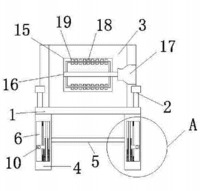
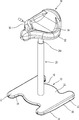
Another option that some users are also looking at to stay active are chairs that have arm exercise equipment built in. The patent for an “intelligent office chair” by Xiaobin Ruan chronicles the design of a chair that would work to address the disadvantages of current office chairs. Ruan’s design includes an arm exerciser that increases the physical activity of the user and a massaging element that would work to ease the discomfort of users and decrease their fatigue. Ruan also explains that though current office chairs have better cushions that make for more comfortable work environments, they still fall short in actually improving the health of users.
Posture-Based Health Chairs
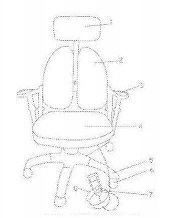
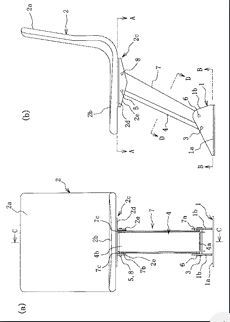
One thing that isn't particularly addressed in these health-based movement chairs is posture. The patent for this Korean chair shows a new spin on the typical modern office chair. This chair provides less lumbar support, instead offering a choice to lean forward with feet flat on the floor. This is thought to help support a more strengthened back because in order to keep the spine neutral in this chair, a person has to work to keep the back straight. This could be considered more healthy than a chair that provides lumbar support, as this design would lead to a stronger back, which in turn would keep the back healthier for longer.
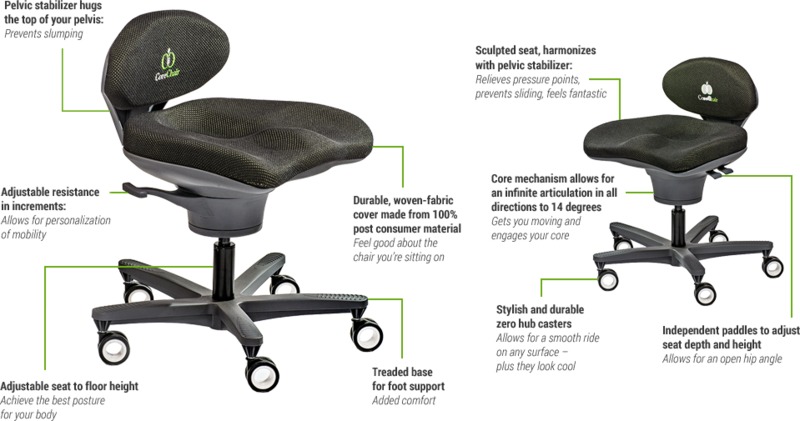
The user-led innovation of the office chair also provides some of the same benefits as the Korean chair. This chair provides more support than the Korean one, however, it is still not as much support as modern office chairs. This chair also has indentations for (for a lack of a better term), your "buttcheeks". This chair also has the potential to form to your body more than a normal chair.
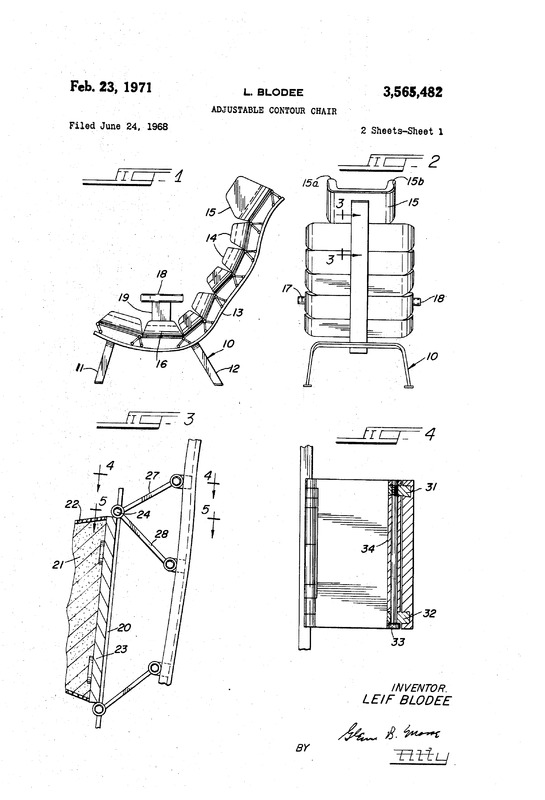
Summary of the Invention; necessarily results in missing the necessary configurations for any particular occupant. This situation can be accepted where the chair is to be used in public areas, where no particular individual is likely to use the chair continually. When the chair is used in the home or office, however, it becomes very desirable to accommodate the chair to the peculiarities of the body structure of the person that will be using it most of the time. Custom-made chairs are available, but the cost of these is usually prohibitive. The present invention provides a contour chair with body-supporting units that can be adjusted with respect to their relative positions, which permits the chair to be manufactured according to normal production techniques while preserving all of the advantages of custom-made furniture.
Even though this chair was invented in the past, it represents a larger trend in making chairs work for more people instead of having a “one size fits all” design.
In a 2018 patent by Chunya Wang and Xishan Liu, the inventors’ aim was to create a chair that attempted to solve the current health problems associated with prolonged sitting. Their solution was the kidney-shaped backrest design, a heating element, and the utilization of a groundbreaking material called Graphene. Graphene is a “two-dimensional crystalline material composed of a single carbon atom layer and is the thinnest of the known materials”. Its advantages include high temperature and corrosion resistance, good mechanical properties, and low density. These properties allow it to have the potential to replace other electrothermal materials in the future production of office chairs.
The innovation of chairs depends a lot on the lead users of the chair re-thinking the way that we design office chairs. One example of this is the CoreChair, who's CEO was motivated by the high prevalence of lower back pain associated with current office chairs. The design of the CoreChair "optimizes sitting posture" and "encourages movement in all directions. This desgin enhances the amount of blood flow into the hips and lower back, which in turn helps to decrease the amount of injuries to those areas. The more that you are able to move while sitting, the less the chance of injury occurs.
School Desks
The past of school desks has been uniformity and regimentation. The future of school desks is increased productivity and individualization. Psycholgical studies show that the humiliation and negative reinforcment of the dunce seat is not an effective teaching tool, students are now encouraged to be creative, comfortable, and explorative in their education. Group projects have become a leading teaching tool in progressive teaching environments and require desks to be mobile and allow for the communication that Woodcock's patented desk arrangement from 1855 specifically discouraged.
Advocates for education reform are promoting mobile and highly adjustable desks which can aid in creative learning techniques and also give students a comfortable spot which can lead to them being more focused and productive throughout the day.



Fiction and Sci-fi Futuristic Chairs
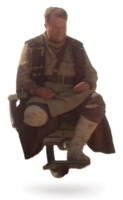
In serval mediums in the Fiction and Sci-fi releams there are chairs that have to deal with users that are physically disabled or need assistance moving around. One clear example of this in Star Wars.
In Star Wars Episode 2: Attack of the Clones, a device called the repulsorlift chair can be seen floating above the ground. The chair is, in essence, an anti-gravity mode of transportation. It appears to serve as a type of futuristic wheelchair, being able to assist disabled individuals. In addition, it can transport people long distances fast.
This shows that futuristic chairs are, in one way, interpreted be soon no longer be attached to the ground. This could provide greater functionality to chairs as well as increase the mobility of individuals that cannot walk as easily as others.
Professor X's wheelchair is yet another perspective on the future of mobile chairs. He is seen in many of the movies and comics with a standard motorized wheelchair. However, in certain issues, he is portrayed in a "hover chair" that floats over the ground. These can perhaps be the future of wheelchairs and a revolution in the medical field.
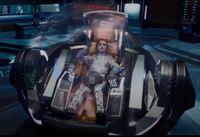
WALL-E shows a future in which chairs are necessary for mobility. Due to inactivity in space, humans have lost almost all muscle mass and bone density and can only move around in reclining hover chairs. This shows the theorized dystopia of extremized health hazards of a sedentary life in contrast to the marketed ease and innovation of the Emperor.
Perhaps in the future we will have chairs such as the Fortnite hamster ball. This unique modification to the chair allows for extreme locomotion, almost like Spiderman swinging on a web. This chair would allow the user to reach areas that were previously unattainable, with the rope attached to the plunger to allow for suction to different surfaces. While something such as this is probably many years from even a prototype, it is an interesting idea presented in video game format.
Or perhaps the furture could be like the novel Ready Player One. In Ready Player One the entire world revolves around a virtual world called the OASIS. In the OASIS people can have jobs, go to school, explore, or play video games. In part of the book they talk about the chairs that they sit in while they go into these worlds. There is a clear heirarchy in the novel about the different verisons of these chairs. Certain ones have sensors and haptic feedback to the user and can move the player around to let them feel movement. In one section of the book the main character is even attemped to be bribed with one of these chairs.
With all these chairs most of the are concievable possiblies that are future can possibly turn towards and shows that there are many exciting possiblities about the future of chairs.