Timekeeping - Future
INTRODUCTION
Time is a fascinating subject of study, not just how to measure it, but also to see how time itself is a relative quantity. According to Einstein’s theory of relativity the flow of time is not constant. Two things mainly affect the flow of time, the speed at which you are traveling and the strength of the gravitational field you are near. You will be surprised to learn that this is not just a theory, but has been confirmed by various experiments (for example Gravity Probe B). This fascinating aspect of timekeeping has influenced modern technology and science fiction writing. According to theory, it is impossible to turn back the clock and go back in history or even to trade time like you would money, but it hasn’t stopped writers from imagining what the world we be like if you could. In doing so people have raised highly interesting questions.RESEARCH IN TIMEKEEPING
Time is relative. There is a distinct time difference between Earth and space. This article goes into the practical application of having Space Optical Clocks and other quantum technologies change when relativity starts to kick in. The technology for quantum metrology has already been pracitcally applied to clocks and sensors but the hope is in the future to be able to sucessfully apply this technology to to quantum technologies in space. The article presents how the authors can apply this quantum technology to gravimeters, clocks, and sensors in space and going into space. The major problem that needs to be adressed at the current moment is trying to measure the position and time at which scales where relativity becomes relavent. Answering these questions can help the future of space travel and the idea of time dilation. The work of this study opens an avenue to continue to develop this tecnhology so relativistic quantum technology, which includes sensors and clocks.
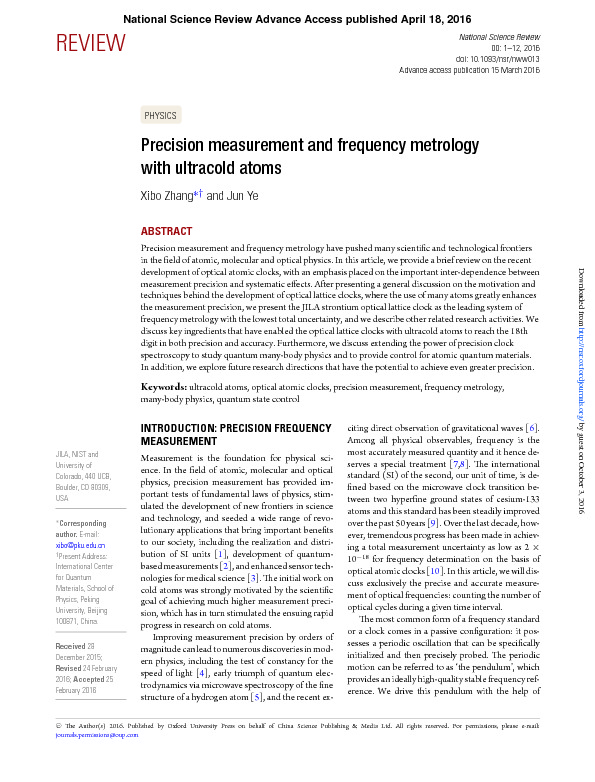
Essentially what this paper describes is a new technique by which to generate a high frequency signal that is also stable. Any device that generates a periodic signal of a fixed frequency is called an oscillator. A pendulum can be an oscillator, a quartz crystal can be an oscillator or even something as simple as a spring and mass system can be an oscillator. Whatever it is, what it must be able to do remain at a fixed frequency so that a device can count the number of times the oscillator’s signal goes back and forth. This paper describes a new technique using ultra cold atoms of alkaline materials to achieve this.
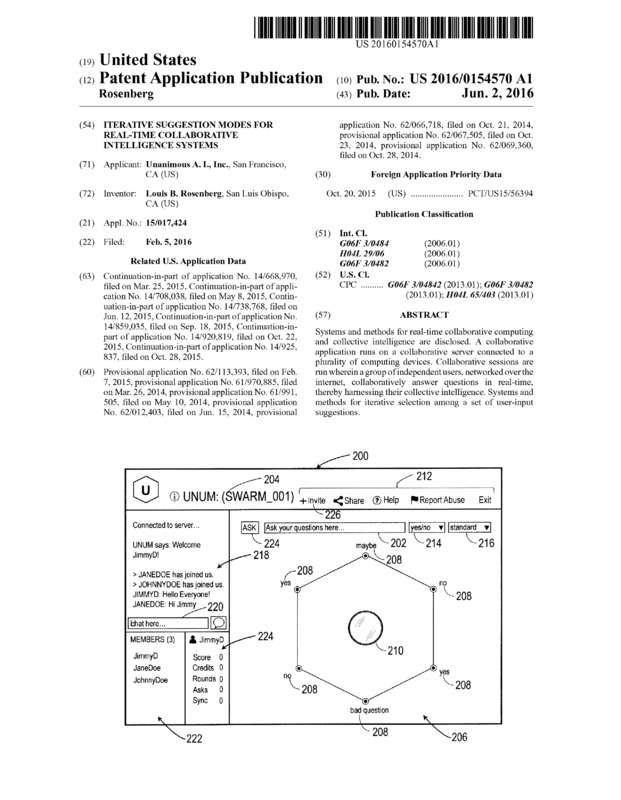
There are more daily applications of timekeeping as well, such as real-time information processing. The patent filled by Unanimous A.I., Inc, illustrates the desire for consumers and information technology firms to enable real-time collaborative servers and systems that enable them to process information faster and from any location. Real-time technology though a redesigning of a earlier ideas such as real time game play and applications such as Google Drive that allow multiple users to communicate and work simultaneously, these programs are still very slow. This new technology offers a system that creates a real-time system with instant information flow from remote locations. Another instance of current markets and professionals needing both the uber precise and instant information technology to be effectively in a contemporary technology filled world. The real-time technology has a ramifications toward many aspects of industry as well, just as the pendulum clock was an accurate, standardized, timekeeper that allowed the efficient control of labor, this real-time technology could have the similar implications of accurately and precisely measuring human labor as well. Real-time technology has other processing abilities as well. The company, Unanimous A.I., Inc’s mission is an idea called “Swarm Intelligence” where they hope to link many individuals together through this integrative system and elevate the knowledge and intelligence of the mass in real time, a sort of next level internet mission. Further exemplifying the power of timekeeping to also connect people together.
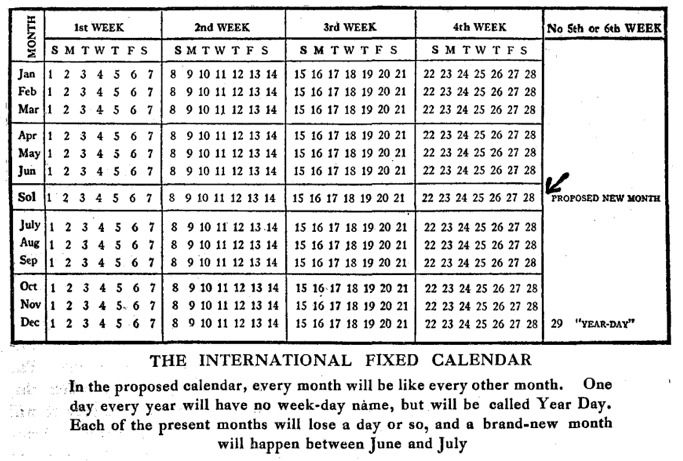
Forums are a great way to see what enthusiasts of a certain subject are thinking and possible innovation that could occur. When initially researching timekeeping, I happened accross a lot of specialty watch forums on how to customize luxury watches and different tinkering that could be done. I specifically wanted to look at a specific form of timekeeping, so I happened upon this. The international fixed calendar was propopsed on a forum. The proposed international fixed calendar comproises of as 24 hour system, which is accepted in most countries other than the United States. The author then goes on to propose the international fixed calendar instead of the Gregorian calendar. The International Fixed Calendar is a 13 month system with 28 days. Each date falls on the same day each year. Every 2 years there is an encounter for leap year which would be on December 29 and it would be called "Year-Day."
However, going down the forum there was some debate about the international fixed calendar. One user pointed out that 13 is a prime number and how exactly would seasons fit into the month. There was also other disagreements on the idea of changing time systems since humans as a whole have a hard time with change. This can specifically be seen through the difference in the metric system and the American system of measurement. In the future we could entirely have a different system of timekeeping or there could be more advancement like the introduction of day light savings. There are endless possibilities.

A Blog to Watch features the revival of jewel-covered ladies watches. The “secret watch” was a popular trend during the 1920s, where the priority for women was to look luxurious. Big name designers, such as Chanel and Graff, are bringing them back in hopes that it would give an edge to modern-day watches.The prices of some of these time pieces start at around $100,000! Women of the future would be more enticed to own such a watch because there seems to be a negative stigma towards being dependent on time. They will have a stronger sense of control, far more advanced than present day women, and will hold positions that men once held making these types of watches more affordable. The comments on this blog are unsupportive of secret watches with claims (coming from the men), saying that they would never spend that amount of money on “a donut with expensive sprinkles.” However, could it be that they are jealous or afraid as to how powerful women are becoming? Luxury watches are typically associated with being a man’s thing, but now this ladies watch could be more valuable as a sign of social status and wealth than men’s watches.
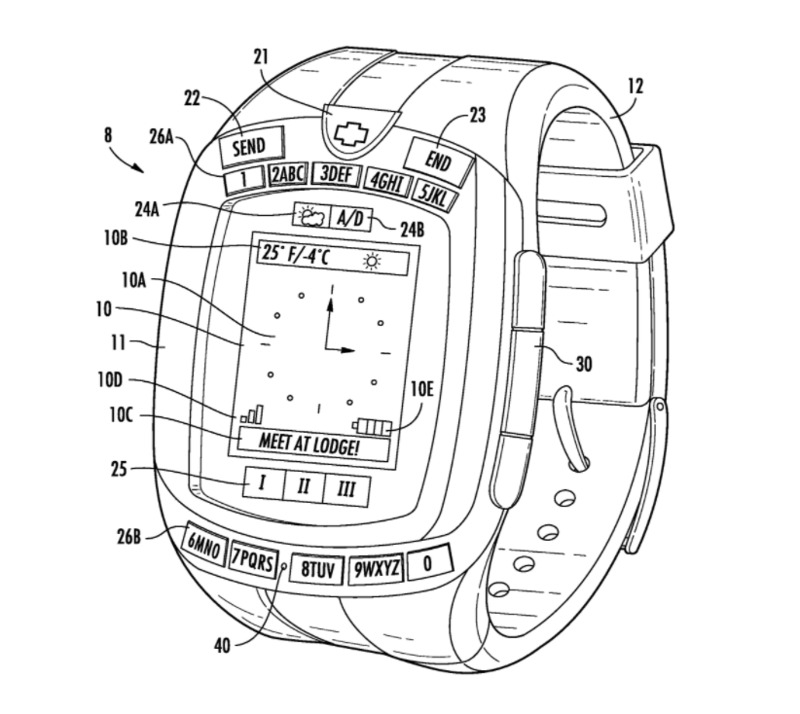
The rescue-facilitating communicating wrist watch, was patented by Laura Hennings-Kampa, with a purpose to communicate with other devices that are capable of receiving a message in case of an emergency. The rescue watch is also water resistant and can provide an exact location using GPS technology. Although there are many products that provide a similar service (ex. a cell phone) they have a tendency to be really big and bothersome, especially for those who live an active lifestyle. Consumers such as hikers, bike riders, kayakers, etc. would be most interested in this type of watch. This watch was patented in the late 2000s, so there is always room for improvement. Technology has advanced quite quickly over the years. Who would’ve thought that a watch would not only be limited to telling time but also pinpointing an exact location or sending a message? Other features that have been added to the watch are a thermometer, compass, a mini keyboard, even a touch screen!
SCIENCE FICTION
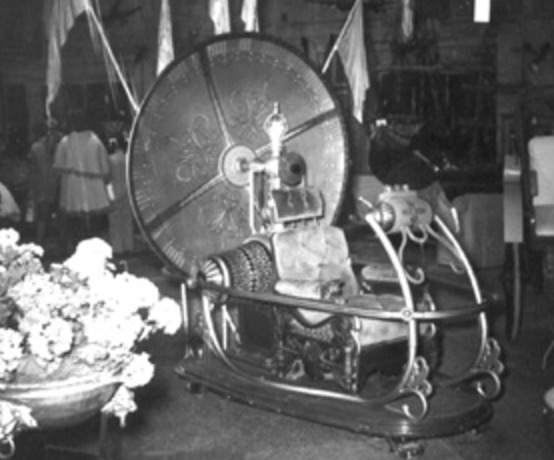
The Time Machine (1960) was one of the first science fiction movies to depict the concept of time travel. The movie consists of a Victorian man, named George, who happens to invent a contraption in which he could travel to the future. His peers didn’t believe he had invented such a thing and thought he was joking. All of his friends laugh it out, while David stayed behind genuinely worried about George’s obscure behavior. He convinces David to time travel and see for himself. They go on many adventures, up to the year 802701. It is very interesting to see how back in the 60s, people thought the human race was smart enough that by the early 2000s we would be able to manipulate time. The theory of general relativity, created by Albert Einstein, predicts that time passes more slowly for objects in gravitational fields (ex. Earth). There are indeed planets in the solar system and beyond that have time distortions but time travel is still far from our reach.
As mentioned in an earlier post, there is a part of interstellar about time dilation. In the link attached, there is a clip from when two of the main characters go down onto a planet for a few hours. They were only planning on staying for an hour or so because one hour on that specific planets surface equaled 7 years in space. However, due to a disturbance the 2 main characters spent multiple hours on the planet's surface. Once they returned to space they realized their comrade in space had been waiting for 28 years for them to return. Although, this is a work of fiction. Time dilation is a real thing that scientists are working on. Going back to the article earlier about quantum technologies, scientists are working on a way to improve our current technology so that we would be able to continue space exploration. This problem is not a top priority since we are not at a time in our technology to have to deal with time flunctiating on different planet's gravitational forces.
The main plot of “In Time” deals with a dystopian society in the year 2169, where genetic engineering and advancement in science has overcome the human biological clock as human stop aging at the prime age of 25. This change ultimately leads to time becoming the currency people use instead of money that segregates society into those that have time and those that do not. This disparity in those “rich” with time and those “poor” with time, surround the main conflict in the feature.
This idea of time becoming a currency is fascinating, particularly due to the present nature of time’s elusiveness. How time is the one commodity that organisms have no control over; a factor that could possibly explain the need for human nature to time keep and origins of the thing itself. The idea that it would turn into a currency that creates societal gaps much like money does now is both daunting and thrilling simultaneously. The idea that we could somehow have enough time to break from the constrains of time. Another aspect of this sci-fi is the overcoming of the human biological clock. This idea “solves” one constraint of time on human existence but since time has become money, when you run out, so does your life force.
All intriguing ideas, but to discuss the feasibility of this future, there may come a time in the near future where we figure out the key to staying young and fight aging and programmed cell apoptosis. But would society really value time in such a way then, why did time become a commodity in this dystopian society? What does time and timekeeping function as then? If you could stay young forever, what does time mean? Removing time restrictions cause happier lives, but this could have ramifications on food resources due to exponential population growth. Does time then function as a population control as well, when discussing the tenants of time, would then our body be the ultimate timekeeper?
Although according to current scientific theories time travel to the past is impossible, it doesn’t stop people from dreaming up what would happen if we could travel in time to the past. Here, the director’s concept of a time machine seems to be specific to that area, using a car as the time machine. ‘Back to the Future’ may seem like just a juvenile movie and a rather light hearted look at the consequences of time travel, it does raise some rather serious points. Humans dream of doing anything and everything, and while the outcome of this movie is positive, it raises the question ‘Should we travel back in time?’ When Dr. Brown is about to be told about the future by Marty McFly, at first he tears up Marty’s letter warning us that we should not mess with time travel. However later, we realize that his curiosity got the better of him and actually saves his life. Time travel (while not currently thought possible or even remotely practical) is still an important question to consider, because it teaches us to think out our actions thoroughly and carefully before we perform them.
The Practical Side of Relativity
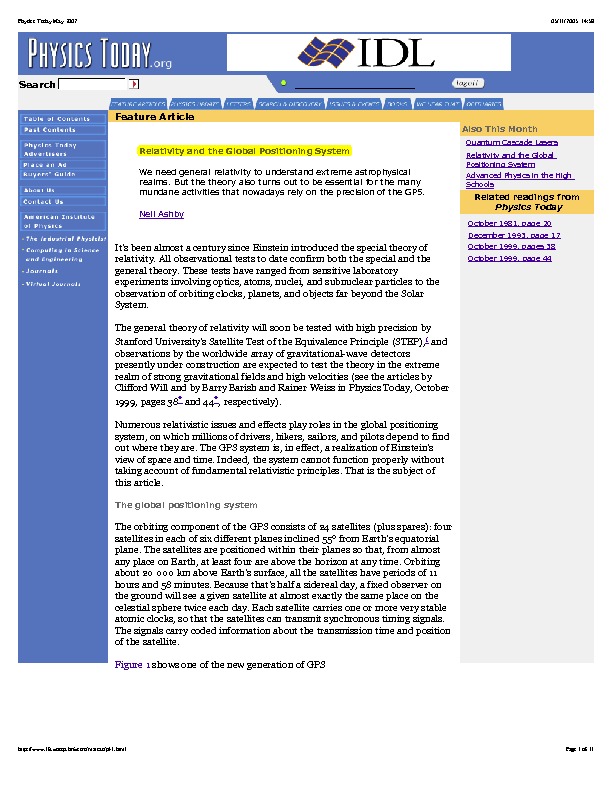
This article describes the necessity of the relativistic model of time and how it makes GPS practical. Within the article it is also noted that in order to track a device to within a 1 meter radius, the satellites require accurate time synchronization. So accurate in fact that if the synchronization of the satellites deviates more than 4 nanoseconds (4 billionths of a second!), you cannot measure position to within 1 meter. This is why high precision time standards are absolutely required for GPS to work. The number of technologies that make GPS possible is simply flabbergasting. We require high frequency electromagnetic waves (often times well into the gigahertz) that can be beamed down to cellular devices, that can pick up such low powered signals. We require time synchronization to a ridiculous level and solid state electronics packed with transistors to make it all possible. If that doesn’t floor you, just think that without the strange and insane theory of relativity, none of this would even be possible. If you thought watches and keeping time was boring, think again! You’ll be amazed to learn how far as a species we’ve come in using the most ingenious methods to achieve the unthinkable.