Cosmetics- Future
The Question of Natural Cosmetics
Appearances and Ingredients
Recent skincare lines have applied a new definition to the term "natural". The latest trend within the beauty industry is incorporating natural products as described in more detail in the Present page and this trend will continue into the future. A No BS blog post reviews an even more modern take on users' appreciation for cosmetics without, as they say, "BS". The brand along with other brands focus on offering consumers fully “clean products.”
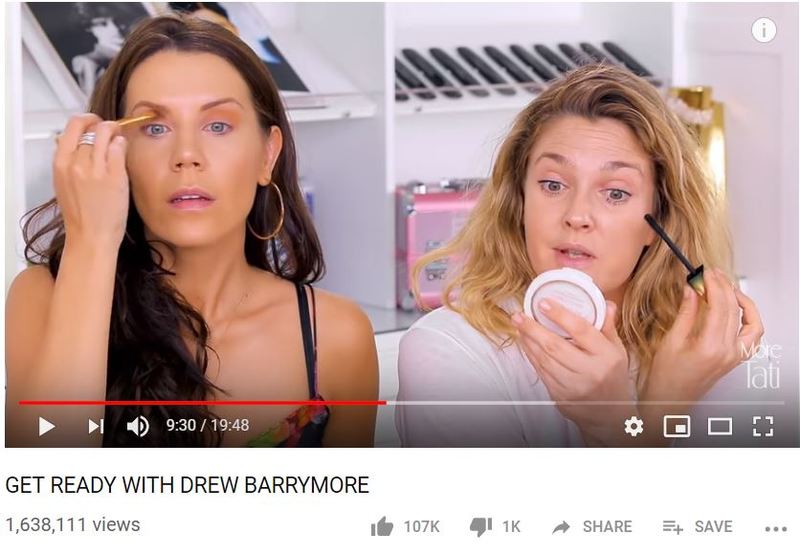
This shift from the “natural look” to a greater freedom of artistry can be seen clearly from social media makeup artists. “Beauty Gurus,” or ”Influencers” on social media sites, who are well known for their beauty reviews and makeup tutorials, are the force carrying makeup users’ voices advocating for ingredient transparency and use of natural ingredients. Large brands take notice of this and create partnerships and collaborations with them. This is an excellent example of user innovation and reflects the true value of user participation within the cosmetics industry. The industry is profit-driven, but must also consider the interests and desires of the public when creating new product. Many makeup companies now turn to influencers, who oftentimes act as a “bridge” for technology transfer. For example, beauty influencer Tati hosts actress and cosmetics company owner Drew Barrymore in a “Get Ready With” video. The two discuss changing makeup trends and how user opinions have assisted in the color evolution of Barrymore’s makeup line.
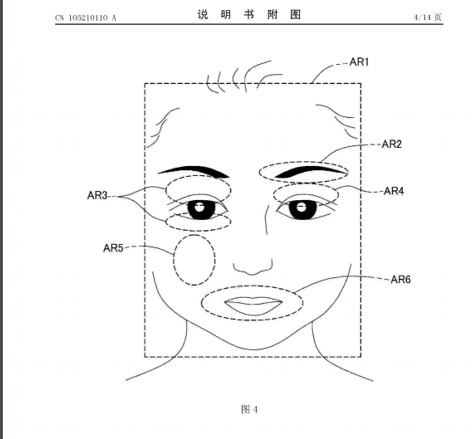
Along with playing with natural ingredients, beauty gurus also attempt to create the most natural looks they can while still using makeup, usually incorporating difficult makeup techniques. A patent created to assist with application emphasizes the importance makeup wearers put into looking a certain way or like a certain person through scanning other wearers' faces and noting how they could achieve a certain look. This calls into question how natural makeup truly can be when users are putting high efforts into looking like someone else. The products can be made of natural materials, the application can look unrefined, and yet, the process of looking like someone else has no naturality to it.
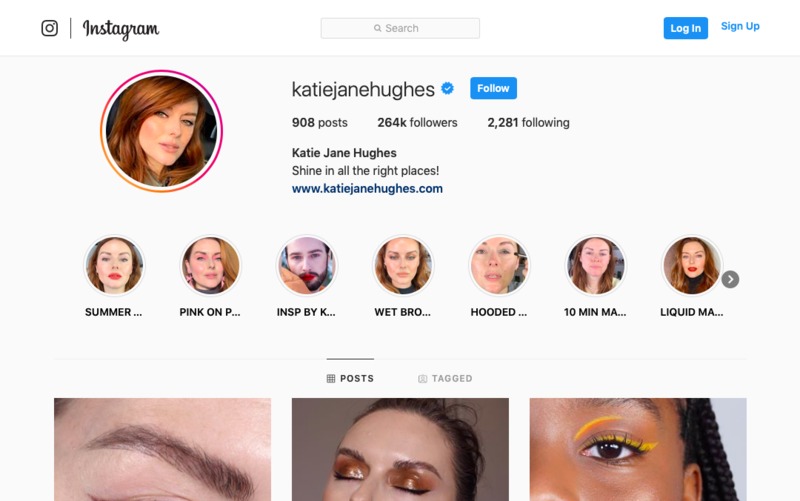
Katie Jane Hughes is a famous blogger and makeup artist who specializes in makeup tutorials on eye makeup. She is active on Instagram and receives many clients who love her work. She lives in Brooklyn New York with her husband Tarek. “I believe makeup is an accessory…One that should be used to make you feel like your best self.” Katie uses many products on her face before she uses any kind of makeup to help her skin and the foundation to settle in. She uses the products interchangeably as well, for example she will put lip gloss on her eyelids to create a shine. Katie also caters to men’s makeup as seen on her Instagram profile. Katie uses social media and YouTube as her main platforms for her blogging and public attention. Katie’s use of makeup is intense and inventive. Her eye makeup especially is very bold and eye catching. Her many different looks attract different kinds of people to her products.
Unnatural Cosmetic Tools for a Natural Life
Makeup gurus have recently been attempting to create the most natural looks they can while still using makeup. Using products that match a person's skin tone is the most ideal and yet, most difficult makeup technique regarding looking natural. Watching makeup tutorials, using other's guides, and trying to look like influential makeup users is fine, but how natural is it? This patent highlights the importance makeup wearers put into looking a certain way or like a certain person. The inventors' goal was to assist those applying makeup by scanning other wearers' faces and noting how they could achieve a certain look. This calls into question how natural makeup truly can be when users are putting high efforts into looking like someone else. The products can be made of natural materials, the application can look unrefined, and yet, the process of looking like someone else has no naturality to it.
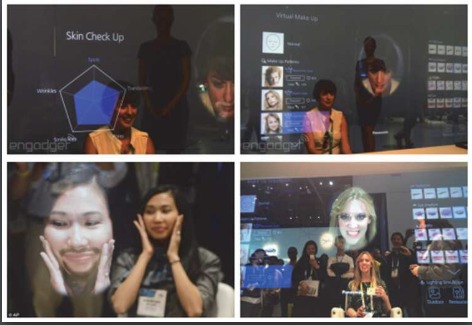
Electronic technology is increasingly becoming integrative in consumer’s everyday life. A Korean patent for a “Smart Mirror” outlines the capability for a voice-activated, facial-recognizing, artificial-intelligence operated mirror that can facilitate consumer shopping of beauty products and clothing by giving consumer a makeup preview of how certain products would look on the face in real-time, provide an easier shopping experience by recommending products and ability to purchase products on the mirror screen, and simply act as a mirror. In the future, this “Smart Mirror” could be integrated with downloadable tutorials of makeup looks or skincare routines that guide the user step-by-step through, or could be integrated with other advertisement information to provide user-targeted advertising. Advancements in “Smart” devices show other countries moving ahead of the United States in terms of innovation, perhaps because of the concern about privacy.
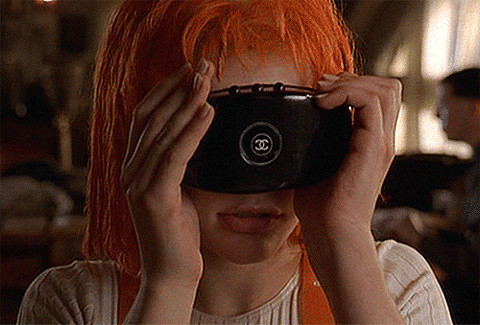
From Refinery 29, the article on “Sci-Fi Beauty Treatments We Wish Existed IRL” talks about several movies that portray makeup in a way the present does not have yet or never will. For example, in the Hunger Games, the character Katniss uses an electrical box that sends a current through her scalp producing untangled, dry and elegant hair within the touch of her hand. This is something completely foreign to anything cosmetic industries have provided us so far. Another example was The Fifth Element: View-Master Makeup, where the character Leeloo puts a Chanel-branded View-Master box to her eyes and it applies the makeup perfectly without any other application process. This seems a little more realistic for makeup to eventually adapt to this kind of technology although it will probably be awhile before we see anything like this. The cosmetic industry is constantly producing new products day in and day out, looking into the future it is quite plausible that some of these unheard of inventions could come into society. Many of them do not make sense, but several of them could potentially be something that makeup producers are already trying to figure out.
The Question of Diversity
A Future of Individuality or Conformity?
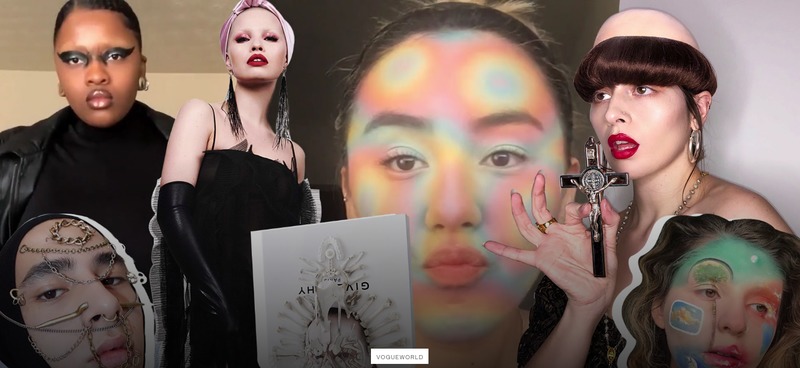
Recently, the cosmetics industry has become a way of self-expression in distinct ways; especially to those often discriminated against in societies. Young artists and individuals are changing the definition of beauty through makeup and applying things to the face. The artists in the article prefer self-expression over the natural look. Most of the artists featured are young, people of color, gender-nonconforming, have had difficulty with their identity in the past, or a mixture of many identities. They used makeup and adorning the face as a way of expressing their individual identity and gain confidence. For them, cosmetics has transcended the American beauty industry’s initial vision of maintaining public image and beauty standards.
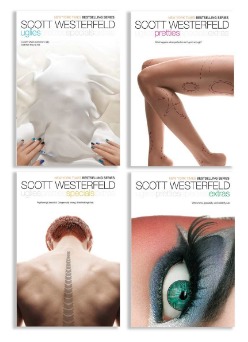
However, beauty standards set by society continue to shape our lives and decide if one is worthy or not. While there has been more call for inclusivity and impartiality in the cosmetics industry as seen above, the future could promise a return to past traditions. In the Science-fiction book series by Scott Westerfeld, the dystopian future requires that all undergo cosmetic surgery once they turn sixteen; where they will turn from 'uglies' to 'pretties' and move to live in paradise. God-given qualities are all considered ugly, even called pigs, thus, pressuring teenagers to be ashamed of their natural looks until they have surgery; all provided for by the government. Strict laws in New Pretty Town strip people of their individualism and personalities. The plot of the story highlights the damage that strict beauty standards have on a society as well as the emptiness one feels if they are image-obsessed, as does the protagonist feels in the novel. Cosmetics surgery in the future corrects any imperfections and transforms one to a perfectly symmetrical face and eyes you can get lost in.

Another work of science-fiction that predicts a future against individuality but towards conformity, is Aldous Huxley’s novel Brave New World explores a future where cosmetic technology has no ethical limit and society stretches the idea of the natural beauty to the extreme. Huxley distorts what we commonly think of as makeup into including the alteration of our genetic makeup. Natural beauty doesn’t exist as people don’t wear color cosmetics to cover up skin imperfections and instant “beauty” can be obtained through preventative measures against aging. In this New World State, babies are made in test-tubes ensuring attractiveness and perfect health, a form of eugenics. Showing signs of aging such as wrinkles or blemishes are eliminated from the equation with encouraged facial reconstructing and powerful drugs. This future is possible given the current climate surrounding aging and beauty. Current day Increased interests and advancements in cosmetic procedures such as plastic surgery and fillers, supplements with claims to increase beauty, and the public desire to maintain the youthful ideal isn’t far off from Huxley’s future technology. However, the book encourages readers to question what is truly natural and what truly is beauty since a bare “natural” face is now artificially made. This book warns consumers about the consequences of the pursuit of perfection and eternal youth. To change this path, the we must challenge the existence of beauty standards towards celebrating differences and embracing the aging process.
Racial Inclusion
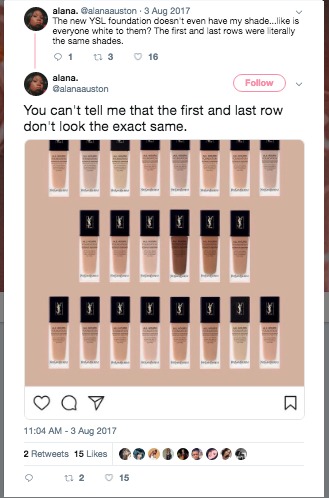
The road to more inclusive makeup brands is far from perfect. Finding the perfect shade for darker skin women is still a struggle. But with the rise of independent brands, it has become a little easier. Fenty Beauty, Huda Beauty, Kat Von D, are examples of beauty influencers starting their own brand and offering a huge range of foundation shades, as high as 40 shades, catering to the often ignored, darker skin tones. On the other hand, high-end makeup brands mostly tailor to lighter skin tones, like YSL Beauty that claims their All Hours foundation suits all skin tones. It could be inferred that they fail at employing lead users, and even more, diverse employees, that could address the lack of darker foundation colors in the industry. They instead mainly focus on features such as waterproof and transfer-resistant foundation. Customers have been verbal in their frustrations on social media, and calling for change in cosmetic brands. The power of consumers has proved effective in this situation as more brands have responded with offering more shades.
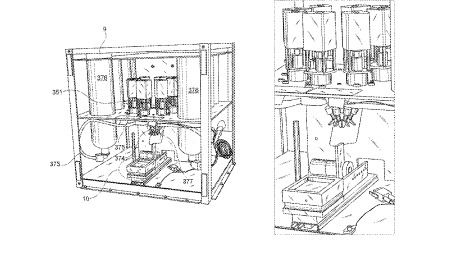
These frustrations could be resolved closer than we think. As we have noticed, picking out the perfect makeup product is a difficult process for non-white or male customers. Largely because finding your true match for foundation depends on skin tone, undertones, skin type, and finish. Every customer is unique in their preferences; whether for bright colors, full-coverage, natural, neutral, one size does not fit all in the cosmetics industry. Thus, in this recent patent, the inventor develops a system that produces products distinctive to every consumer. A Cosmetic Blending Machine for Foundation, Concealer, Tinted Moisturizer, Primer, Skin Care Products, Nail Polish, Blush, Hair Dye, Lipstick and other products. A series of instruments (camera, colorimeter, scanner, etc.) are used to measure the color, composition, and texture of the skin in order to develop the perfect line of products for each customer. This invention aims to solve the struggles of finding the suitable match for your skin, finally having closure in the cosmetics industry.
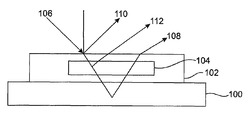
In addition to the above, another recent patent that addresses the difficulty of finding a color match for your skin explores the use of “color cosmetics;” which is basically foundation, concealers and cover-ups for a variety of different skin tones. It provides the invention of a formulation suitable for multiple user’s application. The inventor stresses that finding a color to match a particular skin tone can be challenging, as some of the colors may appear one way in the bottle and look differently when applied. The patent provides “a wide spectrum of different skin tones and undertones, virtually eliminating the risk of application of the wrong foundation color.” This research showed that this formulation with red and yellow interference pigments has the ability to match up to 24 different skin tones. The foundation can be used for olive skin, beige and neutral undertones and provides and brightening effect for these skin types.
Global Market, Global Gender Roles
A majority of recent patents in the realm of cosmetics center around innovations to current, stabilized products. Patent no. CN109464303A, a makeup-removing facial mask, emphasizes past makeup removal methods and their shortcomings regarding skincare. The patent’s description claims that creating a makeup remover mask will limit the amount of product and force a user will employ on their face when trying to remove their cosmetics, which are intended to stay put. In addition to this move towards skincare consideration, many modern patents are based internationally, hinting at both a shift to a more globally-connected cosmetics industry thanks to the rise of social media, as well as an apparent continuation of certain gender standards still upheld in areas of the world in which the makeup is produced. In the case of the aforementioned patent, which was filed in China, this is exemplified in the object’s description, which emphasizes the need for women to wear makeup in daily life and the workplace, and in order to enhance their sense of beauty and self-confidence.

The Question of Sexuality
Sexuality and Convenient Cosmetics
Science fiction gives authors a chance to play around with gender and sexuality, particularly when alien races are involved in the plot. Angelica Gorodischer’s short story “By the Light of the Electronic Moon” incorporates this generic liminality alongside the performance element of cosmetics by depicting a planet, called “Drenekuta V”, that is inhabited by a race that has created “cubicles of compressed air that shave you, peel you, massage you, and make you up.” This depiction of enhanced cosmetic convenience is emphasized alongside an explanation that men on the planet “use makeup and curl their hair and paint their nails”. This not only hints at an idea that males being concerned with their appearance and using cosmetics is a somewhat alien concept to humanity, but also suggests that a culture of convenience and the innovations that ensue will greatly affect who decides makeup is worth their time. A majority of the story focuses predominantly on appearances of the various alien races and how this plays into their character, culture, and responses, sexually and otherwise, by one of the main characters named Trafalgar Medrano. This story provides an interesting look into how cosmetics can adjust perception, and how this adjusted appearance can provide an apparent change in body and gender performance.
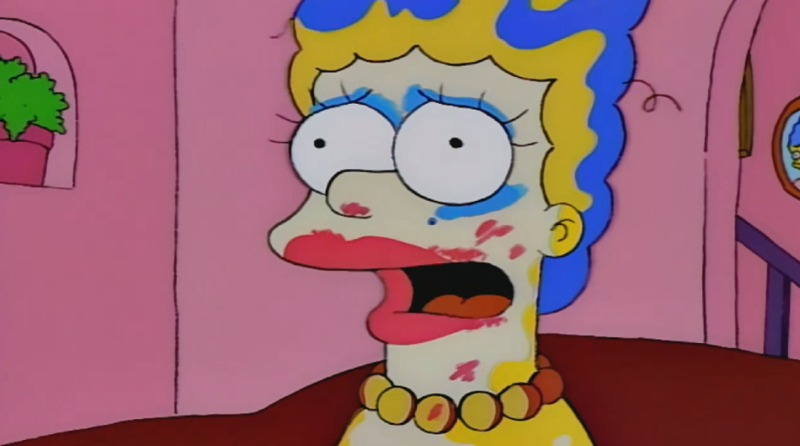
In recent years, The Simpsons has been notorious among social media users for predicting the future. This machine, however, may be a bit harder to recreate than a few political events. In season 10, episode 2 of The Simpsons, Homer creates a makeup gun he markets towards his wife and other women. By inventing this, his vision is that women, when they are running late, will not have to waste time applying makeup the amatuer way, but by shooting it at their faces. When Homer first shoots his wife with his contraption, she gasps at how ridiculous it looks because Homer left the setting on "whore" mode by accident. This serves as a testament to the way makeup can be viewed when applied a certain way or in a certain quantity. Homer's invention is innovative, and it is surely useful in the makeup field. One thing all makeup wearers can agree on is the process takes entirely too much time. For the sake of all makeup users, hopefully The Simpsons has got it right again.