Bread - Present
How to Make Bread New
In the 21st century, society knows what it wants and it wants it quickly. When it comes to grocery shopping, the institution of bread production and consumption has radically changed since the early 1920's era of home bakeries and local production. In this section, you will witness the the transition of consumer bread preference from early artisanal style bread towards the style of mass produced basic white bread that is the trademark of bakery sections in supermarkets for the last forty-five years. Emerging from this idea, the question comes; what do consumers most value in their bread; quality or quantity in nature? The objectivity of bread is ever progressing and the bread of today may not be the bread of tomorrow.
Marketing Nutrition: Making Bread Look Good
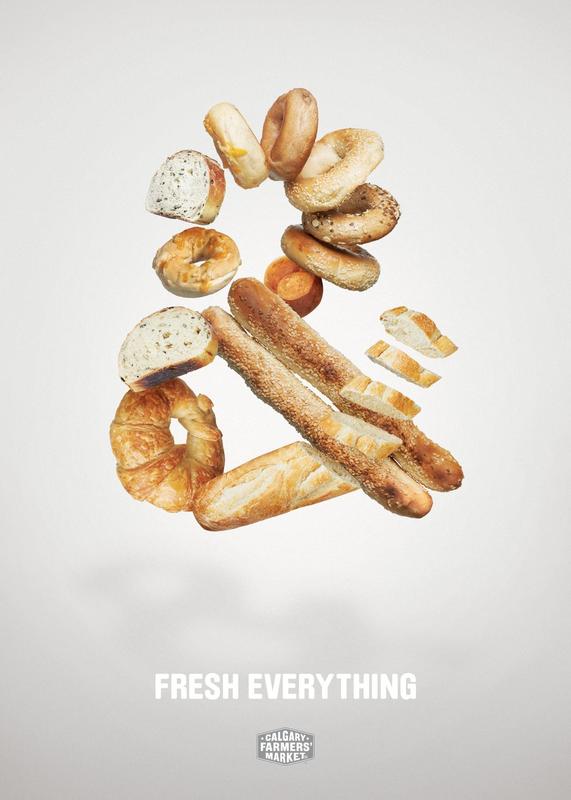
This advertisement created by the Canadian Bakery, Calgary Farmers’ Market, targets the middle-class consumer by showing them what they want to see: no matter what kind of bread product you buy, it is as fresh as can be. Their simple, short, and strong statement of “Fresh Everything” grabs the consumer’s attention, telling them that the goods they are purchasing through Calgary Farmers’ Market are wholesome and made daily. Through strategic use of the well-known ampersand, purchasing breads from this company eliminates the worries that they are buying old, preservative-riddled bread.
Two important and wise marketing points that Calgary Farmers' Market made in this advertisement are 1) the notion that they have so many fresh and different choices for their customers. With all the varying styles, it appears that some bagels are seeded on the outside, some breads have seeds inside and the baguettes have different crusts, one seemingly more baked outside and a different flavor bread inside. 2) None of these breads are packaged insinuating that they are all fresh, which matches with the slogan just below it. With no packaging, it can be assumed that these breads have to be baked daily and then consumed reasonably soon after otherwise they would go stale. If you are advertising the idea that they go stale quickly, it must mean consumers want to eat your products quickly which shows popularity and positive consumer rankings.
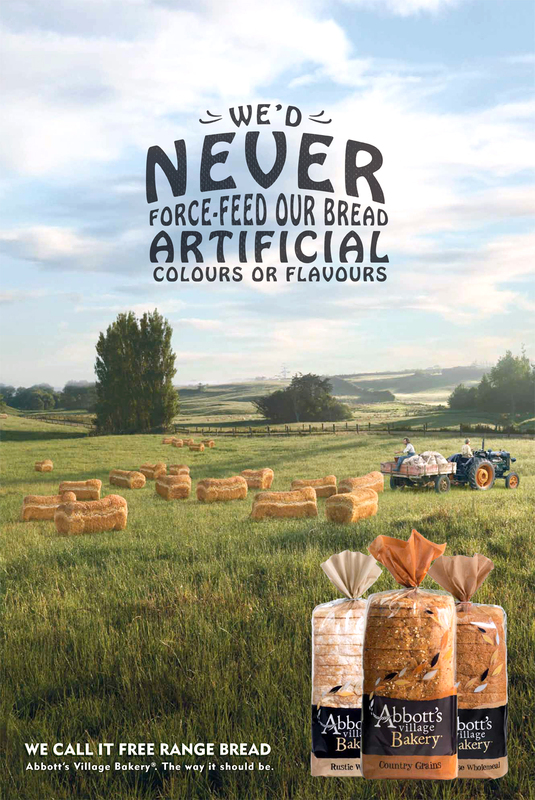
In accordance with the latest fad-diets around, Abbott’s Village, an Australian bread company, debuts mass-produced bread that can finally be eaten by gluten-free and paleo-diet followers. Now, “free-range” bread can be found at all supermarkets and will not require consumers to travel far and break the bank for healthy, nutritious bread. The term “free-range”, normally used for meat and animal products, indicates an all-natural upbringing of the company’s bread. In the world of giant loaves of bread that have similar grazing tendencies to cows, these loaves are “raised” with natural bread ingredients and not “force-fed” artificial colors and flavors.
This ad is brilliant. The marketers know what words will catch the attention of their consumers. Using buzz words such as “free-range” and “never force-feed” calls to the consumer that this bread is as natural as supermarket bread gets. And, in today’s world, natural goes hand in hand with healthy. Also, this picture-esque scenery created by the marketing team – the loaves of bread looking extremely tranquil as they graze upon a lush field of grass, their farmers moving languidly over their land on tractors – tugs on the cultural aspect of “old-fashioned.” This can be translated to the days before bread had all of the “unhealthy” preservatives added to them. There is also a humor aspect to this that is created from the surreal world of the advertisement. This eye catching advertisement is not only pleasing to look at but pleasing to think about. Who wouldn’t want to purchase bread that is labeled as “free-range”?
This advertisement proves that bread is a trend, following the latest fad diets, like the paleo and gluten-free diet. This says a lot about not only the current image of bread in today’s world, but also the class of people that advertisers are trying to attract.
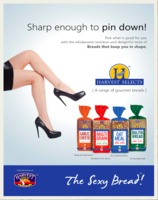
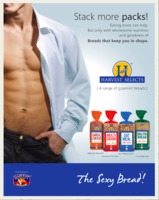
Bread eaters unite! What makes this advertisement particularly catchy and clever? The simple notion turned equation, that sexy people equal sexy bread. This advertisement for Harvest Selects breads made by Harvest Gold uses photos of either a man or a woman in relatively good shape and thus somehow convinces the reader of the ad, and potential consumer of the product, if they eat this bread they too will magically obtain long, thin sexy legs or a six-pack. The ad then specifies by stating eating more nutrient-filled, wholesome bread, like Harvest Selects, will keep you in shape. Harvest Gold believes so much that this bread is as healthy as a wild mustang that they've named this selection of breads, The Sexy Bread! I wonder if this bread comes with a free pair of black pumps and a mini skirt?
Just to point out, the creators of this ad knew several things: 1) their consumer demographics, 2) what word choice would get consumers' attentions, and 3) how to advertise to persuade their consumers. 1) Their consumer demographics can tell a company a lot about who exactly is buying their product. Possibly middle-aged, average weight, American men and women hence the use of "sexy" models to get consumers' attention. 2) Word choice is just as important as the main image, using words like "Breads that keep you in shape" will tell a reader how important this bread is in order to look good. 3) The overall ad, as a whole, advertises to consumers why and how Harvest Selects breads are the right choice, the use of language and images of fit people will stay in the consumer's mind eventually leading them to buy the product.
I feel it’s important to note and commend the marketing decisions of using ads that feature both men and women. Some ads focus on objectifying and sexualizing women, while other ads like Levy's Rye Bread uses many different kinds of men from all different backgrounds, key word being men. Levy's real Jewish rye bread has ads featuring a white policeman, a Native American, a young African American, a mid-aged Asian man, and so on. I suppose only men eat Jewish rye bread. Furthermore, not only are both men and women being represented but just their body parts! This in a way allows the consumer to identify with the person/body in the ad even more because there isn’t a face to the sexy abs or sexy legs. Without a face, these body parts are as if they belong to no one, allowing the consumer to effectively imagine themselves with said abs or legs.
Bakers vs. Supermarkets
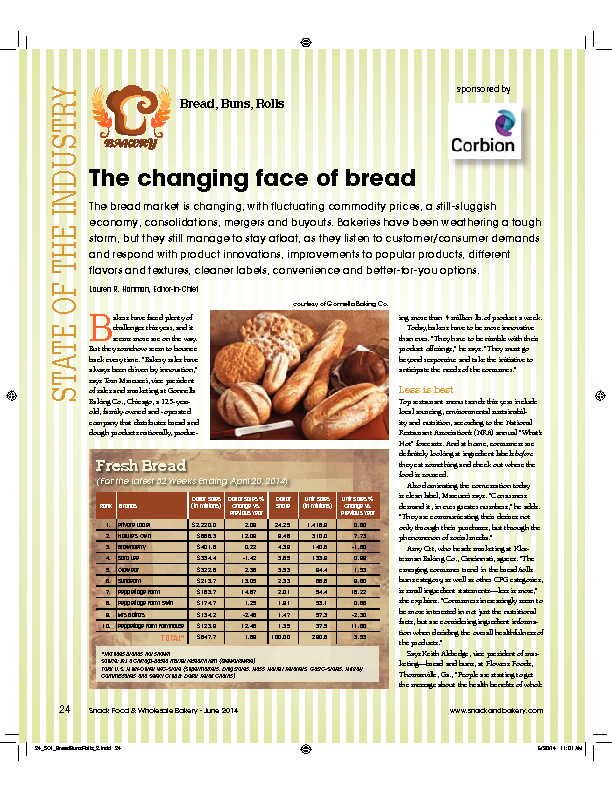
As seen by the title, this article, found in Snack Food & Whole Sale Bakery, discusses the new "face" of bread and how it is a changing commodity, giving advice to bakers, restaurants, and other producers advice on the new trends of bread.
This article starts off strong and sets the mood with a powerful statement made by the vice-president of a 125-year old bread distributor in Chicago, Tom Marucci. He states that "'Bakery sales have always been driven by innovation.'" The article then goes on to explalin how bread can always be seen as "new", as long as it goes along with the fashion of the times. Each section has advice for distrubitors on not only what kind of bread to produce, but also about the best looking packaging.
This article written by Snack Food & Wholesale Bakery discusses the changing consumer trends in respects to supermarkets campaigns to sell pre-packaged bread versus artisanal style fresh bread.
The article is split into two major sections; 'Trend Overlap' and 'Looking to the Future'. 'Trend Overlap' focuses on the idea that, "The demands of traditional breads that once drove growth in the industry have been replaced by new products such as cleaner-label, organic, gluten-free and artisanal bread solutions". The movement detailed here is describing the idea that consumers are no longer proponents of seeing shelves and shelves of factory labeled bread used merely as place holders to show consumers that supermarkets simply have that much bread. The transition of consumers is moving society towards favoring bread that is freshly made each day and so must be sold that day because the outside factor concerning fresh bread versus pre-packaged, are that fresh breads have benefits towards the environment, GMO stances and gluten-free consumers.
The second section, 'Looking to the Future' describes what corporations like Cobbleston Bread Co. and Nature's Own plan to do to stabilize their sales while transitioning parallel to consumer trends that appear to be preferring artisanal breads that put pro-environment and anti-GMO stances. In an overview, companies seem to agree that greater attention shouldbe paid to ingredient lists and how to best market the artisanal style bread that these companies already are producing.
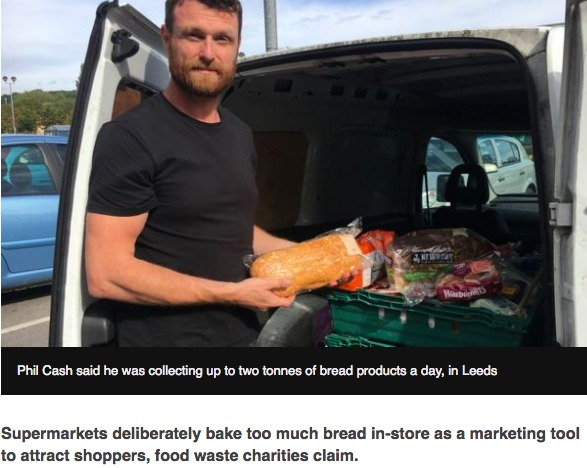
Ironically enough, supermarkets continue to use breads as placeholders because it works as a means to boost sells. It seems there are two types of supermarket consumers, those who want to see more “organic” and “gluten-free” labeled breads and those who just want to see stocked shelves. However, stocked bread shelves not only boosts bread sells, it boosts sells in general. Jay Unger proves just that in his short article for BBC’s Online News about supermarkets and the way they use bread for marketing. These supermarkets are constantly denying the allegations of over-production of bread as a ploy to boost sells, however a food expert stated, “bread is used as a loss leader in a bid to emphasize the value of higher-priced items” and that they are used because they are seen as “mark of quality and freshness”. Unger further goes on to expand this idea by stating that overstocking bread is using food like Christmas decorations as a marketing tactic.
What is it about bread that makes it so attractive? Could it be that its cultural and ancestral linkages make it a very sought-out for item? Or is it that it just happens to be an item that is relatively cheap or cheaper than many other staple items such as milk or cheese.