Cosmetics - Present
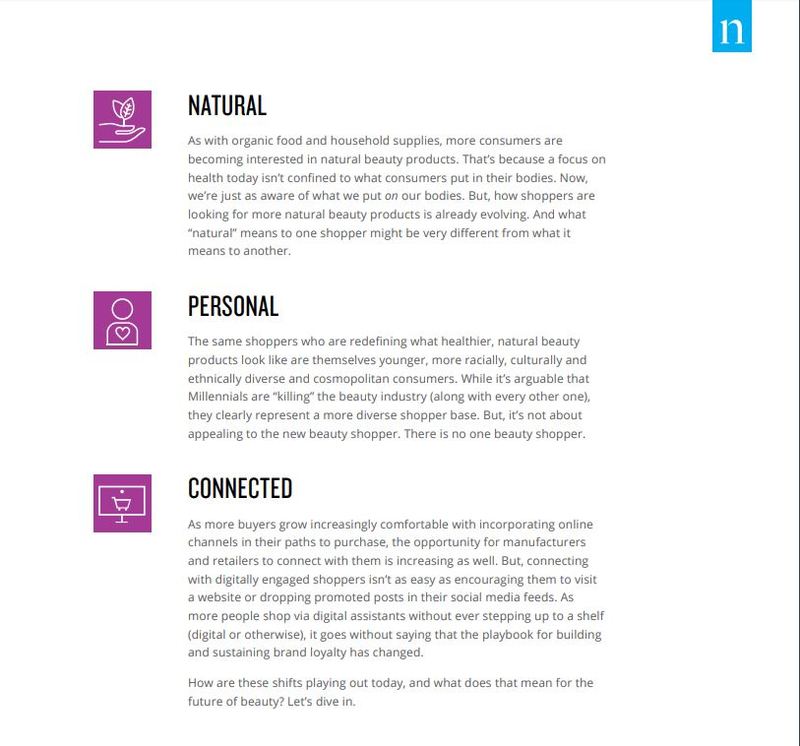
The present state of cosmetics may not be easily summarized when the surplus of relevant social groups are taken into account, but many manufacturers have attempted to focus on the consumer’s evolution of desires when developing and advertising their products. Nielsen’s “The Future of Beauty” report was released in early 2018 and outlines three main consumer desires to be monitoring and monopolizing on in the beauty community. The first is that of a natural approach, and the report emphasizes a rise in consumer awareness of both what they are putting in and on their bodies. The report suggests that cosmetics companies should consider the varying definitions for what is natural and take them into account when producing and advertising their products. The second approach is that of a personal one, focusing predominantly on the inclusivity of individuals from all races, genders, and backgrounds. This ties directly to the rise of a wider cosmetics consumer base alongside the advent of social media, which introduces the third (and final) focus of an evolving consumer base. More specifically, this focus is on the more digitally-literate consumer pool, from which a majority of questions of inclusion, advertising, and manufacturing methods have arisen. These three foci are analyzed and explored in the artifacts mentioned below, providing answers to the question of inclusion and purpose for the modern makeup consumer.
The Question of Diveristy
Racial Inclusion
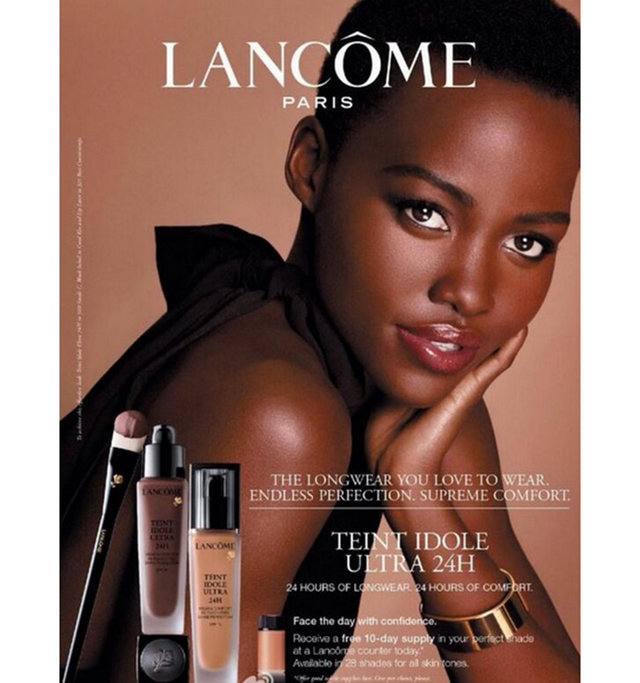
Racial disparities have been highly visible in the cosmetics industry. Beauty standards have been whitewashed for generations before, fashioned by the white businessman who profits off of women’s desires to reach unrealistic beauty. Subsequently, dark-skin tones were not only absent from the product market, but the modeling too. The following advertisement presents the new Lancôme long wear foundation. The model has dark skin; something that was not commonly seen in cosmetic advertisements or even products. Black women suffered when trying to find their foundation color or products that work with their dark complexion. Only recently has the cosmetic industry started to accommodate to the needs of Black and Brown women; a huge market all across the world that was overlooked. The advertisement assures this by stating the foundation’s availability in 28 shades, for all skin tones. Moreover, it attempts to solve the problems of wearing makeup as a working woman. Previously, makeup, such as foundation, would either wear off in the midst of a 9 to 5 workload, or cause huge discomfort for a woman. This foundation however, claims to offer the solution to the at while functioning as a high coverage foundation; stating phrases such as “Longwear,” “Perfection,” and “Supreme Comfort.” Like all cosmetic advertisements, this one appeals to the female desire to be confident and beautiful. Using a beautiful actress, such a Lupita Nyong'o, and using words like “Confidence” is sure to accomplish that goal.
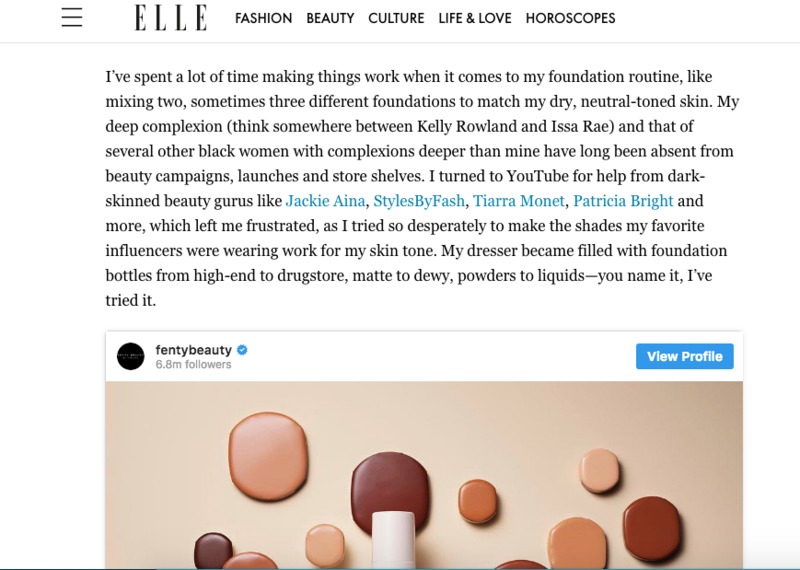
Furthermore, while new campaigns and feminist movements have shaped new beauty standards, the huge market that is darker skin women remains overlooked. The following article conveys the feelings of black makeup artists and influencers still struggling with finding their right shade of foundation. Makeup brands have once again proved that the industry is whitewashed and beautiful is being white or light-skinned. Instead, the industry has viewed black women features as a trend, “why wouldn’t you showcase a black girl with full lips before you showcase someone else with lip fillers?” Not only are makeup brands not catering to darker skin tones, but they also rarely represent them in advertisements. Other makeup brands launch unresearched and unsuccessful darker tone makeup merely to claim diversity. However, black-owned makeup brands have begun to emerge and successfully accommodate to this huge existing market.
Origins of the Inclusivity Movement
As seen above, part of the reason behind the push for diversity is the increased relevance of social media. Sites like YouTube and Instagram lend pathways for “Influencers” to express their love of cosmetics. YouTubers with large followings such as Jackie Aina use the platform to draw attention to lack of color diversity in face products like foundation, highlighters, and various powders like blush or bronzers. As soon as a cosmetic brand launches a new collection, consumers instantly scrutinize it and share their thoughts amongst themselves. In the age of social media, people are informed and make quick decisions. By failing to keep up with consumer demands, brands risk backlash and losing a lot of money. There are so many cosmetic brands existing now than ever before, so if a brand loses their reputation, consumers have the option to choose others brands or entirely boycott a brand for lack of inclusivity.
Including Age
As makeup trends have become more inclusive of race and gender, the question of age appears often. One stage of womanhood is reaching an age where a girl gets to wear makeup. What age is the “right” age for kids to start wearing makeup? Riley references a recent uproar from a mom blogging about her four year old’s interest in makeup. From this, many anecdotal and psychological evidence has appeared as backlash. The question of what impression this could give a child is of utmost concern. The other side is that all kids play like they are older. Additionally, this can be seen as an example of monkey see, monkey do, where the four year old merely does what she sees her mother doing. Varying opinions about when makeup should be offered to adolescents continue this debate.
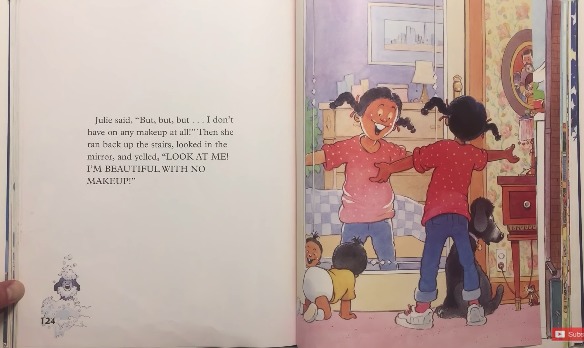
In the children's book, Makeup Mess, the author attempts to teach girls to embrace their natural beauty without the use of makeup. Julie, having saved her money, is excited to be able to buy makeup and become as beautiful as a movie star. This impression that women should work to hide every imperfection instead of embracing them. As Julie paints her face, she slathers on layers of makeup products. Society sets unrealistic expectations of girls and beauty, leading them to the idea that they have to wear makeup in order to look beautiful from an early age. In the end, Julie realizes that she is beautiful without having to wear makeup.
The Sexuality of Cosmetics
Sexuality in Advertising
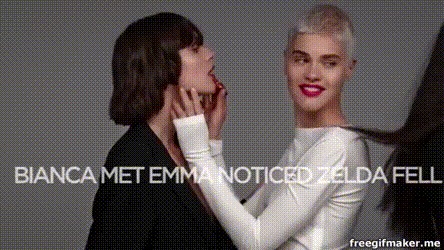
This advertisement is an excellent example of an underlying sexuality prescribed to users of cosmetics as well as cosmetics themselves, particularly that of lipstick, which is typically associated with more amorous or outright sexual acts. The new Tom Ford “Girls Lip Collection” is introduced by a series of models interacting with each other in a somewhat suggestive manner. The models’ actions reflect the scrolling text in the foreground of the video, which is a run on sentence involving a chain of actions done to the next person in line. The product being advertised, while featured, is not the first thing to catch a viewer’s eye due to the small size of the lipstick tube as well as the suggestive actions of the models themselves. As an advertisement for the technology itself, the video seems relatively ineffective, however when the stability rate for lipstick technology is taken into account, it is understandable that Tom Ford, the cosmetics company, would choose to use a less informative and more racy, eye-catching form of advertising.
Sexual or Natural?
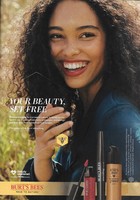
Contrastly, brands occasionally choose to portray people by using subtle imagery to change the narrative about sexuality, which invokes a more natural mood in the advertisement. This is done through campaigns for the “natural look”, which feature carefree women in natural outdoor settings. Advertisements with more animated appeal contrast the natural agenda with images of women in red lipstick and graphic eyeliner. These women are posed looking at the consumer with a sultry stare in a human-manipulated environment (e.g. ambiguous black surroundings or urban cityscapes).
Subtlety and Sexuality in Gender
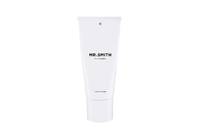
Another way cosmetic brands have pivoted the sexuality conversation to being more subtle is by emitting subtle product lines. The creator of this advertisement assumes that men will be using their product. Conventionally, women were the only ones wearing foundation for recreation. This advertisement accepts and, even encourages, that men use makeup products in this way, too. Mr. Smith proposes a solution to the problem of gendered (mostly women-centered) cosmetics. Not only does the name imply it can be for men, but the neutral colors of the packaging also support this theory. This product defines cosmetic technology by breaking boundaries. While makeup brands tend to market towards women, Mr. Smith proves how progressive it is. The purpose of this brand and its advertisement seems to be to prove: “Times are changing, and so are we”.
In contrast to this subtle suggestion of gender-inclusivity, the aforementioned Tom Ford advertisement (pictured above, Sexuality in Advertising) is more outright about the inclusion of male models in the sexually-laced fun offered by the product advertised. Within the advertisement, there is a moment in which one of the female models is seen applying lipstick to the male model next to her, which may allude to a revolution within the cosmetics and gender community concerning societal acceptance of male-identifying persons who choose to wear makeup. Gender-inclusivity in cosmetic advertisements, while a relatively new concept, appears to be a highly effective indicator of the changing purpose, and resulting view of makeup to society as a whole.
Protecting the Body and the Environment
Alongside the movement for a more natural look, cosmetics users have recently expressed more concern about what products they are putting on their body. A product could be considered natural with just a small percentage of natural ingredients, and allow the company to market the item as such. This may mislead some customers to pay more for a product that claims to be all-natural without truly being natural at all. While some moves have been made to reimagine the legal requirements of an all-natural product, cosmetics companies have still managed to find loopholes using new and different buzzwords to market their chemically-rich products as completely natural. Additionally, the FDA is not authorized to approve cosmetic ingredients although certain ingredients are allowed in small quantities. Because of this, consumers have responded with the “Clean Makeup” trend which focuses on consumer knowledge of ingredients.
The cosmetic industry predicts that the next five years will be a focus on sustainability as a result of consumer demands for environmentally responsible goods. Whether this is done by eliminating waste altogether or reducing the amount of waste, adopting new policies and investing in waste-reduction packaging is seen as a necessary must for pre-existing larger brands. Indie brands, however, have some advantage over the larger brands due to being built around ethics and environmentally-friendly practices at the start. Some cosmetics brands have made efforts to dramatically reduce waste.
The Question of Natural Cosmetics
The Natural “Look”
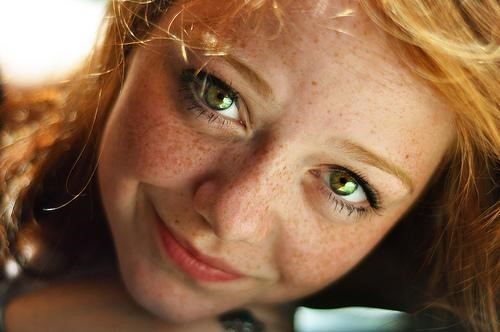
The current “no-makeup” trend emphasizes beauty without makeup. Some consumers, particularly those following the current body-positivity movement, advocate against the use of editing softwares in brand advertisements and for the use no makeup as the preferred, more beautiful alternative to visible makeup (colorful eyeshadow or liquid liner). Cosmetic brands have noticed this trend and have switched to marketing the “no-makeup” look which allows them to stay relevant to the changing consumer sentiment while still pushing sales. The ultimate goal of the company is to sell product, not to challenge the definition of beauty as what the Body-Positivity Movement focuses on.
To conclude, the question on diversity in the cosmetics industry has somewhat subsided with how many companies are producing makeup products for every skin type, yet the inclusivity still remains a question in debate. Makeup for darker skin tones is less available for the consumer and less represented than lighter toned makeup. There are companies that are producing successful darker tones of foundation, some of which are only producing them to claim their diversity in production. When looking at age, children in our society have started to wear makeup at a much younger age than they had before and this raises another discussion on when is the appropriate time for children to wear makeup. This will ultimately be the question and decision for parents raising the children and when they find it acceptable. In some cultures it is customary for children to wear certain kinds of makeup whereas to other cultures it may seem appalling for young children to do so. Looking at the second area of discussion on sexuality, today’s society is much more accepting and open to sharing cosmetic products between sexes therefore making the market inclusive. Also, using sexuality as a way to attract the attention of viewers is also seen to be effective simply on account of the fact that sex sells in the market. This is seen through the use of sexy, attractive models portraying the products to the consumer. Lastly, looking at the natural versus cosmetic look has been seen through companies trying to cater to the new movement of ‘natural is the new beautiful’. This has provoked producers to create makeup that does not “cake” the face or make it obvious the user is wearing makeup. Furthermore, companies have now started to consider what chemicals and substances they are putting into their products, making sure they are “clean” products. All of these topics are still widely discussed, but there are now so many options for cosmetics in today’s society that most consumers will find a company they like the most based on their personal needs and ideals.