Cosmetics- Past
The Question of Natural Cosmetics
The first signs of makeup techniques can be seen from the Egyptian and Roman Era. Women often used white lead to whiten their face and hide imperfections, despite its toxicity. Then, in the early 1900’s of the United States, color cosmetics were called paints for the face and were discouraged. Cosmetics was instead focused on maintaining clear, even, and healthy looking skin with no makeup except to cover perceived flaws. Blemishes were thought to come primarily from poor hygiene. Clear luminous skin indicated proper hygiene and good health. Skincare involved applying oils, taking baths, and cleansing the face, and applying balms. This is both similar and contrasting to present day rhetoric where the “natural look” is deemed beautiful. Now, however, makeup is used on clear-skinned people, all actors/people on camera, and anyone who is performing on a stage with bright lights thus altering the standard of beauty.
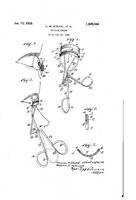
Tools for "Natural" Beauty:
Natural beauty was also impacted by the development of cosmetic tools. Eyelash curlers, created in 1928, gained more popularity in the 1930’s and were marketed as “not a cosmetic” device to enhance a woman’s beauty. The marketing of this product draws the question of what cosmetics is; cosmetics could be defined anything to enhance facial beauty, including tools. The eyelash curler appealed to the consumer who might not want to jump aboard the use of makeup trend or valued the enhanced “natural” look.
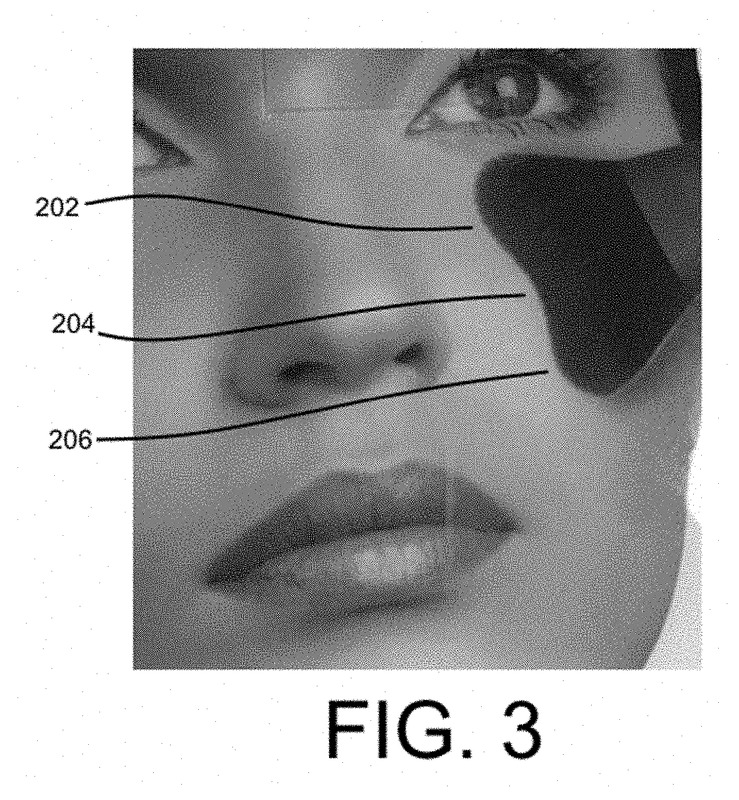
Contouring has been a known phenomenon since the 1940s. It offered a new way of applying makeup to the face, providing each user with a unique look. The technique of contouring is putting different shades of makeup (lighter to darker) on individual parts of the face. Each face requires a different treatment because people have completely different facial structures. The brush used for contouring is called the “dual makeup application” brush. This brush is designed to cover three different areas of the skin for the full contour look. This includes highlighter on the top, blush in the middle and bronzer on the bottom. The bristles on the brush are made of synthetic material that are flexible and provide a comfortable feel to the face.
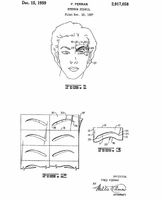
Stencils for makeup application, while increasingly common in current cosmetics marketing trends, have been prominent since the early 1900’s. A 1957 patent for an eyebrow stencil outlines the intended purpose for the stencil alongside asserting why a stencil for one’s eyebrows would be a novel, not obvious, and useful product for women to use in their cosmetic routines. A stencil for any object implies that the user desires uniformity, and this can be seen in a majority of makeup trends from both the past and present. This desire for clean and airbrushed perfection on the made-up face alludes to a greater societal beauty standard for one’s presentation when cosmetics are used, even if currently, makeup appears to revolve around impressing the individual wearing it. The concept of natural beauty was partially defined and revolved around how symmetrical a face was in conjunction with skin clarity.
Natural, or Cover-up?
Grease paint, aka foundation, has been a major contributor to the makeup industry. In the present day, we often see ads advocating for women to embrace their natural selves, whether marketing makeup or not, with models or actors wearing foundation to even out their complexion. The creation of grease paint allowed for easier application. The previous products required multiple rounds of skin-massaging before the paint would actually stay on. Additionally, because of the layered application, the paint would feel thick on one's face. This inventor sought to supply the beauty gurus with an easy-application, quick-application, and lightweight face paint they would love.
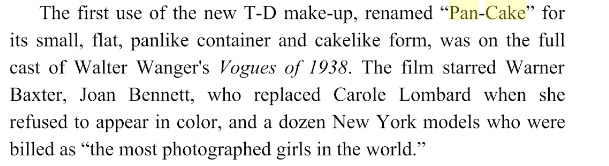
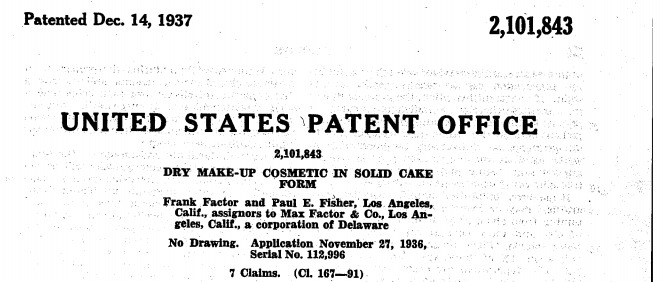
Eventually, with the introduction of technicolor in the 1930’s, previous foundation formulas appeared unnatural on screen. Hence, Max Factor Co. one of the leading figures in the cosmetics industry, developed a water-based formula that was pressed onto the face and created a more natural finish. The name ‘Pan-Cake’ is linked to it being powder pressed into a cake and packaged in a pan. However, now, cake makeup is a common phrase defined for someone that slathers too much makeup resulting in a ‘cake-face’ or mask-like makeup; giving the face an unnatural finish, and altering the use of the term ‘cake’ with cosmetics.
Max Factor Co. then filed for a patent for his formula for pan-cake makeup in solid cake form. Moreover, it states that the invention is mostly suited for actors in the film industry, but may be used in the streets by the general public. The product however, was too dark for wear in public; as needed by the powerful lighting of Technicolor. Max Factor refused to create more lighter shades for appropriate wear in public as he did not intend for this product to be used by the general public, but his son had other ideas. Frank files the patent with mention of the suitable process they developed for general-use Pan-cake makeup, as the demand for it increased within the public having seen the enhancement of beauty it gave actors on the screen. The invention of the Pan-cake and the more natural-looking makeup, we see the transition of its use from only actors/models to the general public.
Consumer Awareness
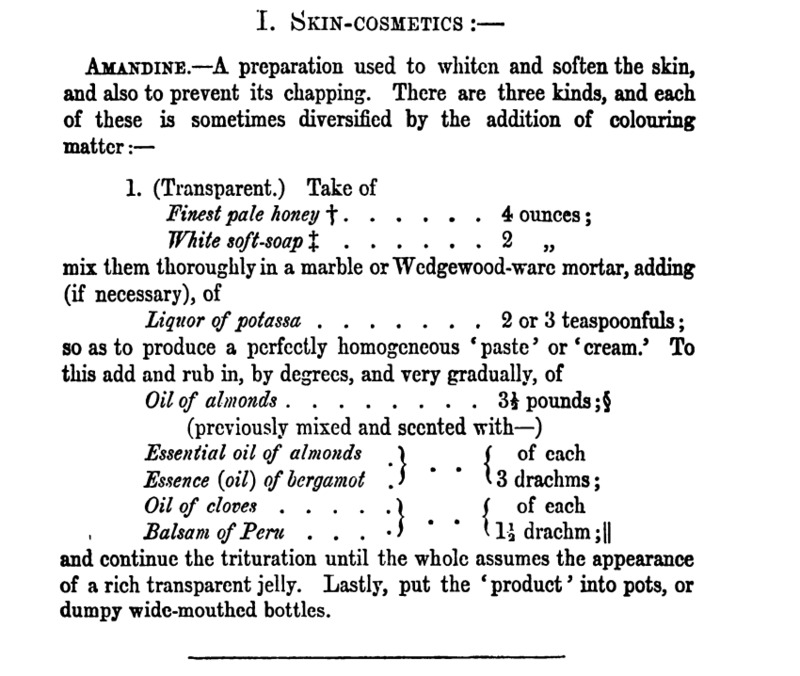
Cosmetics were also considered a health topic and was beginning to be examined scientifically during the early 1900’s. Thus there was knowledge about harmful ingredients.
Soon, cosmetics became popular amongst a wider scope of social groups. In response to this increase, many beauty-based manufacturing publications began tackling the producer’s awareness of product ingredients with “instruction manuals” that outlined the chemical and active elements of most popular makeup, while cautioning readers of certain risks they may pose. In these guidebooks, there was a significant lack in emphasis on keeping the consumer informed on the more negative effects use of the product may have. This seems to be relatively standard when the time period is taken into account. In contrast to this, however, the emphasis on caution both in the title of the manual and within individual ingredient lists suggests that alongside a rise in widespread cosmetics usage, there was also an increasing movement towards complete knowledge of what effects a product would have on a consumer’s internal and external wellbeing.
The Question of Diversity
Racial Inclusion
One of the main issues regarding race in the cosmetics industry, is the base and starting point of any makeup look; Foundation. It has come a long way since its early uses in Ancient Egyptian and Roman times. Initially used to hide imperfections and give the face a fair look using white lead, the practice continued well into the Middle Ages and Renaissance with Queen Elizabeth I being a common user of lead makeup to whiten her face. Hinting that the function of makeup was to whiten the skin and emphasizing that white was beautiful, and dark was not. Subsequently, the toxic nature of white lead steered the changing of the ingredients used for foundation in the nineteenth century.
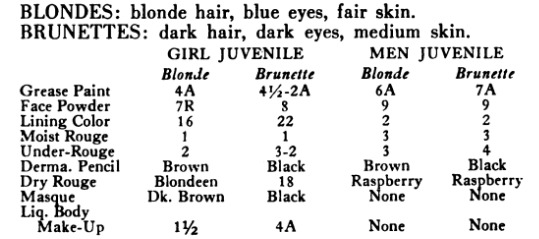
As seen above, makeup techniques have been around since the Egyptians, however, the start of the cosmetics’ industry in the United States did not appear until the start of the 20th century. One of the significant figures in this industry is Max Factor. The consistency of the greasepaint formula limited its usage to actors in film. In addition, the social construction of greasepaint excluded the general public. While Factor offers steps to the application of a straight stage makeup, the preference for lighter skin can be detected. When offering tips on shades for different skin tones, the only races that appear were Blonde and Brunette; (light to medium skin). Restating the common social ideal that white was beautiful and anything darker was ugly. Also implying the absence of Black actors in the industry. Then again, the 20th century proved difficult for darker skin women to wear makeup.
Age and Sexuality in Cosmetics
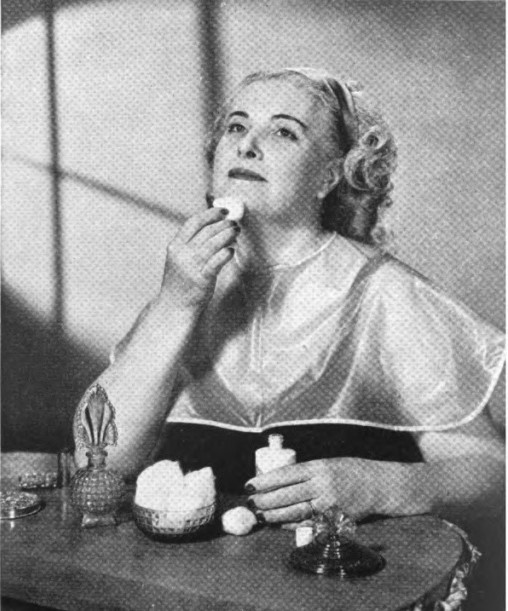
This glimpse into women’s lives in the early to mid-1900s aids in the identification of makeup’s change over time. This change can be seen in use, product, application, and ideation. The author notes that when a woman is in her forties, the time has finally come for her to wear makeup. In our current culture, this is obviously not the trend.In today’s age, most start wearing makeup in their teenage years. In this reading, though, the time for makeup was not until a woman had reached her forties. There is still this question in makeup about when someone can use makeup and if there is such a thing as “too young” for makeup. One important distinction made by the author is that “there is a shade in all makeup accessories to match any skin tone”—interesting because this was most definitely before the time of African-American-makeup-consideration (McLeod, 64). This ties into the difficulties of finding diverse makeup shades that was highly prevelant until the recent inclusivity movement. Makeup is more inclusive now, even though they found it fully inclusive before.
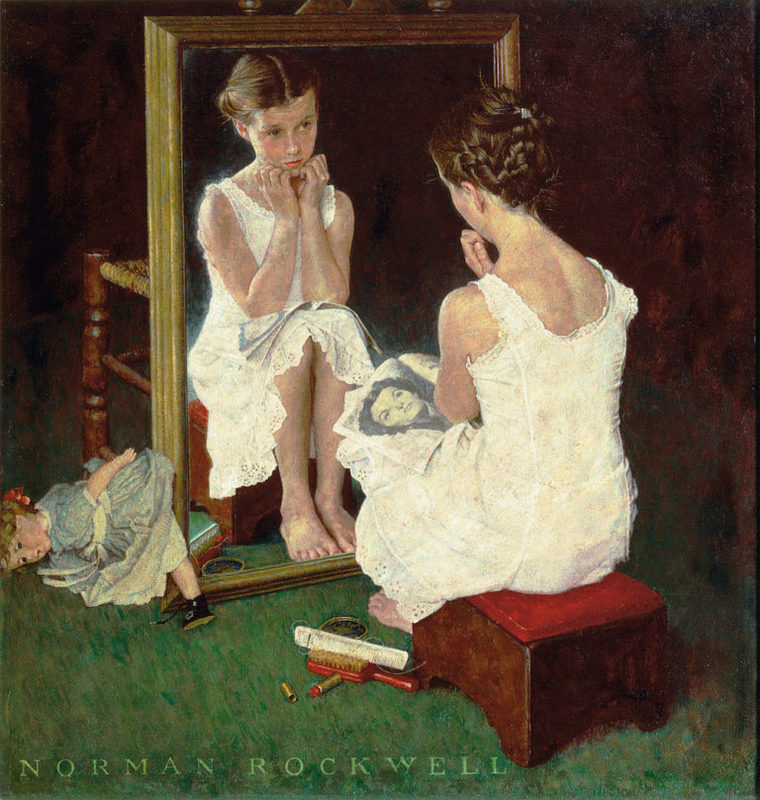
Norman Rockwell’s painting of “The girl in the mirror” depicts a young girl looking at herself in the mirror, not fully clothed, with a pensive and even slightly sad look on her face. The painting is intended to portray a girl transitioning into adulthood, yet not fully prepared for it, or excited about it. Also present in the painting are a brush, some makeup on the floor, and a doll. The girl also has a magazine on her lap with the page open on a photograph of the famous actress Jane Russell, who was known for her beauty, looking up at the girl. This is an interesting thing to note about the artist’s intentions with this painting and what he was trying to communicate about a young girl assessing her own beauty as she grows older, with the assistance of cosmetics. The little girl is caught somewhere between childhood and womanhood. It is thus an important depiction of a girl’s decision to try makeup and ‘become a woman’, a decision some girls make when they reach a certain age. The painting is an accurate depiction of what many girls feel at her age, contemplating their beauty and charm in a mirror, beginning to use cosmetics to enhance their features, and perhaps mourning the loss of their childhood in the process. This painting is from 1954, roughly 70 years in the past, and yet it still communicates something that resonates with modern viewers as it holds true in the modern world. An interesting thing to note is that in the modern world, some young girls make this transition that is depicted in the painting at an even younger age than the girl in this painting, a phenomenon that reflects changes in culture as well as in the cosmetic marketing industry.
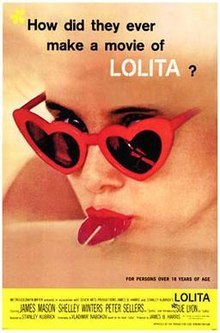
Lolita (1962) tells the story of Humbert Humbert, a middle-aged academic, who develops a sexual obsession with a young girl, Dolores Haze (called Lolita by Humbert). Marketing of the movie exploited its own controversy over hebephilia through the use of the tagline, “How did they ever make a movie of Lolita?” above a suggestive photo of actress Sue Lyon as Lolita. In this promotional image, Lolita’s body is edited out leaving her face and arms bare, thus suggesting nudity. She appears with red heart-shaped sunglasses, red lipstick, and a red lollipop up to her lips. These pops of red stand out, drawing the viewer to become intrigued about her. The movie, told through Humbert’s perspective, paints her as the encapsulation of the maturity of womanhood mixed with the innocence of childhood. However, her appearance of maturity is a performative act achieved by wearing makeup, clothes, and demeanor. These performative acts of womanhood combined with her precociousness leads her to men who apply toxic masculinity to objectify her.
Both movies give an insight into attitudes about sexuality, age, and agency during this time period. Lolita (1962), for example, perpetuates the connection between sexuality and makeup as well as ideas of toxic masculinity. It shows an alarming trend in film of older men preying over underage girls using the excuse of “the child’s maturity” to justify their behavior. This is also portrayed in Pretty Baby (1978) where a young girl works as a prostitute, wears heavy makeup, and is used as an object of men’s pleasure. However, maturity and womanhood can be performative play. Makeup, in the case of Lolita, is shown as both a carefree, explorative act, misinterpreted through the lens of toxic masculinity as consent and maturity. The use of cosmetics, seen before as an indicator of a sexual availability, when worn by a prepubescent child, confuses men sexually as they subscribe their preconceived idea of makeup and maturity to the child. This confusion and controversy it brings urges society to learn that makeup is not solely for the male audience, but rather a personal expression of femininity. However, the viewers aren’t given the viewpoint of the girls
Gender Diversity
Before the rise of makeup-wearing movie actors in the early 1900s, expressive male makeup could be seen through other acting-based platforms, most notably that of the theater. Many newspapers and periodicals from the late 1800s provide mention of men wearing makeup in reviews of performances. An 1868 column from the Australian periodical “Sydney Punch” briefly mentions a male actor’s makeup use within a highly positive review of the performance in question. The actor, “Mr. Hoskins”, is said to have worn makeup “as artistic as his acting”. Theater makeup has long been an area within cosmetics that the male population has been allowed into, due in part to the early western theater tradition of male-only performances. While this specific instance was not hypersexualized, there have been many instances within the theater where males have used the opportunity to play a different role to the fullest; in many cases, this can be seen reflected in the makeup one chooses to wear on stage.
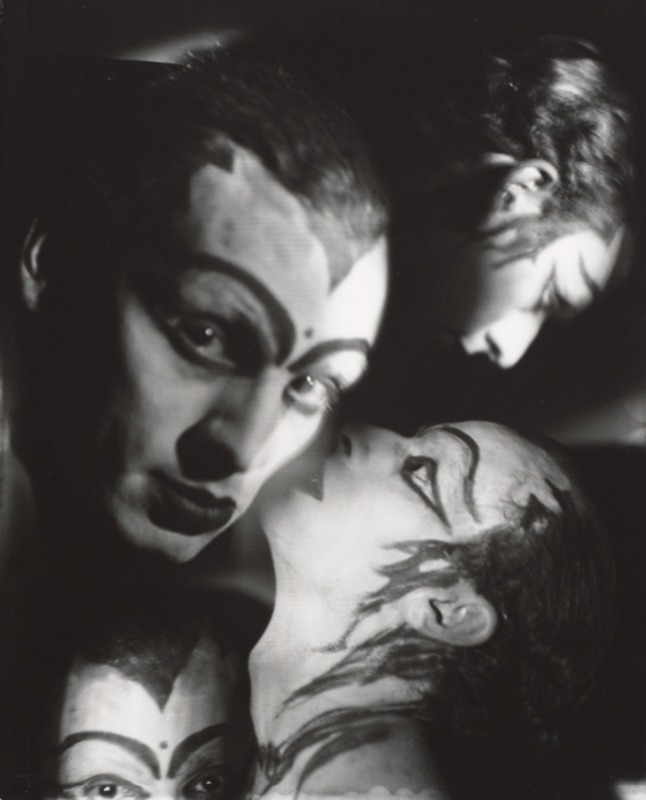
Before the 21st century, men wearing makeup was a social anomaly. However, long before this trend emerged in casual social settings, it appeared in film. In the early to mid- 1900s, actors and actresses were seen in makeup and rarely ever seen outside of it. In its present form, the cosmetic realm is socially suitable for men and women. Before this, though, men were only seen wearing makeup when it was required of them on screen. As depicted here, the man's unnatural makeup solidifies what kind of makeup actors wore. This also exemplifies the unanimous feeling about recreational makeup on men in the 1900s.