Tattoos - Present
In today's American culture, tattoos appear on a bulk of our society. While tattooing is generally defined as a permanent mark made on skin with ink, people still question "What is a tattoo?". Many articles we discovered had a sense of historical consciousness, and lead us to delve into when our present concept of tattooing was defined, and what it stands for today.
A Brief History of Tattoos
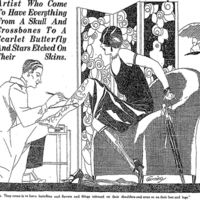
The article “Painting with Electric Needle in Baltimore,” written in 1925, describes the account of a “youth” going into a parlor to get a tattoo. The biggest point of the article is to introduce the progression and increase of popularity towards tattoos. The tattoo artist explains that sailors are the biggest customers for a tattoo parlor, while there was also an increase in “youth” and women. This article illuminates the transition from a certain group of people to (today) a wide variety of different types of people obtaining tattoos.
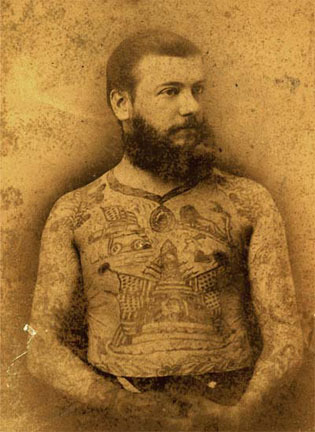
This article from the New York Times in 1876 interviews the first known tattoo artist in the US, Martin Hildebrandt. This interview demonstates similarities and differences from the world of tattooing in the present day. Just like the present, customers may come in to his tavern and select from a number of designs. Hildebrant uses tools with needles and ink and punctures the skin in a similar fashion as current artist. However differently from today, Hildebrandt only has two colors: red and black. He also uses the same designs over and over, with personal designs being rare. Today, most tattoos are unique design or artist commissions. Also, Hildebrandt claims most of his customers were soldiers and sailors, when nowadays tattoo customers are much more diverse. The largest difference between the time of this article and now is the size of the industry. When this was written, Hildebrandt was the only tattoo artist in America, and now it is a huge industry with multiple technologies and factions.
Tattoo Technology in Today's Media
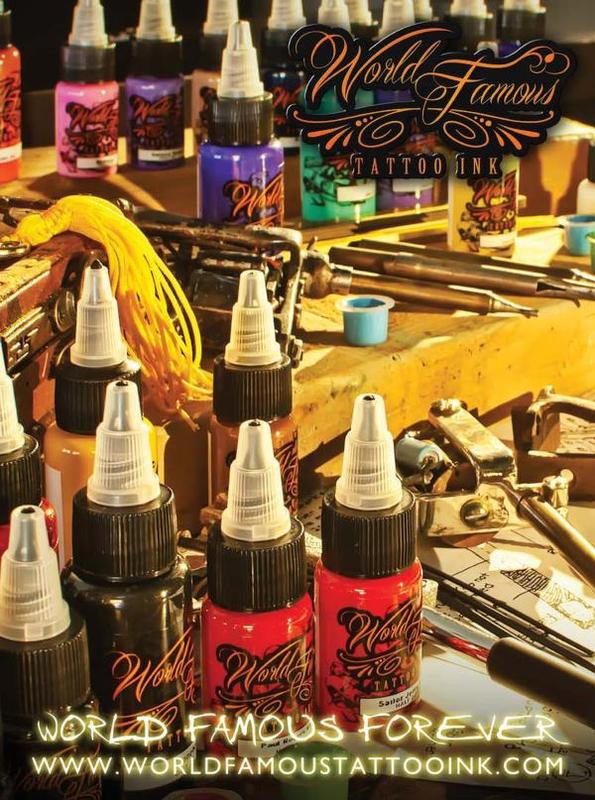
A large part of tattooing is the psychical technology behind tattoos, and what allows the general population to understand how tattooing works. Through mainly advertisements, the tattoo industry, comprised of both artists and product companies alike, push this idea of an ideal tattooing space and process.
This is exemplified in The World Famous tattoo ink advertisement sells their products by simply displaying a typical tattoo station. Incorporated into the station is a basic table, tattooing tools, and the meticulously placed World Famous tattoo ink bottles. The colors and positioning makes the ad attractive, and catches the attention of tattoo artists/parlors.

As one of Kranzberg's laws of technology states, technology comes in packages. This ad in Skin Deep magazine is for a customizable tattoo chair. The viewer can see an artist, a glove, a pen, and a chair all associated with tattooing; a package of technology. Just as tattoos change over time in society, so do the technologies associated with them. Nowadays there is a large market for objects sold specifically to tattoo artists and parlors. This ad appears in a British Magazine, but is concurrent with the western tattoo culture that we are exploring.
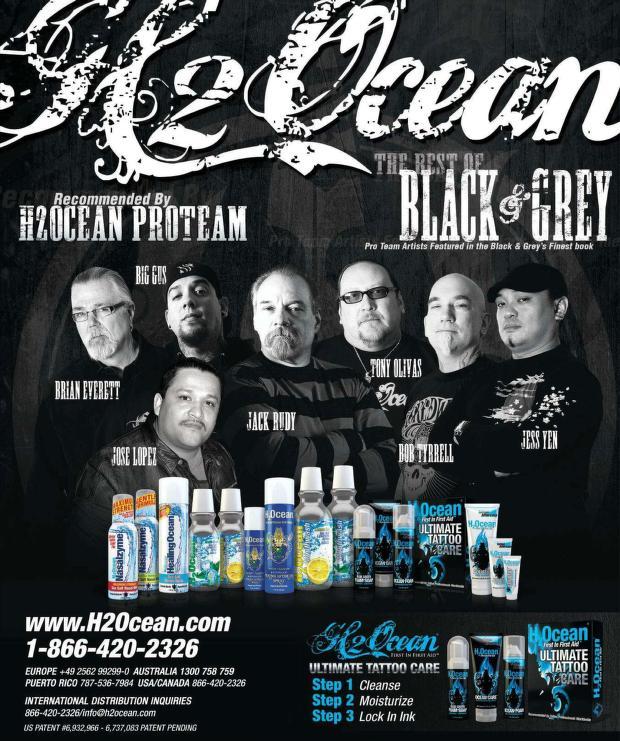
With seven of "the best of black and grey" artists supporting the product, H2Ocean not only earns reputability with the consumer, but with the businesses selling to the consumer as well. Businesses at which products such as these are sold at are owned or operated by tattoo artists themselves. Reputable artists, or experts in their respective fields, who support this tattoo care product line, show the general public's tattoo artists that this product is not only to be trusted, but also that these products are "popular". While this advertisement cannot be seen as evidently false, it may be deceiving the customer. While these seven significant artists may promote the product, they are being paid to do so, and may not actually use the products themselves.

Tattoos have had many different meanings over the centuries. At times, tattoos were used as a means of rights of passage in old Native American civilizations. In other times they were used as a form of branding to illustrate ownership or worth. In the more modern days, tattoos have been used to express one’s individuality, but as of the past 15 yeas, tattoos have even taken the turn to make people into walking billboards. Sites such as “Lease Your Body” are using temporary and even permanent tattoos as a way for companies to market and people to profit. It is of course not the first time people have been used as billboards, for example, many clothes that young people wear often market some time of product where its “Levi’s” or “Samuel Adams”. Yet as regulation loosens, and companies search for new ways to get their products recognized, it seems that they are willing to exploit the art of tattoos by making it another measure of marketing.
The Fashion of Tattooing
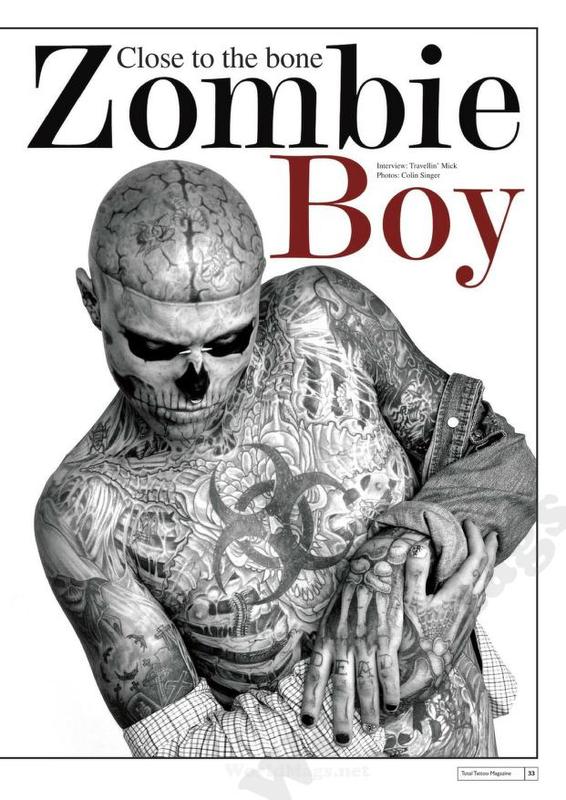
In "Closwe to the Bone 'Zombie Boy'", we explore the present social "shocking" implications tattooing has on society. Tattooing, by definition, is a permanent branding of ink into skin. Fashion has the same branding concept, and in today's society, many individuals have made their affliction for tattooing into a fashion. "Zombie Boy" is an example of such individuals, and represents American society's present viewpoint of tattoos as fashionable and popular. While they may be fashionable, they also represent the taboo (such in the case as Zombie Boy), which also represents the social viewpoint of sectors of American Society.
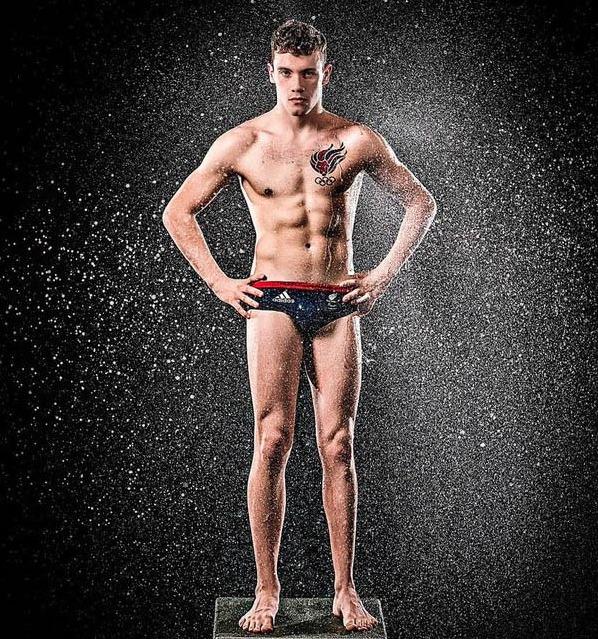
The article describes an issue in the recent 2016 Rio Summer Olympics where many athletes feared disqualification due to their tattoos. The surge in fear stemmed from British swimmer Josef Craig who had issues in the 2012 London Paralympics where he was disqualified because of a tattoo of the Olympic rings and a lion, which the board considered advertising. The International Olympic Committee (IOC) addressed the issue and said it had no problem with personal tattoos or tattoos of the Olympics rings because in many cases it is a right of passage for athletes to get them. In the case of the London Paralympics, the IOC said that it was in no way associated with the actual Olympics so the rules are different. At the same time, the IOC will not condone any athlete who has sold any part of their body for temporary tattoo advertisements in hopes of sponsorship.
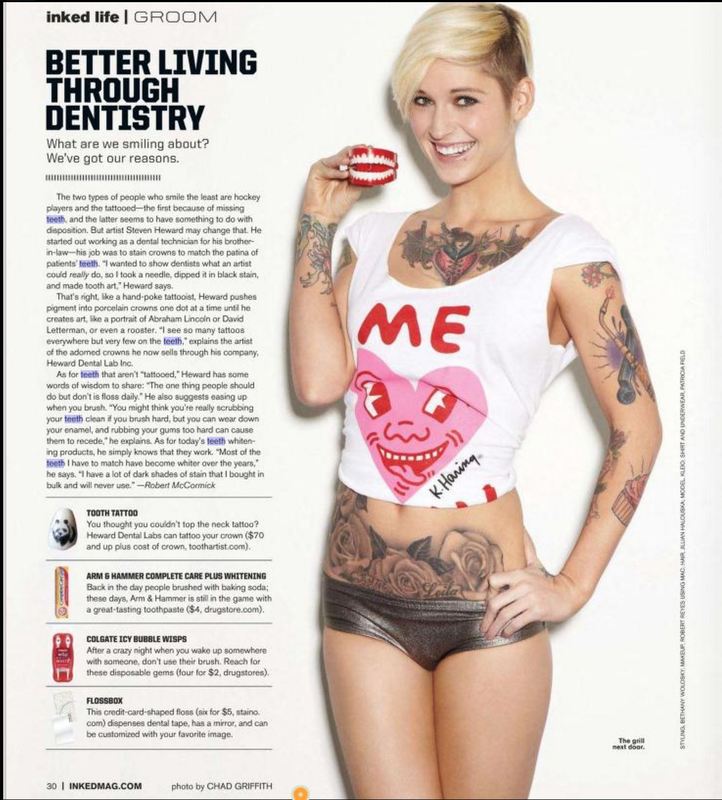
An article written in the tattoo magazine Inked illustrates the rapid improvements and progress of tattooing. A dental technician went a step further by using tattoo ink to “match the patina of patients’ teeth.” He feels that tattoos can do and be so much more than body art. It can also have a medical impact, and he takes that leap by tattooing customers teeth. The article reaches out to medical professionals, tattoo artists, and even tattoo customers, to show that the future of tattoos are quickly changing and improving. The use of the woman in the skimpy outfit with tattoos all over her body catches the attention of the reader.

The advertisement is in "North Colorado Medical and Wellness" magazine. It is advertising the Cabana Medical and Day spa, which offers tattoo removal services through use of laser treatments. The image has a serene color scheme and a beautiful woman stretched out in a relaxed position to draw the readers eye. The ad offers a short description below the picture with key words bolded that the creators wish for the readers to see. Below this in smaller white letters is a blurb given by the Spa to provide the reader the ideals they hold as a company.
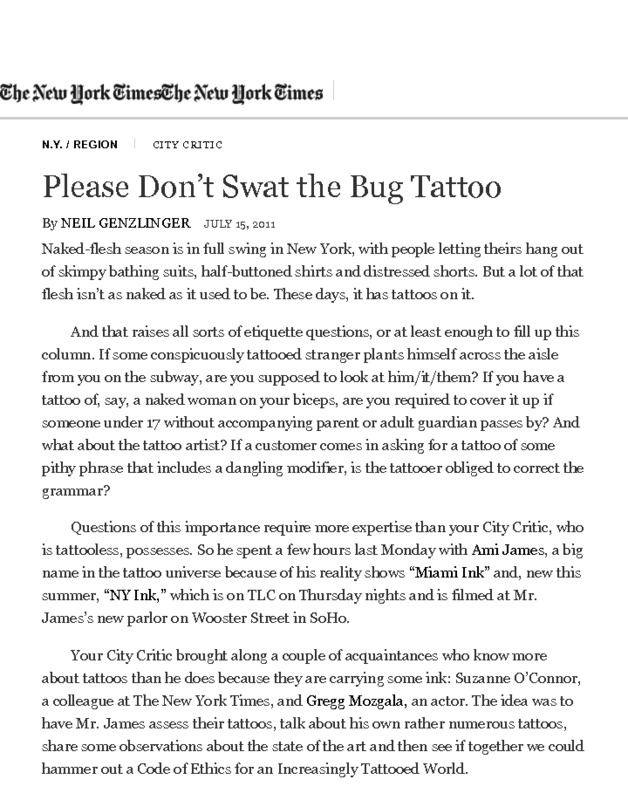
While a majority of millennials find tattooing utterly normal, their grandparents and some other subcultures may not. Tattooing can still be considered "taboo" for a multitude of different reasons.
The article "Please Don't Swat the Bug Tattoo," covers the proper etiquette for someone who has an obscene tattoo and if they should or should not display it in public. Further, the analyses of proper tattoo placement and what is appropriate to have where when attempting to get a job or receive certain services. Article uses interviews with an expert tattoo artist in Miami. The article asks his opinion on inappropriate tattoos and displaying them in public, looking specifically at the fact that children and involuntary viewers may see something they do not wish too. The article attempts to answer the question; If something is censored on tv, should it be censored in public? Even when it is permanently on someone's body?