Virtual Reality - Past
Development of VR
Across the 18th and 19th centuries, the public enjoyed viewing panaromic images. Early 360 degree images included a curved frame and specific lighting to make the viewer feel immersed in the scenery. In the early 1800s, the first stereoscope was invented to project images. Between 1870 - early 1900's, the stereoscope was used particularly for educational purposes. Continuing onwards to the 1950s, the Sensorama was invented by Morton Heilig. This technology created a new era of multisensory stimulation, including sights, smells, sounds, and touch. Moving onto 1960, Heilig patented a head-mounted display device, which became the foundation of many modern advancements in the field. From there, in 1965, Ivan Sutherland made adaptations to this head-mounted device so that it could provide a more immersive experience. From the 1970’s-1980’s, VIEW (the Virtual Interface Environment Workstation) created a joint device for these head-mounted devices and gloves that allowed for haptic interaction. Finally, while all of these developments were being made, the founder of VPL Research (Jaron Lanier) coined the term “Virtual Reality” in 1980.
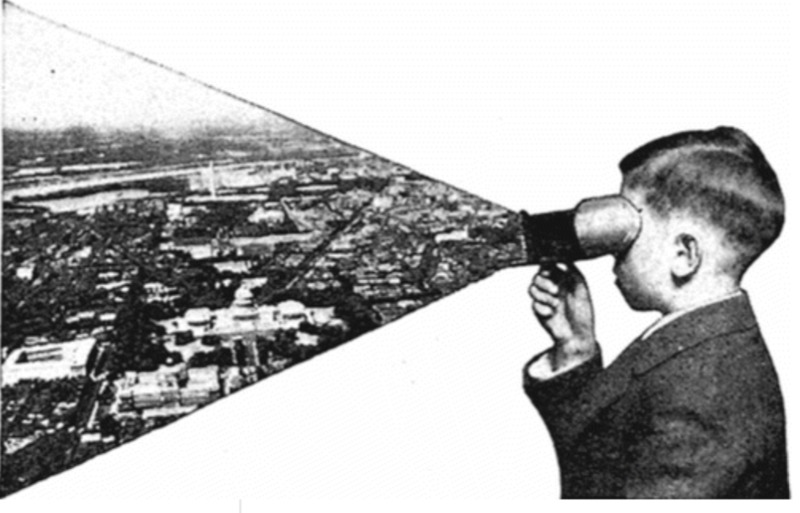
The article, "Democracy and discipline: Object lessons and the stereoscope in American education, 1870–1920," describes the use of stereoscopes in the early 1900's. During this period of time, the stereoscope was mostly utilized for education purposes. This began what was known as the "visual instruction movement." In terms of relevant social groups, this allowed students of any socioeconomic status to view places in 3-D -- places that they might not have otherwise been able to see, due to the cost of travel. It is also worth noting that, through the use of stereoscopes, teachers were able to control exactly what students could see and when they could see it. Even at this time, there was much debate about children interacting with visual media in habitual and mechanical ways, and whether or not this would promote visual discipline in schools.
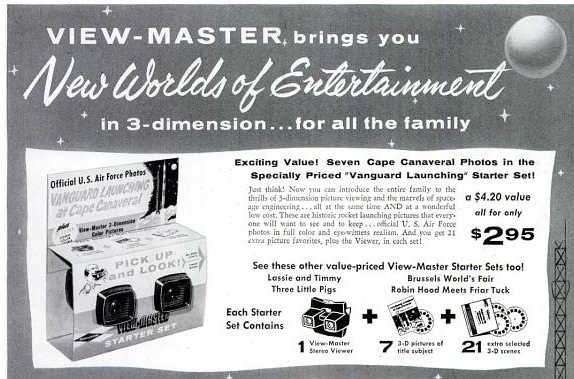
Similar to the stereoscope, the View-Master gives a look at one of the first attempts to bring virtual reality into the home. This object used small disks which had images printed onto film. From there the user would look into the device to see a pseudo 3-D image which would range from real life places (such as Cape Canaveral) or was even later used with comic strips and other more fictional materials. Targeted at the whole family, the product's goal was to allow people to explore things they would not be able to witness physically, by using a small, convenient device to offer the "'feeling" of actually being there.
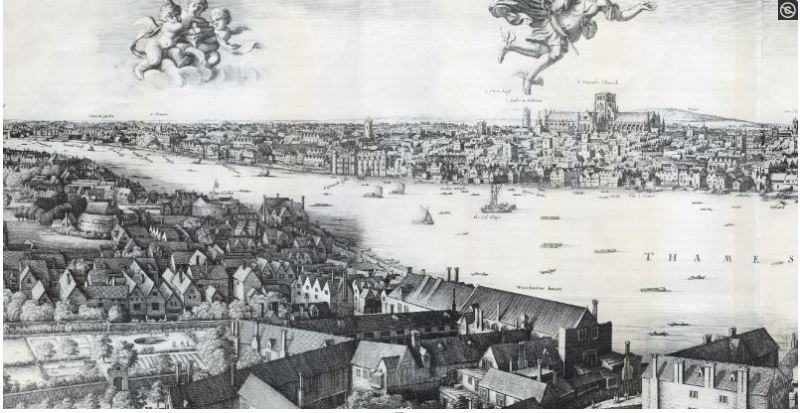
360 degree images and VR today is possible due to the computers and imaging technologies that we have. However, this didn't exist in the 19th century. Instead, painters would look at landscapes and paint on a large canvas. This is an example for Kranzberg's sixth law that technology the history of technology is a very human activity.
Patents
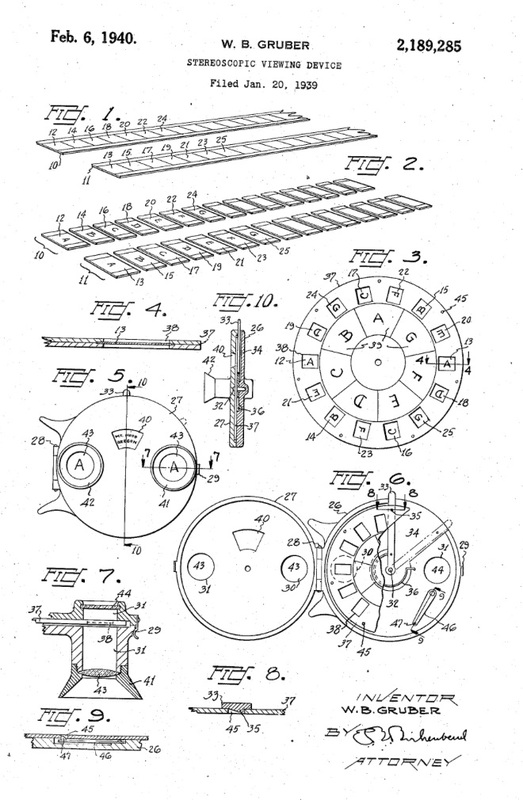
This is a patent for the Viewmaster, which was designed by Wilhelm B. Grubler in 1929. It is a device in which multiple pieces of square film are placed on a circular disc, which can be rotated. The person using the stereoscope would then look through two points, which are intended to match up with the location of the eyes, and would then view the slides through these two points. The person has the ability to move the slides and therefore would be viewing not one, but multiple images in a row.
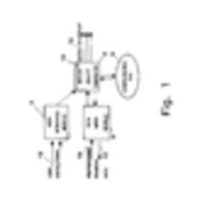
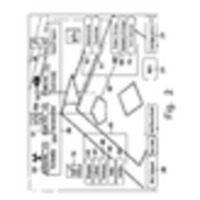
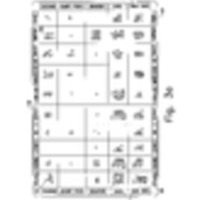
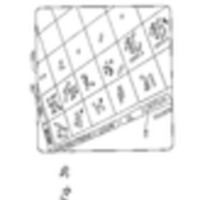
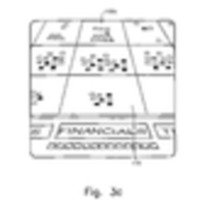
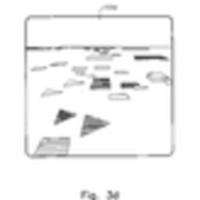
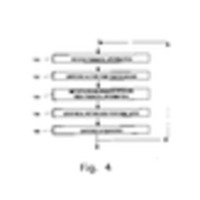
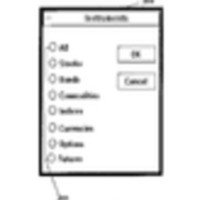
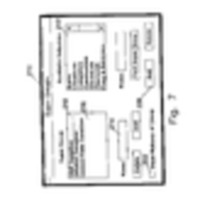
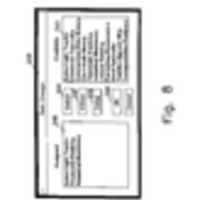
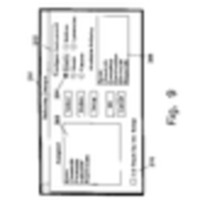
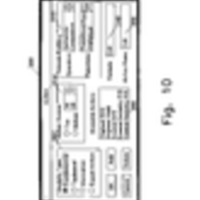
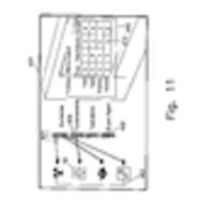
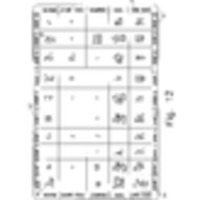
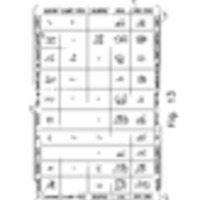
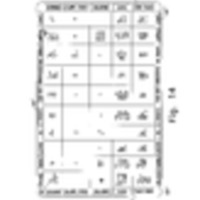
This patent (above) in the early 1990s tries to connect the up and coming technology of Virtual Reality to a marketing perspective. This programming patent looks to create a new way to look at one’s finances, that is continuously updateable if the user continues to add new financial information. One of the key introductions made by this patent is the idea of looking at intangible information (like money) in a more tangible way. The creators of this patent cite specifically money managers and financial advisors as being the most influenced by this technology, as they have to absorb a huge quantity of (not real-time) information. The implementation of this program would not only allow for a visualization of the data they are looking at, but also allow for the inclusion of real-time information. While this patent looks specifically at financing and other abstract information, it is clear that the patent maker wants more creative utilization of his ideas by defining his core idea as “abstract,” rather than purely “financial."
This patent is for an invention that would allow multiple people to telephone into a central communications center so that they may collectively interact in a virtual reality experience.
Heads up displays, of HUDs, have been used in fighter aircraft since the mid 1900s and have been adapated for use in motor vehicles. As a version of AR (augmented reality), they offer insight into the early designs that eventually led to modern displays and VR headsets, as well as into the lead user process where the automotive field took up aspects from aerospace VR.
Fictional Representations
Virtual Reality has been referenced within science fiction for decades. Multiple uses of VR have been introduced in these stories, from being able to hack into computers with one’s own nervous system, communicating with other people through the brain, living an actual virtual life, etc.
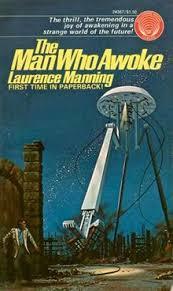
The Man Who Awoke is a series of short stories from 1933 that was later adapted into a novel. The novel is about man who invented a time travel device by putting his brain in a coma for 5000 years and then waking up. He repeats this multiple times to peer into the future. One future describes a world where people ask to be connected to a machine that replaces all their senses with electrical impulses and, thus, live a virtual life chosen by them. This eventually led to a breakdown of society where people chose to sleep and control their dreams instead of working towards it in reality.
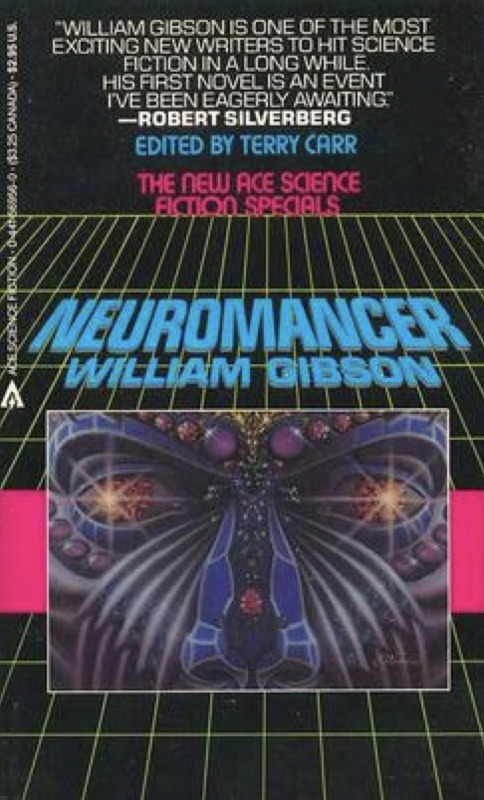
Another interesting representation of virtual reality can be found in the novel, Neuromancer. Neuromancer is a science fiction book by William Gibson. It was written in 1984, and is known as one of the most influential novels within the cyber-punk genre. This story introduced some very advanced technologies in terms of virtual reality -- some of which have yet to be invented. For instance, the main character (Henry Dorsett Case) is able to hack into computers using his own nervous system, and therefore is able to physically feel the environment within the virtual reality. In addition to this, he is able to communicate with other people using his own brain. This novel truly recognizes the many potential ways in which VR and the internet can be incorporated into someone's physical body.
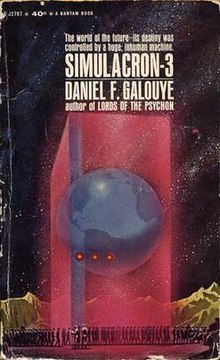
Simulacron-3 is about a team of marketing researchers using an environment simulator in order to gather consumer data. The main idea of this novel is to question whether reality, is really “reality.” Galouye uses the term Virtual Reality as a way to signify the immersion of each consumer because of how real the simulation is to its participants. The protagonist is then hit with a mystery to solve when two of his co-workers end up disappearing without a trace, almost like they vanished from the face of the Earth. He is then informed by a man that his reality itself is a simulation as well, and the protagonist falls into an endless loophole of questions and paranoia. Galouye’s main purpose for writing this novel is undoubtedly to question materialistic reality and the philosophical questions pertaining to the subject, however, Galouye also makes another point: marketers are becoming too manipulative to get the results they want. This can be seen by the negative portrait that the marketers have around them, whether it is his detailing of dastardly advertising, or forcing civilians to fill out consumer surveys.