Eyeglasses - Present
Price vs Quality
In our society money is a driving factor, so naturally, this applies to eyeglasses. The complications that arise with money is that of quality; does more money necessarily mean better glasses?
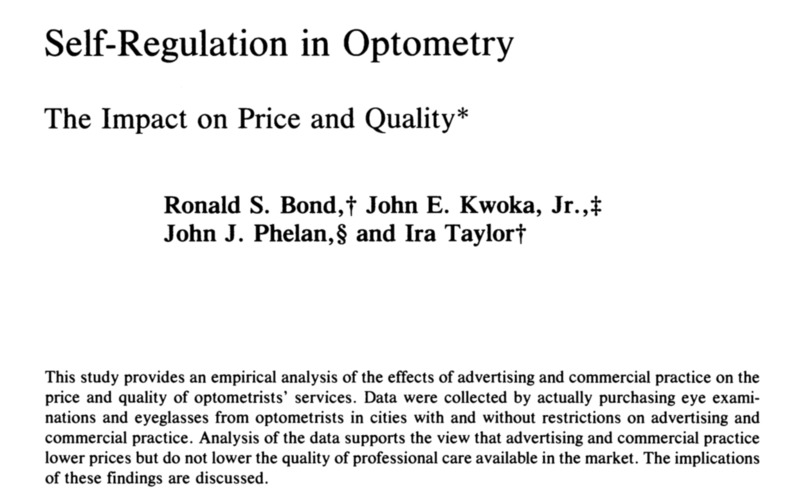
As Americans, we are idyllic consumers and a large part of our buying strategies have to do with finding high quality items for low prices and this is no different when it comes to buying our glasses and getting eye examinations. Overall, this article presents an important debate. Even though the research was done in the 1970’s, it remains quite relevant today. This article looks at the regulation of optometry in various cities to determine the correlation between price and quality of eyeglasses and examinations, and how advertising and commercial practice affect these variables. The study looked at “restrictive” and “nonrestrictive” cities; meaning, cities where optometrists advertise their products and services are nonrestrictive and those who didn’t are restrictive. So, in general, those who were advertising were larger companies and/or practices who were able to offer their services and products for a lower price to accommodate a larger target group. The results showed that optometrists in restrictive cities on average charged higher prices for eyeglasses and examinations. The results also showed that there is virtually no variation in quality of the eyeglasses available at any of these retailers, although the price may differ. However, the quality and thoroughness of the examination varies greatly. In general, the results show that non-advertisers seem to offer more in-depth examinations, and this is really the only substantial variation that exists. Adequacy of prescription is generally consistent, meaning that it is in most cases acceptable for consumers to choose eyeglasses and eye examinations based on price. Therefore, this research largely puts rest to the age old debating concerning whether price has a large effect on quality, at least in the world of optometry.
This advertisement by Marchon, an eyeglasses manufacturer, targets eye care professionals looking to sell frames to their patients. Marchon assumes that consumers have a wide range of preferences such as style and willingness to pay, and asserts it can meet these needs. Furthermore, it emphasizes the ability of the titanium-alloy frame to withstand various external forces by depicting one as a literal question mark on the ad page. Although the product price is vaguely described as "surprisingly low," the reliability inherent in such a high-strength metal would appeal to consumers because they would save on maintenance or frame-replacement costs. The advertisement questions traditional notions of the physical weakness or fragility of glasses through its dramatic display.
Fashion vs Function
As eyeglasses have developed out of practicality, fashion has been at the forefront of eyewear. But, with fashion comes a decision for the consumer; how important is fashion compared to the functionality of eyeglasses? Sometimes, there is a combination of the two, but for the most part, the question comes to what will trump what.
For decades, being called “four-eyes” was not something to be proud of. It was a derisive term meant to mock those forced to wear the burden of awkward-looking eyeglasses in order to carry out their daily lives. This occurrence, especially prevalent amongst the younger demographic, popularized more appealing methods of vision correction such as contacts and Lasik surgery. In order to boost sales, however, eyeglasses manufacturers like Gucci and Chanel have recently taken great lengths to increase the attractiveness of frames while simultaneously diminishing the potency of the insult. Indeed, the appeal of frames as a stylish accessory is so great that even those with perfect vision opt to wear eyeglasses with non-corrective lenses. So much for bullies teasing bespectacled youngsters, it seems. After all, who would be able to jeer at a wearable status symbol akin to a Rolex or gold chain?
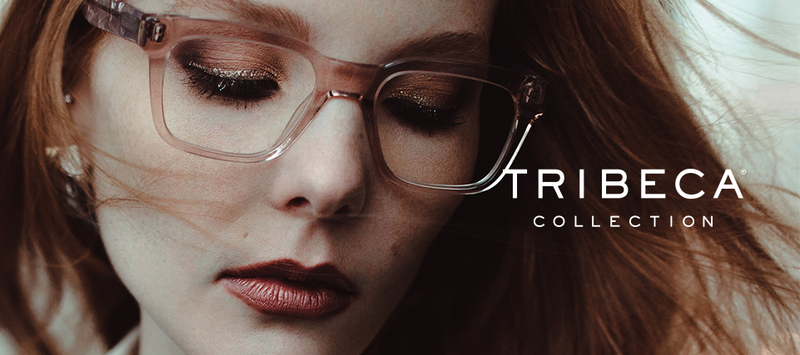
The advertisement for the Tribeca Collection on the Scojo website, uses a certain aesthetic to portray the eyeglasses being sold in this particular collection to show that they are chic and stylish. This idea of glasses embodying style and sophistication is a far stray from the idea of calling people with glasses "four eyed." The photo has hues of deep red and brown all allowing for a pleasing view, thus showing that the eyeglasses that are in this collection are stylish and appealing. The woman in the photo seems effortlessly chic, also conveying that these are glasses for people that have a chicness to them, and if not, these glasses will add to it. This particular eyeglass collection on the Scojo website adds to the appeal of eyeglasses because eyewear is meant to be seen as something of style and not just necessity.
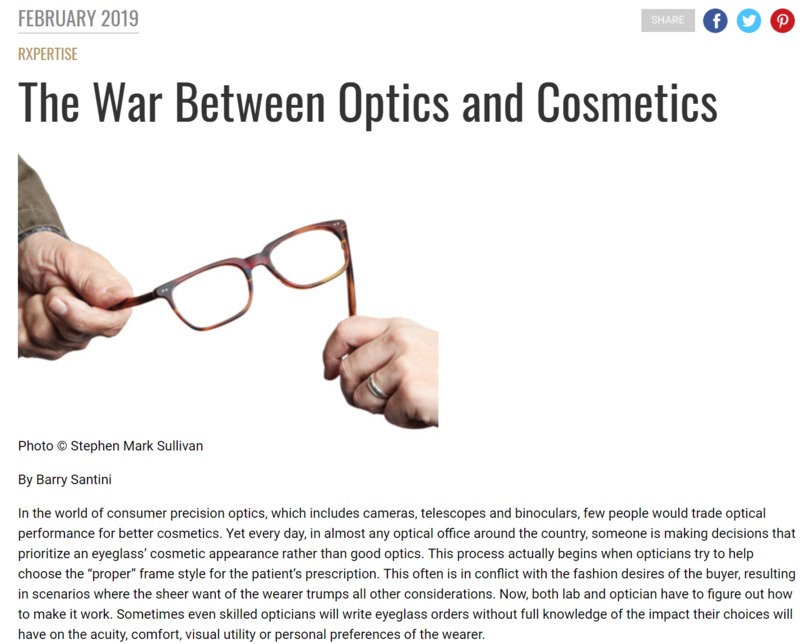
This article conveys the stress opticians face when dealing with clients and their new pair of glasses. There is a conflict between the functioning of the glasses and the style that the client desires. This battle has been ongoing to many decades; just as the 1930s allowed for a mass production of glazed and steeper lenses for better visibility, there was already a shift in frame style. People wanted to move away from the shapes they see as medical, like the round, oval, and hexagonal shapes, and wanted to move towards something more asymmetrical. And so, by the 1940s, companies appeased the public, but just as people were happy, poet Dorothy Parker scathed that men don’t find women with glasses attractive. So, the hatred and belittlement of glass-wearers was born allowing for wearers to be called 'four eyed' and the like. As the decades progressed, people would fight the need for such a device as to not compromise style but also still provide that function of correcting vision. This article helps ease the fight faced by opticians as to not compromise the functionality of the glasses but to also make the client happy; the answer is to make them happy but to also curate the frames to ensure the client isn’t missing out on proper functionality.
Necessity vs Luxury
The basis of glasses has always been to correct vision, but the additions to better vision have advanced rapidly with the boom of electronic technologies. And so, the combination of glasses and 'smart technology' have evolved to present to the consumer, what is necessary? How much technology should eyeglasses have and how much a luxury should the basic necessity of vision correction have?
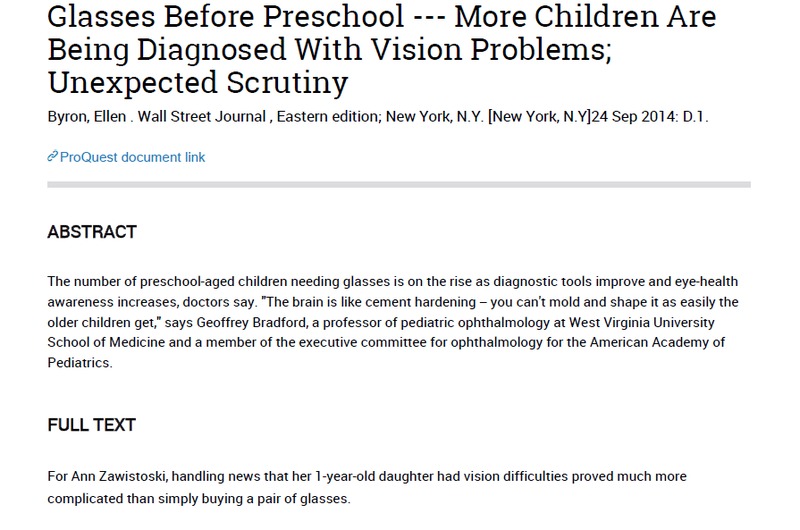
Should toddlers be wearing eyeglasses? It might be an incongruous sight, a swaddled youngster sporting a pair of spectacles, but this recent article asserts that there exists a fair amount of criticism surrounding what seems like an innocent situation. From a medical standpoint, children can greatly benefit in the long term from wearing corrective lenses early in life, potentially avoiding permanent ailments. Unfortunately, this recent practice has coincided with the new trend of wearing fake eyeglasses, fostered by some adult celebrities or models. Many who encounter infants wearing glasses mistakenly criticize the parents of forcing their kids to follow the new style. Furthermore, there is a practical reason to delay kids wearing glasses. One parent cited an accrued $5,000 cost associated maintenance and upgrade costs with her physically active two-year old son’s eyewear. Ultimately, however, should it not be the decision of the parent to act in the best interest of the child? The article emphasizes the mutual emotional relief and wonder of both parties when a child first experiences newfound vision.
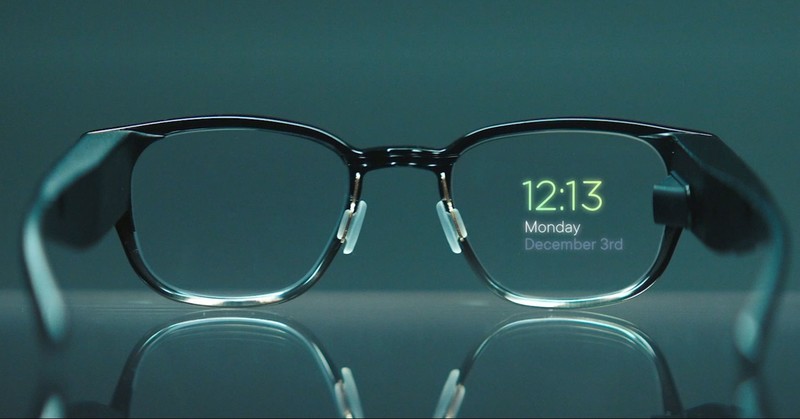
In contrast to the necessity of eyeglasses, North represents luxurious methods for conventional eye glasses. North is a company that designed these glasses, released them September 2018 with a starting price of about $1000 (but is slowly reducing that price). This image itself doesn’t show much and is quite empty. However, the glowing effect of the time and date on the glasses’ lens attracts the viewers attention. To add on to this, in the video included, the co-founder and CEO of North, Stephen Lake describes the attributes of Focals. The video uses interesting camera angling and close ups on the glasses to give the audience a very clear imagine of these glasses. Lake mentions that they kept in mind “how do we give people those magical benefits of technology and build something that’s there when you need it but then gone when you don’t.” This appeals to the audience by showing how easy it is to use and convenient. I find it interesting that they kept the video at a very basic level. What I mean from this is that they could’ve included all the hardware and specifics that went into building these glasses, but instead they mainly talked about the design and wanted to keep the glasses looking as normal as possible. In making this video, it can be concluded that they had in mind that people would most likely buy the glasses if they looked slick and stylish.
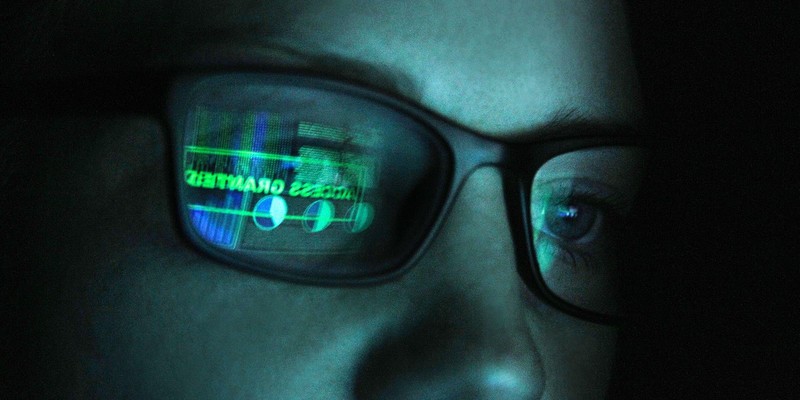
Eye glasses can be bought with many different enhancements and an article covered a discussion blue light from computer and phone screens. They begin by stating how the majority of people believe that blue light is the cause for eye strain, troubled sleep, and long-term vision problems. However, the American Academy of Ophthalmology say these claims are “unfounded” and that these problems can just be caused from focusing on something too intensely and for long periods of time. They mention how blue light is in the suns rays anyways, so our brain is used to it, and so when trying to sleep and being on your phone, your brain associates the blue light coming from your phone as daytime making it believe it should be more active.