Bread - Introduction
Since the dawn of human civilizations on Earth, bread has been present and at some points in history, the most critical source of nourishment for a society. The Nile River Civilization in ancient Egypt depended on wheat as one of their staple crops and Jane Howard, author of TourEgypt, wrote, “central to their nourishment was bread and beer. From very early on, both were consumed at every meal, by everyone, and no meal was considered complete without them".
She further writes that varying types of flour produced allowed for different styles of breads; from thin crust wafers to doughy, airy bread. The ability to manipulate flour to produce different breads is something that was and still is utilized up through the 20th century.
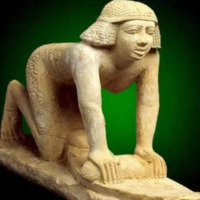
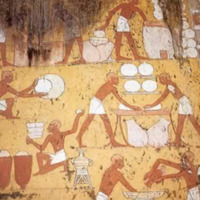
The paintings and sculptures that accompany Howard's article demonstrate the importance of bread in the Nile Civilization. The sculpture depicts a woman kneading bread thoroughly before preparing it for baking and the painting is a multistep storyline of the bread making process. This evidence of the traditional style baking of bread in the earliest recorded centuries of human history shows that while the technology of bread production has changed, the components at the heart of the process, human labor, remain.
The purpose of our project is to show how even some of the most ancient, basic technologies are still adapted and innovated to accommodate for the changing world. We dove into the world of bread and the technologies surrounding it. Starting with the present, we thought about how the nature of bread is in a transition phase, between a necessity and a social food fad. Our past focuses on the start of “modern” bread and how homemade breads became sliced and processed. Finally, the future focuses on the ways bread will be innovated, discussing the value and meaning that it holds as society progresses into the 21st century and beyond.