Tattoos - Past
Tattoos have been in existence since cavemen walked the Earth. Tattooing as a technology began as a rudimentary technique that lacked precision and distinct individuality. With the advancement of technology, tattoos became more individual, and thus more directed at the customer and less at a mass culture. This page will explore the turn tattoos have taken from a taboo underground culture in America to a popular and prominent feature in our society.
An Ancient Art
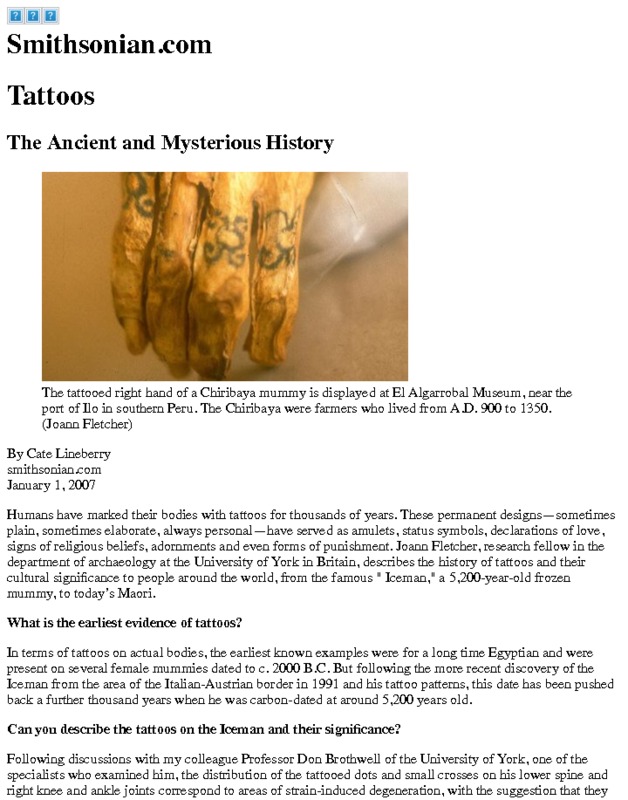
The implication of tattoos and their values in different cultures. The article explores certain cultures that utilized this art form and what it meant to them. It searches for the definition of tattoos in multiple cultures and time periods.
In, "A History of Tattooing" why "people have drawn on themselves for various reasons" is discussed. It was believed that "they have done it to scare their enemies in battle, to tell their life stories, and to display their respect for their ancestors and their tribal traditions". This allows us to gain valuable insight as to what a tattoo was defined as, and how that affects our present viewpoint of what a tattoo is, and the new social implications tattoos can have.
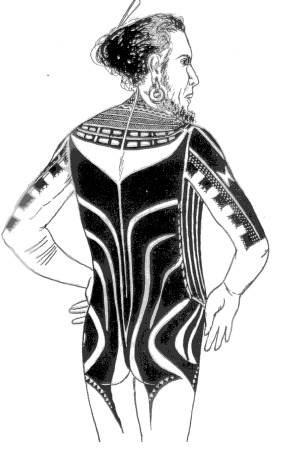
In This article and collection of volumes from Tattooing in the Marshall Islands by Dirk Hr Spennemann, the finding and cultural reasons behind tattooing in the Marshall Islands is discussed. By the time in which Captain Cook made it to the Marshall Islands, tattooing had for the most part been considered taboo among regular European society due to the rules of Christianity. Tattoos were seen among the sailing crowd but they were an exemption to societal norms at time. Additionally, when Cook and his men first stumbled upon the tattoos in the Marshall Island, they had never seen such full body tattoos before or the cultural meaning behind them. In fact today’s term “Tattoo”, comes from the Polynesian word tatau. For the Marshall Islanders, and many other Pacific island cultures, tattooing was “was a simple -- though painful -- fact of life” and was a right of passage for both men and women. While tattoos helped initiate people into full members of islander society, tattoos among the islanders were interestingly enough used as decorations to link the body to dress.
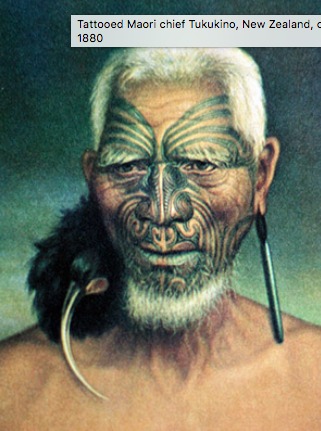
In this article from history today, the topic of how tattoos have come and gone as fads from western society elites is discussed. While tattoos has been considered a fad by modern society. tattooing has remained consistent among native cultures and the seafaring culture of western civilization. While some may think that tattoos have only had two faces of being popular and unpopular, contrary to popular belief, they were popular among British elites in the 1870s.This article deals with the trends of tattoos and how they have been accepted in western culture from their discovery on natives in pacific islands to the creation of the tattoo pen in the 1890s.
An American Art
“Tattoo: Secrets of a Strange Art as Practised Among the Natives of the United States” by Albert Parry discusses the unfamiliar discourse that a majority of society felt from the early settlers all the way to the early 1900’s in regards to tattooing. Native peoples were looked at as savage and frightening because of their heavily marked and painted skin. This intimidation and “strangeness” that tattoos brought to the newcomers of America followed until societal viewpoints were changed in the later 1900’s. This uncomfortability with the tattooing artform was the basis for the stereotypes and many of the condescensions placed on tattooed people in popular culture up until the tides turned for the tattooed individual.
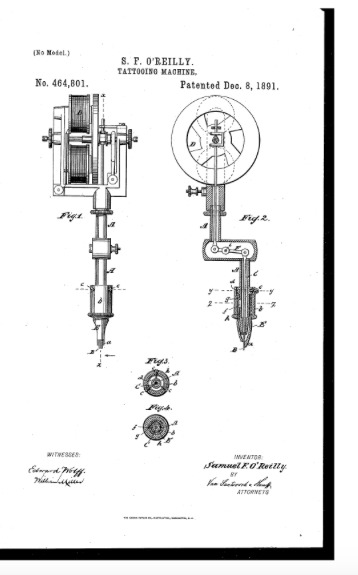
This documented Patent provided by google d describes one of the first patented tattooing machines from the year 1891. Created by Samuel F. O’Reilly, this Tattooing machine allowed for anywhere from one to five needles and also has a ‘tubular’ handle so it did not disturb the actual movement of the device. This tattooing machine helped propell the industry, and was later on used as a referene in bettering tattoing machines as technology progressed.
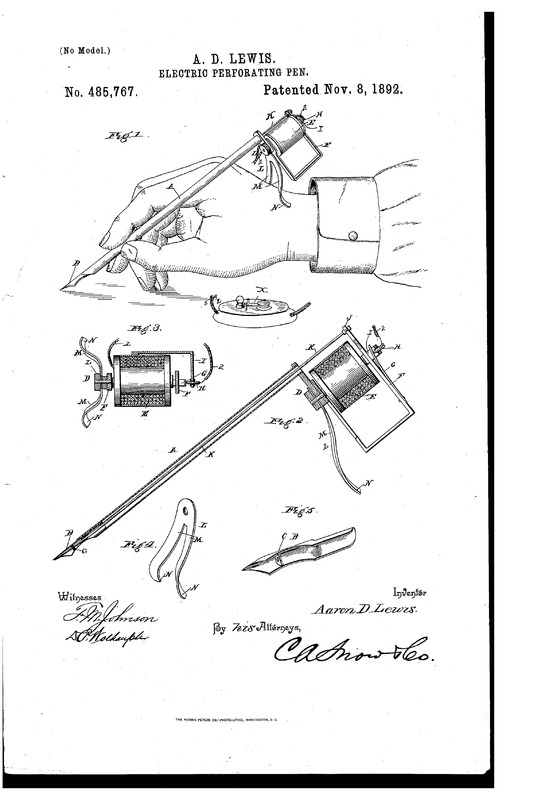
In 1892, Aaron D Lewis patented an “Electric Perforating pen,” very similar in function and structure to Samuel O’Reilly’s “Tattooing Machine,” which was the first patented technology for tattoos. The electric pen’s inventor, Lewis, claimed that the pen made for making “more permanent” marks in writing material. While that was its main function, the pen could also be used for tattooing and hygiene and medical procedures. The tattoo machine by O’Reilly became the most popular model, and this electric pen did not contribute to the future of tattoo technology. However, this patent provides an example of other machines that were once used to create tattoos that do not exist anymore.
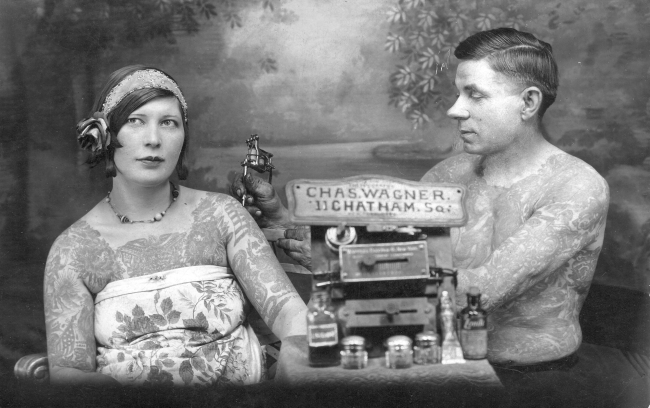
The purpose of the excerpt The Colorful, Subversive History of Women Getting Tattoos is to introduce the change of what it meant for a woman to get tattoos in the early 20th century. Heller explains this transition as such: “Tattooed ladies were once carnival freaks. Now they’re cool hipster chicks.” Beginning in the 20th century, getting a tattoo was considered illegal in some places because of the stereotype and stigmatism that was associated with it. If women were to get tattoos, they were looked at as “loose” or “seedy,” much like men who were looked at as a bit “raunchy.” The first woman to receive a tattoo is Olive Oatman, a white Indian who was marked with a tattoo on her chin for tribal acceptance. Associate Professor at Lehman College describes Oatman’s tattoo as an “ethnic barrier” and a much deeper meaning to her life. As the years went on and the 60’s and 70’s rolled around, “tattooing became more directly linked to the counterculture, and remained so until the 2000s.” Now, tattoos are seen as an art, and not a form of unbalanced character.
The Turn of Tattooing

The reason for the surprising introduction to women getting tattoos is the perception of the ideal person who got tattoos before the 1990s. Daniel Curley is famous for his short stories in and around the 80s, and in his story Living with Snakes, published in 1985, he describes a man stereotypical for the time period.
"Billy Will was a small man, but he dressed tough. He wore Levis and boots
and a white T-shirt with a pack of cigarettes rolled up at the shoulder. On his left biceps
he had a tattoo. It was supposed to be a skull and crossbones, but it turned out to be
just a skull and only part of that. It was as crude as if a child had done it with a ball-point
pen or he had done it himself one morning when he had a hangover. But it was a
genuine tattoo, although it looked like a death's head on a stone in a very old cemetery.
On his left forearm was a girl's name, Elva. He didn't know any Elva, but he was glad to
have the name even if it did look as if she had done it herself when she was both drunk
and very angry” (107).
Billy Will was the norm for those who got tattoos around the 1980s, in terms of his outer appearance and what he had tattooed. As the norm began to change and develop throughout the 90s and 2000s, tattooing technology also began to develop.
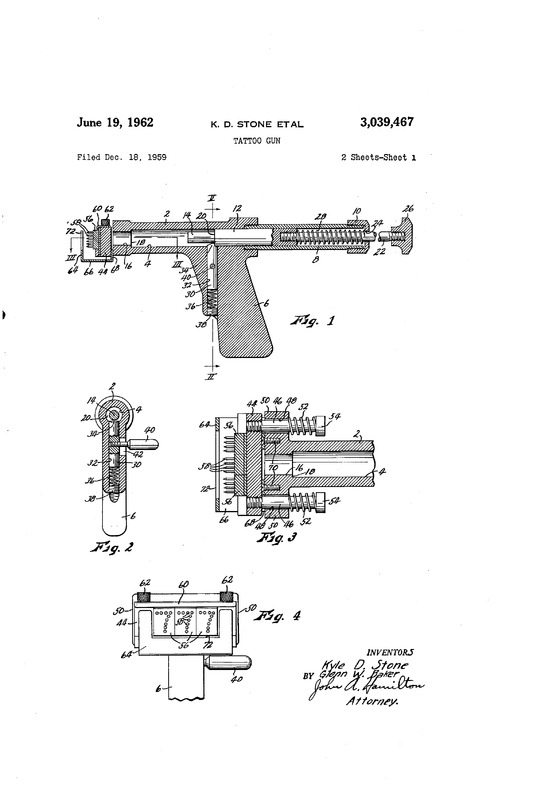
As stereotypes began to slowly diminish from Billy Will to a form of expression for anyone, the technology also began to improve. The patent of the Tattoo Gun was an improvement from the tattoo machine used prior, and the main goal of the invention was to make it easier to mark livestock for branding and breeding. The improvement also allowed for greater uniform. Before the invention, each mark was poorly executed and therefore was considered less efficient.
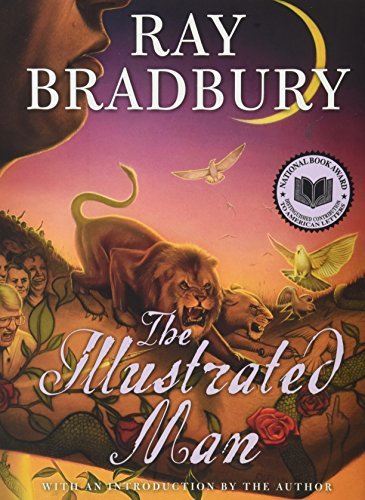
The meaning of tattoos changed during the 20th century, from being rare and remarkably underground to more mainstream and artistic. However in 1955, Ray Bradbury wrote a novel called The Illustrated Man which challenged his time period’s conservative view of tattoos. The book is a collection of short stories that come to life off a man’s tattoos, having been placed there by a time-traveller.
“ How can I explain about his Illustrations? … infinitely detailed, with all his sulphurous color, elongation, and anatomy, perhaps he might have used this man's body for his art …This wasn't the work of a cheap carnival tattoo man with three colors and whisky on his breath. This was the accomplishment of a living genius vibrant, clear, and beautiful. “
The narrator describes the tattoos as breathtaking works of art, which have a clear purpose to tell stories of the future. This description contrasts the view of tattoos described in “Living with Snakes,” although The Illustrated Man was written 30 years prior. These two examples show that the definition of tattoos became more complex with time, and tattoos meant different things to different people throughout the 20th century.
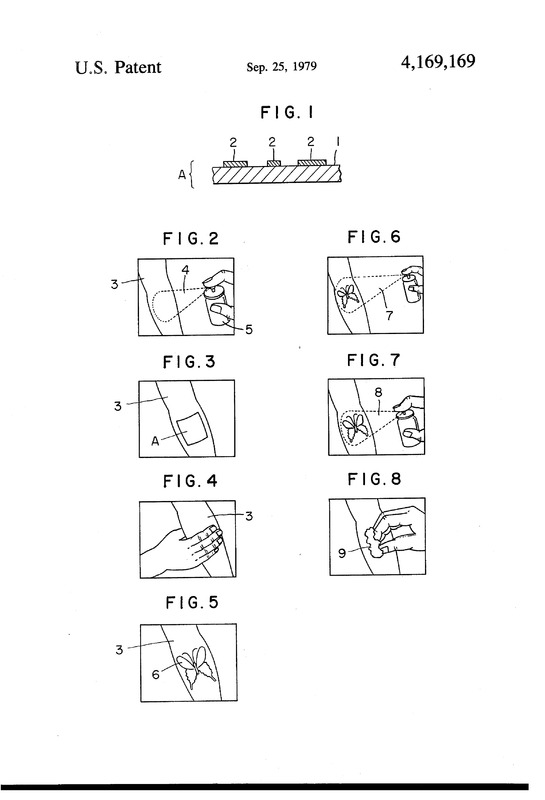
The transfer paper patent relates to an exudation transfer process and a transfer sheet for use therein. More specifically, the invention is concerned with a transfer process which uses lower monohydric alcohols as a transfer agent, requires no use of heat and is applicable to the human body and with a new transfer sheet for use in the transfer process

With the patent of a new rotary style tattooing machine, the tattooed culture of America was allowed to flourish. Run off of electromagnetic technology, with a lighter weight and a quieter sound, rotary tattoo machines made the process of getting a tattoo more pleasant for the customer. The concept of mass tattooing for a stereotyped subculture of bikers, delinquents, and other shunned persons of society shifted to a more common customer seeking tattoos.

This shift in the type of persons being tattooed is exemplified in the article, “How Tattoos went from Subculture to Pop Culture”. This growing popularity of tattoos is the definitive point where tattoos shifted from a previous historical context of tattoos as entirely unpopular as opposed to only remaining unpopular by very small subcultures in American Society. The shift of tattooing from a subculture to a pop culture is caused by the growing sense of popular media and the spread of the massive concept of tattooing as a more individually accessible technology.
From being considered a marginal and sometimes deviant behavior, the consumption of tattoos has become a mass consumer phenomenon. As tattoos have gained in popularity, it can be expected that the reasons for why people get tattoos have shifted as well. This paper explores consumers’ motivations for getting a fashion tattoo and the meaning associated with its consumption. Through phenomenological interviews with fashion tattoos, the themes ‘art/fashion’, ‘personalization and biographing’, ‘contextual representation of self’, and ‘meanings?’ are related to existing consumption theory.
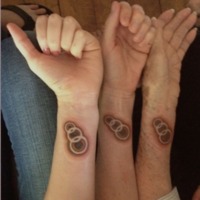
Brian Handwerk wrote an article in 2002 for National Geographic, called “Tattoos - Taboo to Mainstream.” He describes how in the “last decade” (1990s) tattoos shifted from being rare and risque, to becoming increasingly popular. The article points out how not only young people were starting to tattoo themselves, but the older generation was getting involved in the fad. From the invention of the tattooing machine in 1891 to the 21st century, tattoos never had growth in popularity as they had in the 1990s and after this article was written. Handwerk also mentions the government is growing increasingly aware of keeping tattoo parlors sanitary and registered as popularity grows.