Chairs - Introduction
Pull Up A Chair...
Humanity has used chairs for millenia. While their purpose has remained relatively constant throughout history, their function has shifted in response to societal, economic, and environmental factors. Nowadays, chairs are one of the most mundane objects that humans encounter on a daily basis. However, their position within our everyday lives has been shaped over thousands of years.
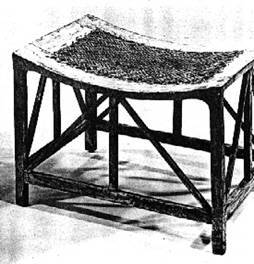
The long history of the chair is closely tied to status, power, and politics. For example, in Egypt, stools were used by the working class while the elite sat in chairs, showing their power through elaborate designs and extended posture (Friedman).
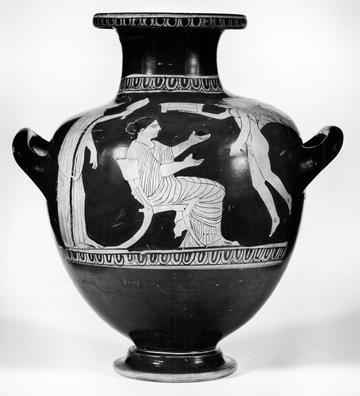
In contrast, ancient Greece appeared to have less-stringent sitting standards. Many of the empire's paintings depict all types of people sitting in chairs, regardless of their social status (Friedman). A mistress sitting in a klismos chair is depicted on the pottery shown to the left (Artist). The klismos chair, a common design throughout Ancient Greece, was used by nearly everyone, embodying the civilization's relaxed social standards in regards to sitting.
It seems ridiculous that sitting in a chair would ever be seen as a privilege. However, according to Friedman, a "...back-and-forth between democratic and hierarchical sitting customs has been occurring throughout history."
In addition, chairs have been closely associated with health and well-being. When examining modern chairs, a focus on ergonomics has become quite prevalent.