Movie Cameras - Future
Introduction to the Future of Cameras
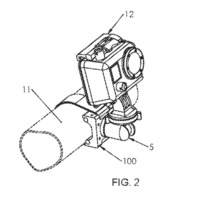
Cameras have never been much without their accompanying accessories, and we continue to see inventors look for ways to improve the overall functionality and accessibility through accessories as we have throughout the product’s extended history. We saw this notion with all of the accessories on the past page of this exhibit, including a very early interpretation of a similar camera mount, and we see it again with Marc Webster’s patent from this year. Another idea that has been consistent throughout the exhibit is the progression in accessibility and affordability of camera products to the average consumer. This idea also presents itself within this patent application. Webster still makes the assumption that premium camera products and accessories are not affordable and accessible enough to the average consumer, even though we have come a long way from the $1000 camcorders of the 1980s, and makes a point that it is his aim to attempt to continue to mend this gap. So even if many of the artifacts in this exhibit serve as evidence of just how far the camera industry has come in the past 100 years, Webster’s patent can serve as example that there is definitely still room for improvement.

This continuing process of the diffusion of complementary products is further illustrated by the increasingly widespread use of drones by amateur filmmakers. As the price of camera-equipped, remotely controlled aerial drones drops, many ordinary consumers have lobbied for an easing of the process of acquiring the necessary licenses to utilize them. This appeal for change in the regulatory status of “unmanned aircraft systems”, as seen in the article Droning Onward, signals a demographic shift in the videography community, with an every-increasing number of independent professionals and hobbyists using drone technology (which was until recently prohibitively expensive). As with so many prior advances in photography, this “drone revolution” is opening up creative doors which were previously only open to high-profile film studios with large budgets. With the movie camera and its complementary technologies advancing in terms of technical capability and affordability, the future promises further innovations which may force us to rethink the fundamental nature of filmography.
Distortion of Truth: Space and Time

Plenty of camera products exist that incorporate a wide range of unique modern technologies. But what if we could have one digital camera that utilizes multiple technologies like GPS, photo recognition, and social media simultaneously to improve user experience? Like many things, you can find the idea behind this prospective invention on the subreddit r/LightBulb from the popular public forum website known as Reddit. Lead user ZombieAlpacaLips proposes a device/application that when one takes a picture of a recognizable landmark, it searches a database for similar higher quality images and lets one post those pictures to their social media(s) instead of the lower quality original one – "I see you've taken a poorly composed picture of this famous waterfall in harsh lighting. Would you like to replace it with this picture taken 3 weeks ago with a Nikon D750 that has received 2950 upvotes on /r/earthporn?" In an age where seemingly everyone has access to their own camera through their cell phone, ideas like this serve as great examples of how your average consumer can turn into a lead user when they take multiple familiar technological concepts and combine them with one another to create a new technology, as well as provide a good introduction into the developing debate in the camera industry of how we can use them to distort and modify truth that is further evidenced by the two following artifacts.

When dealing with technology that enhances image quality, one may think about Wide Dynamic Range (WDR) and High Dynamic Range (HDR) technology. This patent is a Chinese patent for a WDR camera that has enhanced processing capabilities. WDR and HDR technology captures multiple pictures within an extremely short period of time. From there, the HDR/WDR camera would then process these images in order to create an enhanced version of the image with advanced luminosity. Some argue that HDR doesn't capture the true essense of a photograph due to the fact that the end product is a combination of photographs that are merged with each other. As such, temporal distortion of the true image would occur. So, it's a trade-off between image quality and image authenticity.
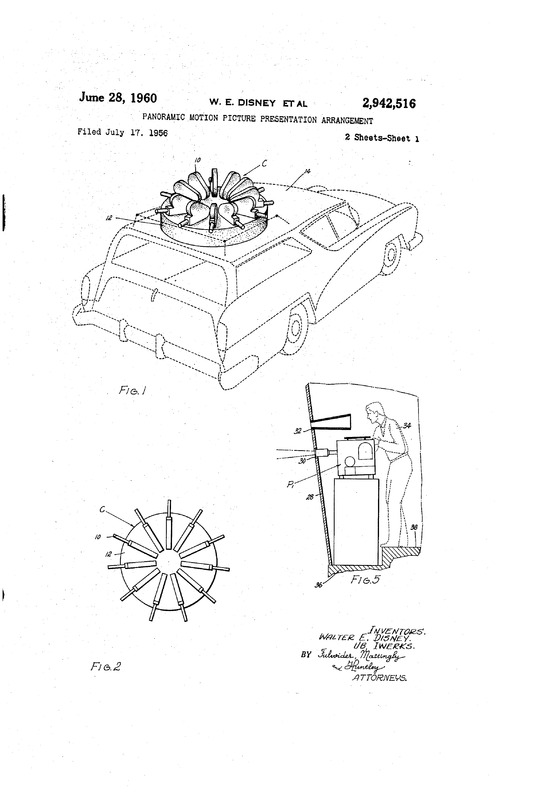
In order to understand where a technology is going into the future, it is necessary to examine where it came from. It is also vital to understand that technology does not exist within a vacuum, and its survival into the mainstream is very much determined by society. Depending upon human need and social norms, technology can become popular just as fast as it can become obsolete at the feet of a flashier, new technology. Even the most innovative minds of the time, like Walt Disney in the 20th century, have patents in the graveyard of technologies that were never valued or demanded enough by society to warrant being mass produced. An example of this is shown here with Disney's patent for a 360 degree screen for motion picture viewing. The concept allows viewers to enter a panoramic viewing area, which would allow them to view the film from each angle as it surrounds them. It is possible that as consumers consistently began to value private home screenings of television and film, Disney saw less incentive in pursuing a technology that would rely upon community/public screenings. While we have not yet seen the obsolescence of indoor movie theaters, drive-in theaters have certainly declined. With the prevalence of Netflix and other streaming services, movie theaters could soon follow suit (maybe).
Imaging in Science Fiction
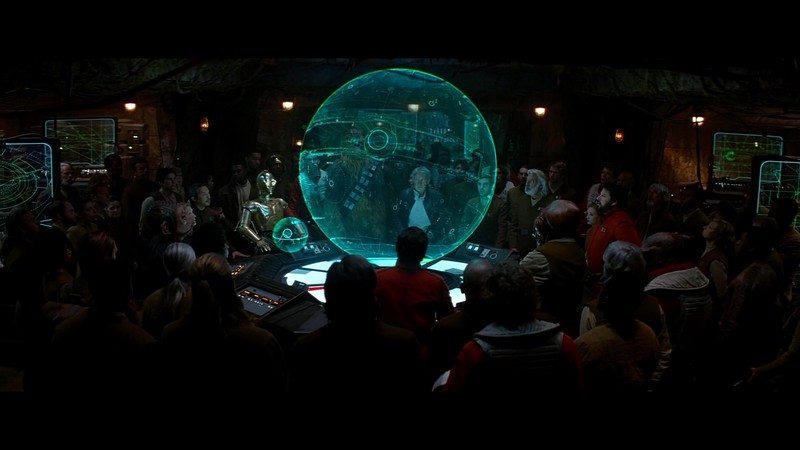
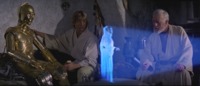



A look into the imagination of George Lucas through the countless hours of Star Wars films that we have been given has also provided us with countless interpretations of future technologies (even though he says it was “a long time ago…”). A good example that can be applied to our technology is the various interpretations of holograms in each of the films. Throughout the exhibit, we have discussed the increase in functionality of camera products over time. Holograms in Star Wars are a perfect example of broad functionality. Each of the photos provided show a different function that holograms can serve, whether it be face to face communication, sending a video message, virtually attending a meeting, or looking at interactive maps and diagrams. We already have technologies that can fulfill each of these functions, but we have only seen actual working holograms in a couple of ways (see Tupac at Coachella). But, the fact that we have holograms and we have all of the previously mentioned technologies that are used in Star Wars may serve as adequate evidence that we are coming ever closer to seeing George Lucas’s ideas in real life.
The sort of three-dimensional holographic technology first envisioned by George Lucas in 1977 was brought to its logical conclusion by Gene Roddenberry in the 1987 television series Star Trek: The Next Generation with the introduction of the “holodeck”. Unlike Lucas’ hologram, which exists as a semi-transparent, monochromatic projection, the holodeck is able produce realistic three-dimension projections which can be felt as well as seen and heard. In this short clip from the series, a starship lieutenant (Reginald Barclay) who deals with serious confidence issues, uses the ship's holodeck to live out fantasies in which he has overcome his feelings of low self-esteem. Through the series, we see the invention serving both practical and recreational ends; it can be used to simulate and prepare for possible future problems or immerse the user in an absolutely convincing, idyllic simulation. The draw of the latter is so strong that some characters become severely addicted to its use. In the real world, the fictitious holodeck has inspired engineers to invest time in creating “virtual reality” devices like the Oculus Rift or HTC Vive. Although time has yet to be seriously invested in simulating the sense of touch, these devices utilize 360 degree video technology and stereo audio effects to immerse users in simulated realities which they can interact with visually and aurally. As in Star Trek, these devices may be used both as recreational escapes from reality or as practical tools, with some proposing their use to, for example, train prospective surgeons. This new technology holds the promise of fundamentally changing the way we interact with video, from passively viewing it to physically engaging with it.
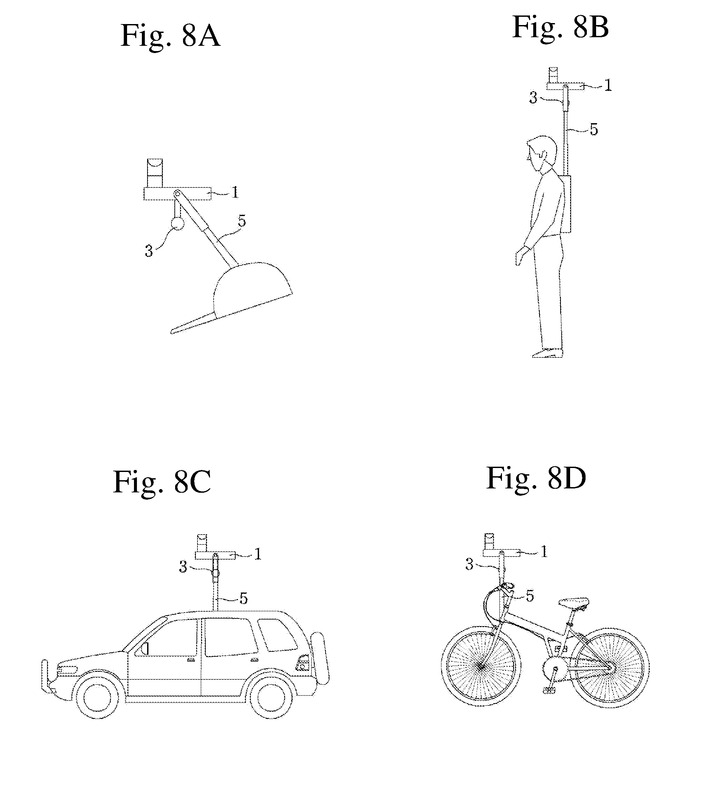
With virtual reality on the cusp of becoming a part of our everyday reality, inventors are already beginning to anticipate the demands of a broad base of casual consumers. In this patent, we see a device designed to mount an omnidirectional, or “360-degree”, camera, capable of capturing video from every possible angle. This allows the footage to be experienced via a virtual reality headset, allowing viewers to explore the scene being filmed as though they were present. It is worth noting that this patent demonstrates its possible uses as a mount for backpacks, cars, or bicycles, hinting at its appeal to a casual consumer market. Utilizing this mount, users may choose to document, for example, a visit to Machu Pichu, using a backpack mounted omnidirectional camera. Upon the tourist’s return home, they would then be able to share their experience with friends by offering them a VR headset with which to experience their footage.



According to Kranzberg's First Law: "Technology is neither good nor bad; nor is it neutral". Technological advancements have very real consequences when released out into the wider world. This concept is exemplified in Season 1 Episode 3 of Black Mirror, "The Entire History of You". Known for its dark themes and critique of modern society and our relationship with new technology, Black Mirror presents us with a world in which a majority of the population have a chip implanted into their brains to record their entire lives from their individual points of view. These memories can then be replayed over and over again by the user, slowed down for analyzation, and even projected outward onto screens for others to view as well. In the age of oversharing on social media, and Go-Pro cameras recording action shots for later viewing, this is not a far stretch. By natural design, as time goes on, memories fade, and old wounds can heal as a result. In a future world where everything someone has ever experienced can be searched and replayed at will, in the case of this episode's protagonist, lead to obsession and ultimately madness. In the end, the protagonist cut out his chip, opting to live without the recording and replay technology due to the emotional pain of viewing old memories.
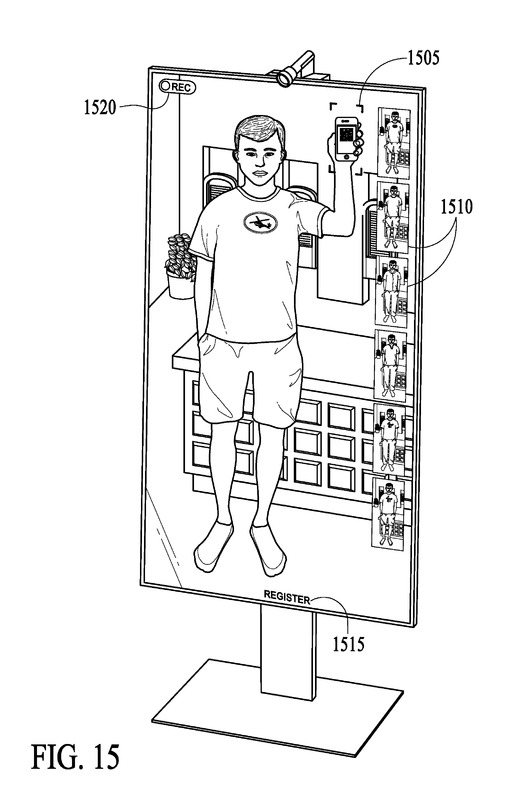
There seems to be a competing demand in developing movie camera technology: reality-based technolgy and augmented/fantasy-based technology. These competing demands are elucidated in the examples above: Black Mirror's vision of a future based upon real recordings of memories, and the reddit user's proposal for a technology that replaces the real photo taken by a consumer with a high-quality professional photograph they did not take. This concept is further reiterated with this patent granted in 2014 for a virtual reality experience that allows users to essentially change what they see in the mirror. As a user looks into a mirror, they can recreate their image into anything they want: someone wearing different clothes and with a different hairstyle, etc, becoming a walking avatar. This technology belongs on the "fantasy" end of the technology spectrum, because the only thing that changes is what users see.
Cameras in an Alternate Reality: Video Games
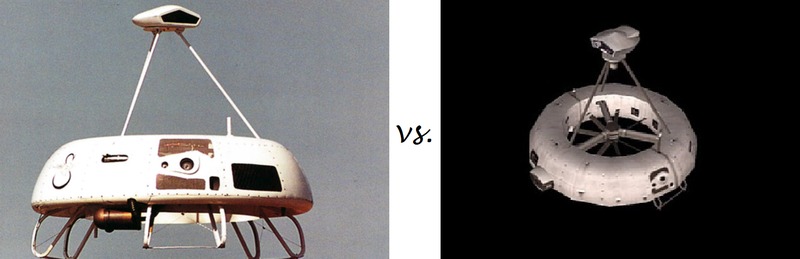
Like many forms of Science Fiction media, video games provide an alternative to our reality. Technologies that may have only existed in prototype form in the real world might see a new life in the video game world. One example of this was the Cypher Unmanned Aerial Vehicle (UAV) that Sikorsky Aircraft developed back in the late 1900s. It was a torus shaped vehicle that was designed to hover in the air and perform functions for the user. Several designs showed that cameras would be able to be mounted on top of the torus, which enabled the Cypher to go on reconnaissance missions. Two second edition models of the Cypher (simply known as the "Cypher II") were later made, but the project was deemed too expensive and was thus cancelled. Despite its cancellation, this was not the end of the UAV's life.
In Konami's late 2001 video game Metal Gear Solid 2: Sons of Liberty, the Cypher UAV makes a reappearance. It is first seen during the Tanker Incident at the beginning of the game. As seen in the video clip, a Cypher was able to fly to the USS Discovery and snap pictures of Solid Snake. The images were then later used to pin the blame of the tanker's destruction on Snake. Cypher UAVs were also found patrolling the Big Shell decontamination facility later in the game. Whenever their cameras detected Raiden (the main protagonist of the second part of the game), the Cypher UAVs would alert the guards of his presence. In addition, some Cyphers were outfitted with guns. The inclusion of this discontinued product within a popular Science Fiction series shows the effect that Science Fiction has on technology of the old.
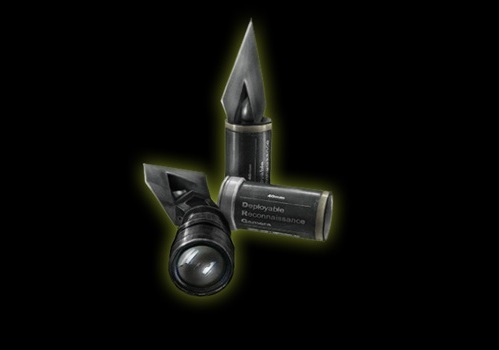
While the Metal Gear series dealt with enhancing obscure technologies like the Cypher UAV prototype, the Splinter Cell series focused more on creating unique applications of already existing technology. A key technology that appears frequently in the series is the sticky camera. Throughout the series, the sticky camera has made several different appearances in different forms. While recent entries depicted it as a throwable tool, older entries in the series like Splinter Cell: Double Agent depicted it as a tool that can be fired out of a firearm. From there, the anchored sticky camera is able to stream footage back to his display, which allows Sam to be able to receive intelligence about his surroundings. In addition to collecting intelligence, some installments in the series allow for extra attachments to be installed to the camera. These attachments include sleeping gas, sound emitters, and explosive charges Based on this information, we can see that Sci-Fi video games also allow for the creation of unique innovations in technology.
Diffusion of Video Editing

As technology advances in the future, consumers obtain more ways to speak with the producers of the technology. In this case, a user of Magix Vegas Pro 14 that goes by the name pierre-k highlights an issue that he perceived with the software. He desires for a feature that would allow him to highlight multiple clips with a left click and simultaneously move them with a right click. However, one of the developers of Vegas Pro 14 decides to chip in and list several reasons why they cannot change the right click functionality within the program. As such, the advancement of technology allows for more communication between consumers and producers. By having conversations between consumers and producers, the producers would learn how to make their product benefit their consumers more that before. In this case, the producers would want to learn how users of Magix Pro 14 could make better video productions in an efficient and effective manner.
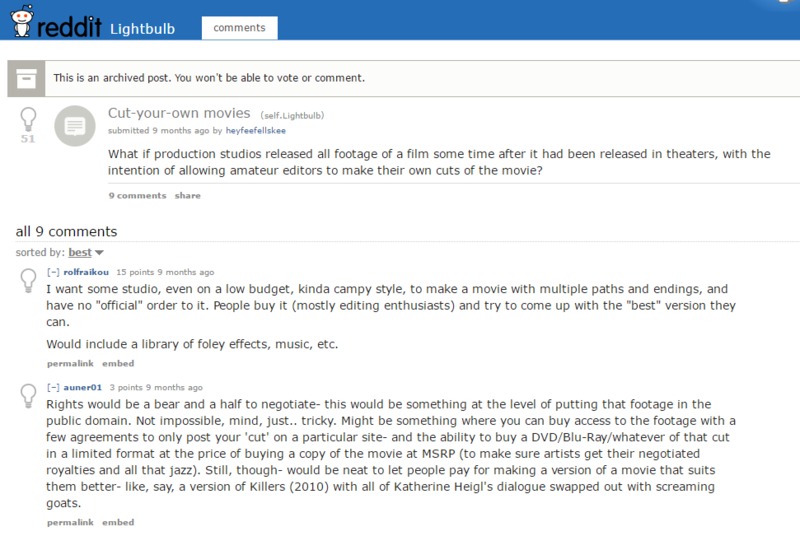
Often, the best innovations in technology come not from production companies, but rather from the consumers who use products on a daily basis. In order to continue to produce breakthrough inventions (and not just incremental improvements to existing technology), researchers increasingly rely on the expertise of "lead users", those consumers whose needs for a particular technology far exceed those of the average consumer. This can be seen in reddit's Lightbulb forum, where a user proposes furthering the diffusion of movie editing. In this proposal, the user and commenters discuss production companies releasing unedited footage, including alternate movie endings, to consumers to create a "cut your own movie" film. Users would not have to rely on professional editors and directors to create a finished story anymore, instead having the opportunity to form stories out of the footage at their will. While this is only an idea on a forum, it shows how users are at the forefront of formulating the next big idea when it comes to particular technologies.